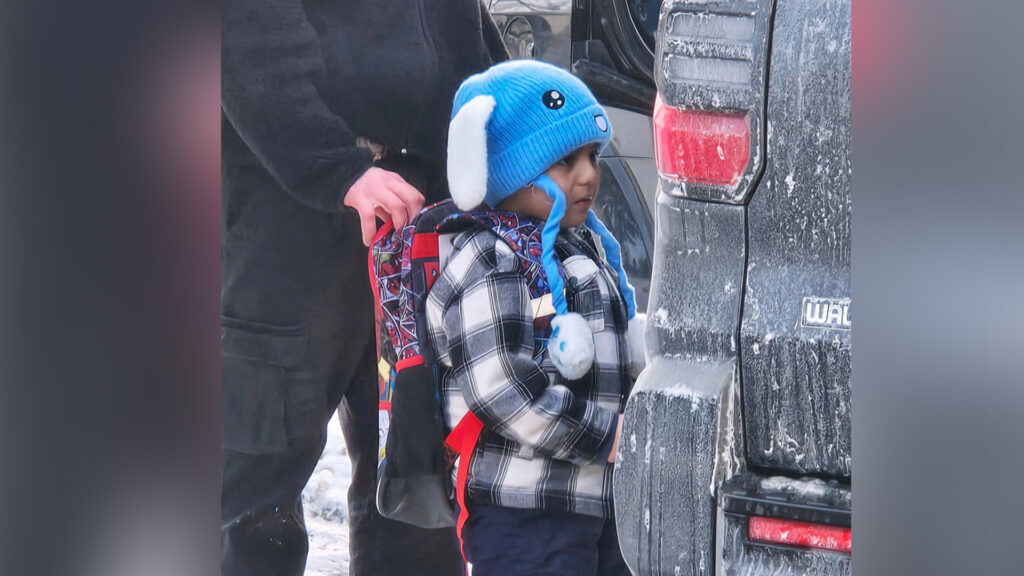
In a poignant and heart-wrenching image that has rapidly gained national attention, a five-year-old boy wearing a blue bunny hat was taken away by immigration agents right outside his home in Minneapolis, Minnesota. The photograph of the young child, visibly confused and scared, has become an emblematic symbol reflecting the ongoing and often controversial US immigration raids.
The incident underscored the increasingly aggressive immigration enforcement actions that have been taking place across various parts of the country. Immigration and Customs Enforcement (ICE) agents conducted a raid at a residential area in Minneapolis, targeting individuals suspected of violating immigration laws. The situation escalated emotionally when the young boy, who was apparently accompanying his family or was a bystander during the enforcement operation, was separated from his loved ones.
Witnesses at the scene described the boy wearing a distinctive blue bunny hat, which quickly caught the eye of onlookers and media. His small frame and innocent appearance contrasted sharply with the harsh realities of the immigration system he found himself entangled in.
The image of the boy became a viral symbol on social media, sparking widespread debate and concern over the practices of family separation and the treatment of minors in immigration enforcement. Advocacy groups, legal experts, and politicians have criticized the use of such stringent measures, emphasizing the trauma inflicted on children and families.
Numerous human rights organizations have called for immediate reforms to immigration policies, stressing the importance of humane treatment and prioritization of family unity. The incident in Minneapolis has reignited conversations about the balance between national security and upholding human dignity within the immigration framework.
Families affected by immigration raids frequently face psychological distress, financial instability, and disruption of community bonds. The image of the blue bunny hat boy has personalized these broad issues, reminding the public of the real human beings behind the statistics.
Officials from ICE have defended their operations, citing the necessity to enforce laws and maintain border security. However, the public backlash and media coverage have led to renewed calls for greater transparency and the development of alternative approaches that minimize harm to children and families.
The boy himself has become something of a poignant representation of the vulnerable populations caught in the crossfire of immigration enforcement policies. His image serves as a rallying point for activists demanding comprehensive immigration reform.
In the wake of this event, a larger dialogue has emerged involving lawmakers, community leaders, and citizens on how best to address immigration challenges while respecting human rights. The story of the five-year-old in the blue bunny hat encapsulates the urgent need for compassion and thoughtful policy-making in the realm of immigration enforcement.
As this story continues to unfold, it remains a stark reminder of the human impact behind immigration headlines and the importance of safeguarding children from unnecessary trauma in legal processes. The blue bunny hat, once a simple piece of children’s clothing, now stands as a powerful emblem in the ongoing debate about immigration in the United States.