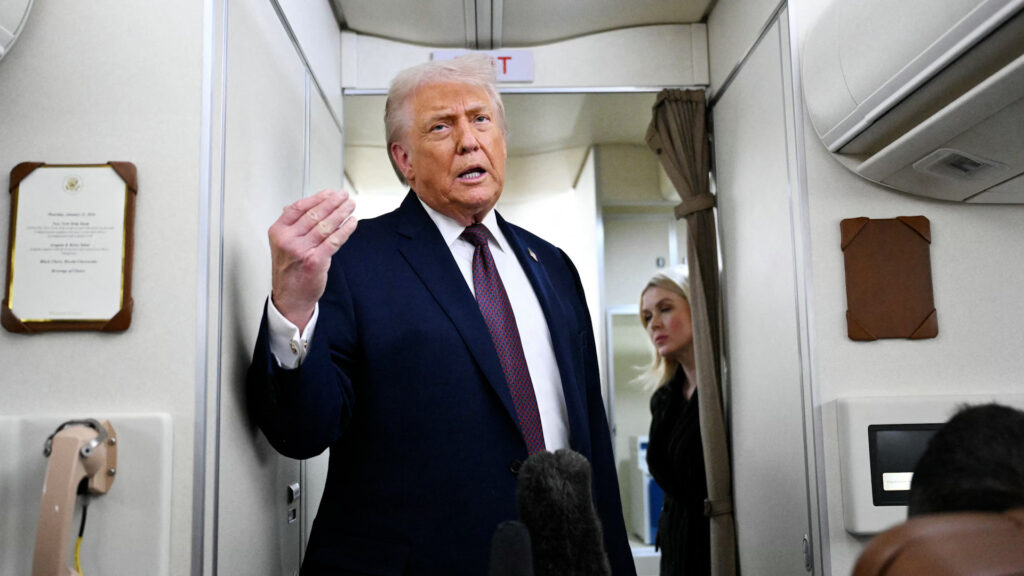
In a recent statement, President Donald Trump announced that a ‘big force’ of US warships, referred to as an ‘armada,’ is en route towards Iran. This move signals a significant escalation in the ongoing tensions between the United States and Iran.
President Trump’s declaration has raised global attention and concern as it underscores the heightened military posture of the US in the volatile Middle East region. The deployment of a substantial naval force near Iranian waters is perceived by many analysts as a demonstration of strength and a strategic maneuver aimed at deterring Iranian aggression or provocations.
The composition of the naval force has not been officially disclosed in detail, but the term ‘armada’ implies a large and powerful group of warships, potentially including aircraft carriers, destroyers, cruisers, and support vessels. These ships are likely equipped with advanced weaponry and surveillance systems designed to project military power and provide rapid response capabilities.
This announcement comes amid escalating tensions characterized by previous confrontations, sanctions, and diplomatic strains between the US and Iran over various issues including Iran’s nuclear program and regional influence. The show of force could be a response to intelligence reports of threats or recent activities attributed to Iran or proxy groups in the region.
International reactions to Trump’s statement have been mixed. Some allies have expressed support, emphasizing the importance of a strong stance against Iran’s destabilizing actions. Conversely, other nations and diplomatic groups have called for de-escalation and urged all parties to seek peaceful solutions to avoid a military conflict that could have widespread consequences.
Military experts highlight that maritime deployments of this scale are complex operations that require significant logistical support and coordination. The US Navy’s presence in strategic locations often functions as a deterrent but carries an inherent risk of incidents that could escalate into broader hostilities.
This development adds to the growing list of challenges faced in US-Iran relations, which have been marked by periods of intense hostility as well as attempts at negotiation. It remains to be seen how Iran will respond to the incoming naval force and whether diplomatic channels will be pursued more vigorously to mitigate the risk of armed conflict.
In the meantime, global markets and political observers are closely monitoring the situation, aware that increased military tension in the Persian Gulf region can impact oil prices and international security.
President Trump’s announcement regarding the naval ‘armada’ contributes to the ongoing narrative of assertive American foreign policy under his administration, emphasizing readiness to employ military assets to safeguard national interests and send a clear message to adversaries.