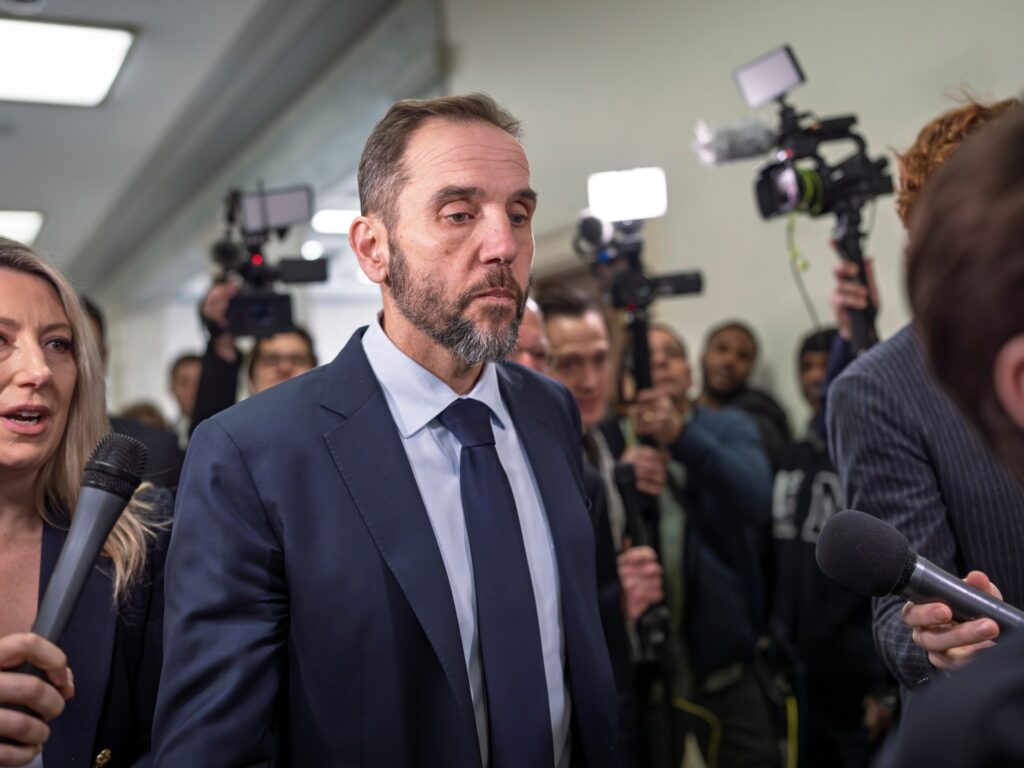
In a highly charged session before a United States Congress committee, former Special Counsel Jack Smith delivered a striking testimony that has stirred the political landscape. During his address, Smith asserted that he uncovered “proof beyond a reasonable doubt that President Trump engaged in criminal activity.” This bold statement has intensified ongoing discussions about legal accountability at the highest levels of government.
Jack Smith, who served as a Special Counsel, was appointed to investigate issues related to former President Donald Trump. His role was pivotal, tasked with ensuring a thorough and unbiased examination of the evidence at hand. Smith’s testimony marks a significant development as it moves beyond speculation to a confident assertion based on concrete findings.
The context of Smith’s investigation involved numerous allegations that have surrounded President Trump throughout and after his tenure in office. By stating that the evidence met the “beyond a reasonable doubt” standard, Smith highlighted the strength and credibility of his findings, which could have profound implications for the political future of the former president.
Congress members responded with a blend of shock, skepticism, and calls for further action. The testimony is expected to influence ongoing and upcoming legislative and judicial processes that concern President Trump and his associated entities.
Legal experts have weighed in, noting that testimony from a Special Counsel carries significant weight. It may pave the way for additional investigations, potential indictments, or reforms aimed at enhancing the accountability of elected officials. The burden of proof described by Smith—a standard typically reserved for criminal trials—signals that prosecutors might have strong grounds to pursue charges.
Supporters of President Trump have dismissed Smith’s claims, labeling them as politically motivated and lacking impartiality. This testimony is likely to deepen the partisan divide in the United States, with each side preparing for a prolonged battle in the court of public opinion and perhaps in judicial forums.
The broader public reaction has been one of keen interest, with many calling for transparency and justice. The allegations point to an underlying tension in America’s political system about the limits of power and the rule of law. Smith’s testimony adds a new chapter to this ongoing narrative, reminding citizens and lawmakers alike of the critical importance of checks and balances.
Moreover, the legal ramifications of Smith’s revelations could extend beyond immediate charges. They might impact future presidential conduct, legislative reforms, and the mechanisms by which special investigations are conducted. Smith’s position and his vocal testimony underline the seriousness with which these issues are being treated at the highest levels.
As the story develops, it is anticipated that Congress will hold additional hearings to further scrutinize the evidence and the implications of Smith’s claims. The political and social ripple effects are expected to be wide-ranging, potentially shaping the trajectory of American governance and justice.
In summary, Jack Smith’s testimony before Congress represents a watershed moment in American political and legal history. His unequivocal claim of “proof beyond a reasonable doubt” that former President Trump engaged in criminal activity thrusts the nation into a profound debate on leadership, accountability, and the rule of law. The coming weeks and months will reveal how these revelations translate into actions and consequences within the American political system.