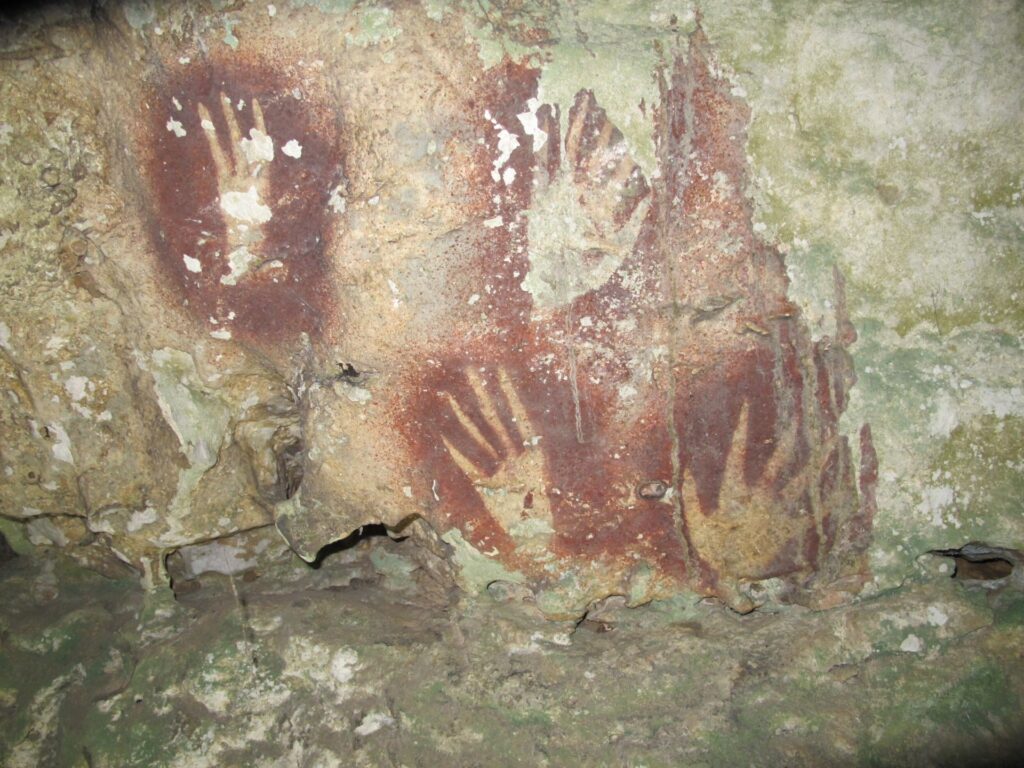
Archaeologists have uncovered the world’s oldest known cave art on Muna Island, Indonesia, marking a significant milestone in the study of prehistoric human culture. This extraordinary discovery highlights Indonesia’s crucial role in understanding ancient human civilization and adds to the region’s reputation for some of the world’s most ancient archaeological sites.
The newly identified cave paintings on Muna Island feature intricate depictions of human figures and animals, dating back tens of thousands of years. Experts believe these artworks were created by early humans, offering a glimpse into their daily lives, beliefs, and environment during the prehistoric era.
Indonesia’s diverse archipelago has long been a treasure trove for archaeologists, with previous finds including some of the earliest known figurative paintings in the world. This latest discovery on Muna Island reinforces the area’s significance as a cradle of early human creativity and expression.
The cave art is situated in a remote, hard-to-reach part of Muna Island, which likely contributed to its exceptional preservation over millennia. Researchers employed advanced dating techniques, including uranium-series dating, to accurately establish the age of the paintings, confirming them as the oldest known to date globally.
This breakthrough challenges earlier assumptions that the oldest cave art was primarily located in Europe and underscores Southeast Asia’s pivotal role in prehistoric human development. It also offers insights into the migration and cultural evolution of ancient populations in the region.
Conservationists are now working closely with local authorities to protect the cave site from environmental threats and human interference, ensuring this invaluable cultural heritage remains intact for future generations. Plans are underway to develop controlled access for scientific study and carefully managed tourism.
The discovery has sparked excitement within the scientific community, with researchers eager to explore further caves in the Indonesian archipelago for similar hidden treasures. These findings promise to deepen our understanding of early human artistic expression and the spread of cultural practices across the globe.
Indonesia’s Muna Island cave art discovery not only enriches the global narrative of human history but also underscores the importance of preserving archaeological sites worldwide. It reminds us of humanity’s deep-rooted connections to art and storytelling, transcending time and geography.
As research continues, this ancient cave art will undoubtedly provide valuable clues about the origins of human creativity and the ways our ancestors interacted with their environment millions of years ago.