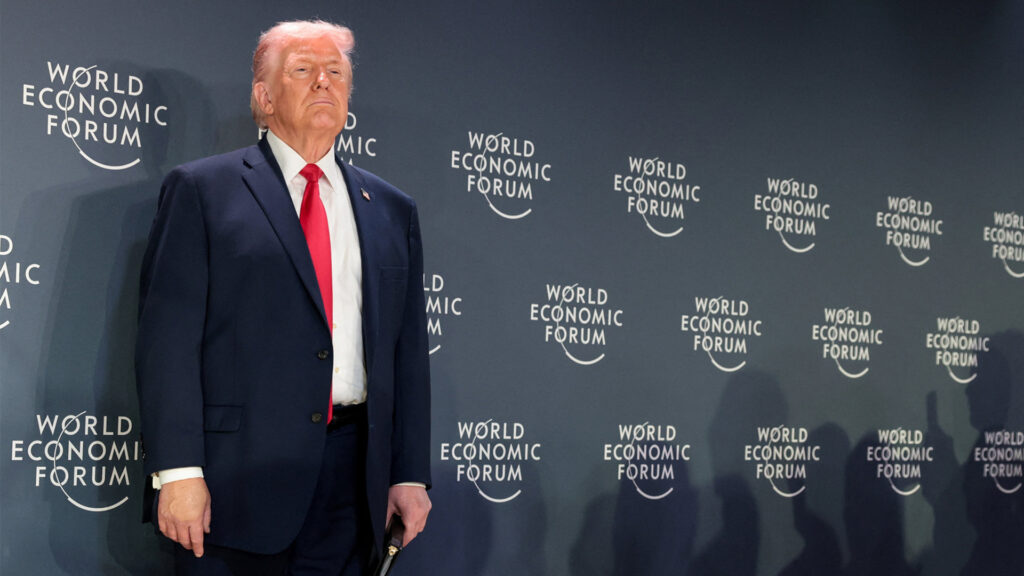
US President Donald Trump recently expressed praise for what he described as an “infinite” framework deal regarding Greenland, signaling a significant development in his administration’s approach to the Arctic island. This positive remark comes after a period of heightened tension and uncertainty surrounding Trump’s controversial interest in acquiring Greenland from Denmark.
Earlier in the diplomatic saga, Trump had publicly mulled over the idea of purchasing Greenland, a move that drew widespread international attention and speculation. This ambitious proposal was met with mixed reactions, including firm refusals from Danish officials and skepticism from other global leaders.
The idea of buying Greenland was part of Trump’s broader strategic vision, likely motivated by the island’s vast natural resources and its strategic Arctic location. However, the suggestion sparked a diplomatic stir, raising questions about sovereignty and international norms.
In conjunction with discussions about Greenland, Trump had also threatened to impose tariffs on several European countries. These threats were seemingly linked to frustrations over trade imbalances and other geopolitical disputes, potentially affecting the broader US-Europe economic relationship.
However, recent developments indicate a thaw in these tensions. Reports confirm that Trump has dropped the tariff threats against European nations. This pivot away from punitive economic measures signals a more conciliatory tone in transatlantic relations.
Trump’s reference to the Greenland framework deal as “infinite” suggests a long-term, adaptable agreement that could facilitate cooperation and mutual benefits. While details of the framework remain limited, the characterization paints a picture of an enduring pact rather than a fleeting arrangement.
The change in stance also reflects practical considerations in diplomacy. Greenland’s status as an autonomous territory within the Kingdom of Denmark means any transfer of sovereignty would require extensive negotiations and consensus from multiple parties, making outright purchase highly complex.
The administration’s move to praise the framework deal and retract tariff threats could be seen as an effort to maintain stable alliances while pursuing strategic interests in the Arctic. This region is increasingly important due to climate change, emerging shipping routes, and resource potential.
Experts suggest that the “infinite” framework might encompass collaboration on scientific research, defense, and economic development rather than sovereignty transfer. This collaborative approach aligns with the interests of Greenland, Denmark, and the United States.
Moreover, Greenland’s indigenous population and their aspirations must be considered in any international agreements. Ensuring their participation and consent is crucial for the legitimacy and sustainability of any deal.
President Trump’s latest remarks signal a shift from confrontation to cooperation, highlighting the complex interplay of diplomacy, strategy, and economics in modern international relations.
The evolving scenario underscores the importance of dialogue and negotiation in resolving disputes and advancing mutual goals. While Trump’s initial bid to buy Greenland was met with skepticism and opposition, the new framework suggests avenues for constructive engagement.
This development also illustrates the broader geopolitical dynamics of the Arctic region, where US, European, and other global powers are increasingly active.
In conclusion, Trump’s commendation of the Greenland framework deal and his abandonment of tariff threats indicate a cautious but positive step toward managing US-European relations and addressing Arctic cooperation challenges.
Observers will be watching closely to see how this “infinite” framework unfolds and what implications it holds for the future of Greenland and international diplomacy.