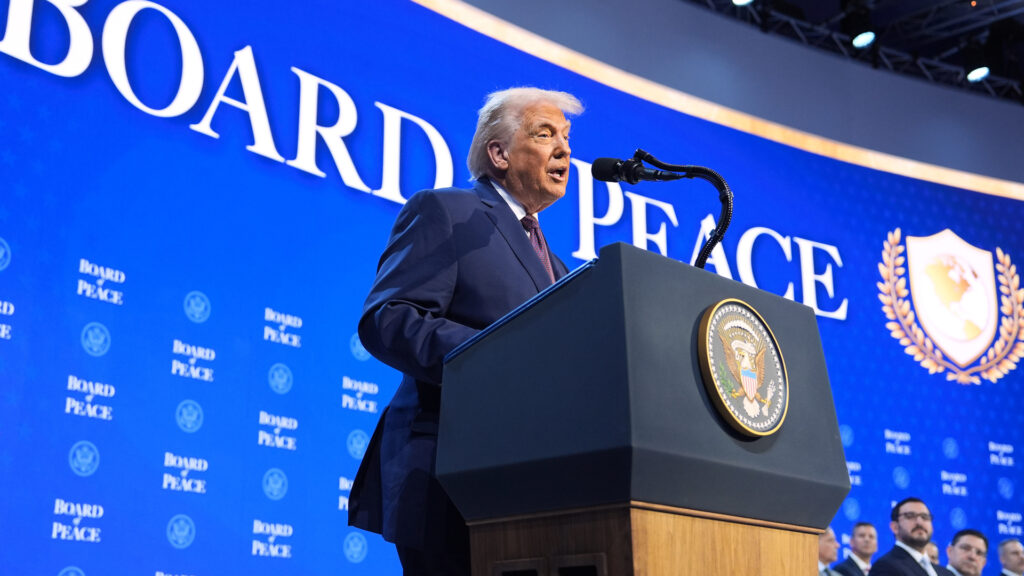
During the inauguration of his controversial ‘Board of Peace’, US President Donald Trump made a striking address where he enumerated the countries the United States has bombed over the years. This announcement came amid efforts to promote peace and resolve international conflicts, making the speech particularly notable for its candid acknowledgment of America’s military interventions worldwide.
President Trump highlighted several countries, naming those that the US had targeted in airstrikes or other military actions. This list included nations involved in recent conflicts as well as historical engagements, underscoring the extensive reach of American military power. The inclusion of this information sparked a complex reaction from the international community, as well as from domestic audiences.
The ‘Board of Peace’, according to President Trump, aims to facilitate dialogue and foster peaceful resolutions to ongoing disputes. However, the president’s decision to open the event by discussing military interventions presented an intriguing contrast between the message of peace and the reality of past conflicts.
Critics argued that the list’s mention might undermine the board’s credibility by highlighting the United States’ history of involvement in foreign wars. Supporters, on the other hand, suggested that acknowledging past actions is a necessary step toward accountability and genuine reconciliation.
Experts in international relations noted that comprehensive peace efforts often require confronting difficult truths, including acknowledging previous military actions. The transparency displayed during Trump’s address could signal a new approach to diplomacy, although some viewed it as a paradox.
The event drew attention to America’s complex role on the world stage—balancing between military intervention and diplomatic peacekeeping. It emphasized the challenges the US faces in promoting peace while managing its history of conflict.
As the ‘Board of Peace’ continues its work, the global community will watch closely to see if it can effectively contribute to resolving ongoing tensions and fostering long-term peace.
President Trump’s opening remarks have sparked widespread debate about the United States’ foreign policy and its implications for the future of international peace efforts. The board’s initiatives and outcomes will likely remain under scrutiny, as hopes for peaceful resolution meet the realities of the past.