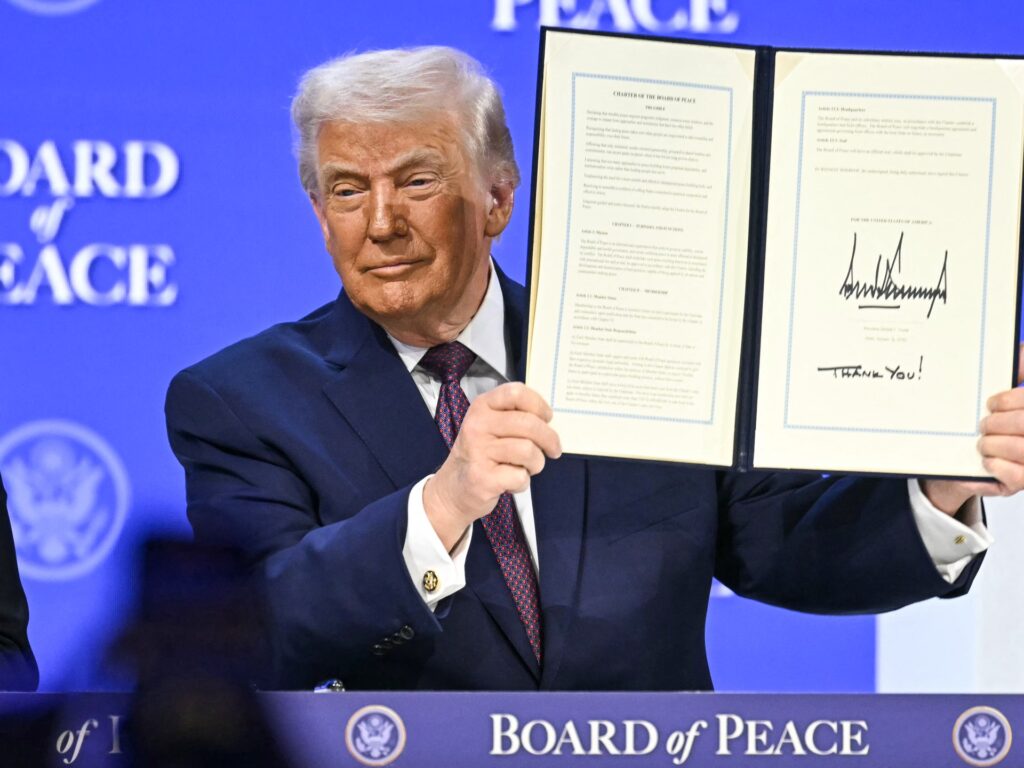
At a high-profile signing ceremony in Davos, US President Donald Trump announced the establishment of a new entity called the Board of Peace. The president highlighted the potential influence and capabilities of the Board, stating that it will be able to “do pretty much whatever we want to do.” This declaration signals a broad and potentially flexible mandate for the Board of Peace, reflecting President Trump’s unconventional approach to governance and international diplomacy.
The ceremony took place amid an atmosphere charged with anticipation, as attendees from various countries gathered to witness the launch of this new initiative. The Board of Peace is intended to play a crucial role in fostering global stability and resolving conflicts, although specific details about its operational framework were not disclosed during the event.
President Trump’s remarks suggested a confident and assertive stance, implying that the Board could operate with significant autonomy and authority. This could mark a departure from traditional diplomatic and peacekeeping efforts, potentially allowing the Board to undertake a wide range of actions in pursuit of peace.
Critics and supporters alike have speculated about the implications of such a broad mandate. Supporters argue that this flexibility could enable the Board to respond swiftly and effectively to emerging crises. However, skeptics have expressed concerns about the lack of clear oversight and accountability mechanisms, fearing that unchecked power might lead to unintended consequences.
The establishment of the Board of Peace aligns with President Trump’s broader foreign policy vision, which often emphasizes strong leadership and decisive action. The initiative is seen as part of a strategy to reshape how the United States engages with global peace efforts and conflict resolution.
Observers at Davos noted the symbolism of launching the Board during a gathering primarily focused on economic and political cooperation. The move underscores President Trump’s intent to position the United States as a central player in international peacekeeping endeavors.
While details remain sparse, the Board of Peace is expected to develop protocols and strategies to address various types of conflicts, including political, social, and economic disputes. Its effectiveness and impact will likely be subjects of intense scrutiny moving forward.
In conclusion, the launch of the Board of Peace at Davos represents a significant development in international diplomacy under President Trump’s administration. The Board’s broad mandate and potential power raise important questions about its future role in maintaining global peace and stability.