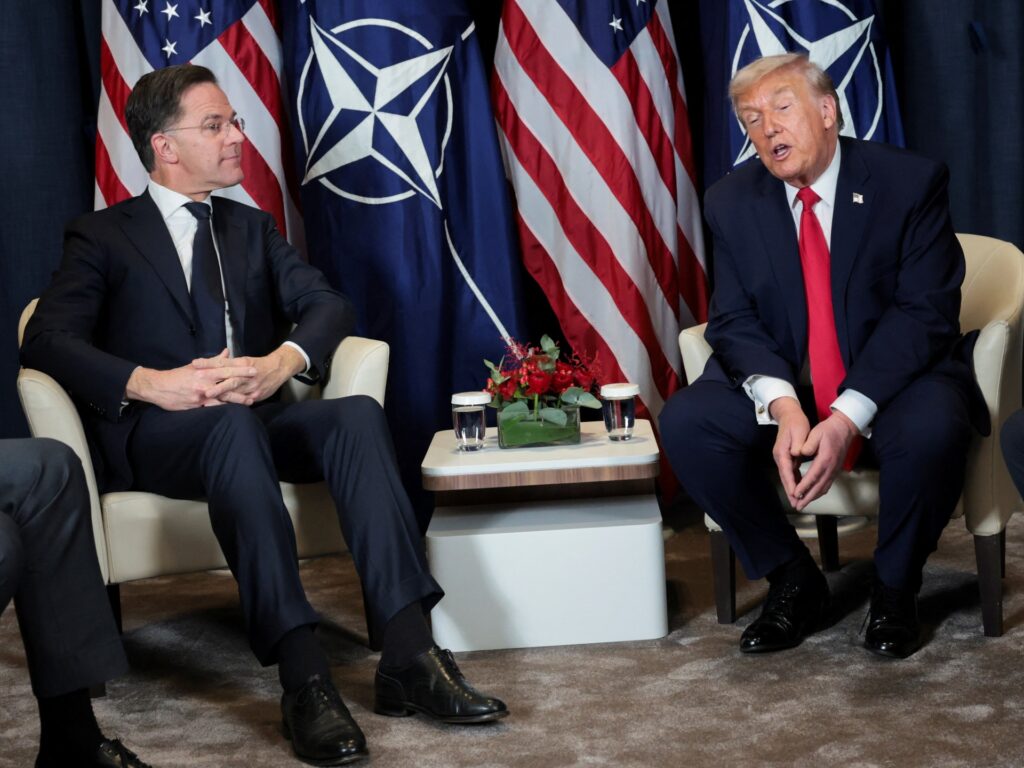
Former President Donald Trump has announced that he has secured “total access” to Greenland as part of a new NATO agreement. This surprising claim has sparked considerable discussions among European allies already dealing with uncertainties stemming from recent shifts in U.S. policies.
Trump’s statement comes at a time when many European countries are scrambling to respond to his recent abrupt changes in U.S. tariffs and his earlier threats regarding the potential purchase of Greenland. His comments have once again brought the spotlight on Greenland, a strategically important territory in the Arctic region.
During his presidency, Trump expressed interest in acquiring Greenland, an autonomous Danish territory, citing its strategic military value and natural resources. This idea was met with resistance and even ridicule by Denmark and other NATO allies, leading to some diplomatic tension between the U.S. and its European partners.
Now, Trump’s claim of “total access” through a NATO deal suggests a shift away from the contentious idea of outright purchase towards a more formalized security arrangement. However, details about the terms of this supposed agreement have not been fully disclosed, leaving many questions about the scope and implications of the access.
European defense officials have expressed concern over the lack of transparency and the unpredictable nature of the U.S. approach under Trump, highlighting challenges in maintaining cohesive alliance strategies. Some analysts interpret this move as an attempt by the former president to assert American influence in the Arctic region amidst growing competition from Russia and China.
Greenland’s geographic location makes it a key asset for monitoring Arctic activity and securing northern routes, making it an area of interest not only for NATO but also for global powers looking to increase their presence in the Arctic.
In addition to the Greenland access claims, European countries are also grappling with Trump’s recent reversal on tariffs, which had destabilized trade relations and raised fears of a prolonged economic conflict.
Together, these developments have led to an atmosphere of uncertainty among U.S. allies, who are now working to navigate the complexities of security and economic cooperation with a United States adopting a less predictable foreign policy stance.
As the situation develops, international observers are keen to see how these claims translate into concrete agreements and the overall impact on NATO’s cohesion and Arctic security dynamics. The importance of Greenland in global geopolitics continues to grow, underscoring the region’s emerging role on the world stage.