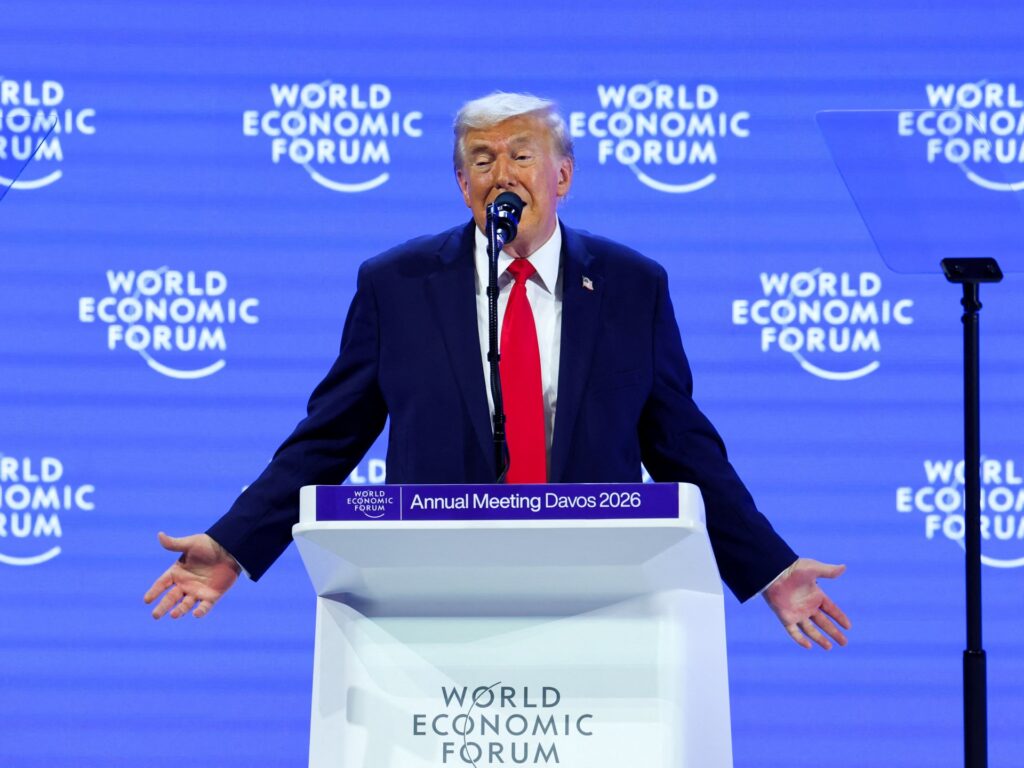
At the World Economic Forum in Davos, former US President Donald Trump delivered a speech that captured international attention, especially regarding his stance on Greenland and broader foreign policy.
One of the most notable points Trump made was his reiteration that he would not use force in any bid to bring Greenland under US control. Despite the controversy sparked by his initial proposal to purchase the territory, Trump emphasized a diplomatic approach, underscoring his desire to expand American influence via negotiation rather than military means.
The proposal, initially announced in 2019, had shocked many as Greenland is an autonomous Danish territory rich in natural resources and strategically significant in the Arctic region. Trump’s renewed mention reminded audiences of his longstanding interest in the island’s geopolitical importance.
Beyond Greenland, Trump took the opportunity in Davos to critique European unity and policies. He pointed to what he described as Europe’s overreliance on the United States for defense and economic support, urging European nations to shoulder a greater share of responsibilities.
At the heart of Trump’s speech was a vision of US foreign policy grounded in prioritizing American interests. This approach includes protecting the nation’s borders, promoting domestic industries, and advocating for fair trade deals.
Trump outlined several key foreign policy priorities:
1. Strengthening American sovereignty and security without unnecessary military interventions abroad.
2. Reevaluating alliances to ensure they benefit the United States reciprocally.
3. Supporting economic policies that encourage job growth and protect American workers.
4. Engaging with international partners from a position of strength, emphasizing negotiation over conflict.
He also alluded to a desire to reduce American involvement in global conflicts that do not serve direct US interests, advocating for a more measured and strategic diplomacy.
Trump’s speech was met with mixed reactions at Davos. Supporters praised his firm stance on national interests and his straightforward critique of allies. Critics, however, questioned the implications of his statements on Greenland and Europe, worrying about potential strain on international relations.
Overall, Trump’s remarks in Davos reflect his consistent foreign policy narrative: America first, pragmatic engagement with the world, and strategic prioritization of US assets and alliances. His assurance that no force would be used in Greenland signals a preference for diplomacy, though his initial purchase proposal remains a contentious topic.
As global leaders continue discussions at Davos, Trump’s speech serves as a reminder of the ongoing debates about the United States’ role on the world stage, the future of international alliances, and the strategic importance of regions like Greenland in global geopolitics.