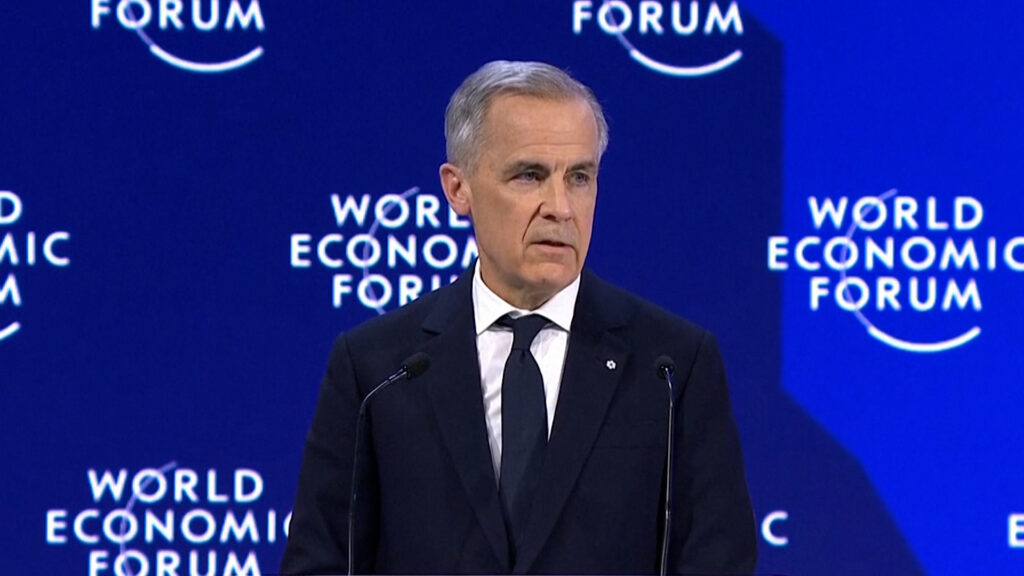
At the World Economic Forum in Davos, Switzerland, President Donald Trump sparked international tensions with his remarks about taking over Greenland, an autonomous Danish territory rich in natural resources and strategic significance. The declaration was met with swift and united opposition from US allies and global leaders.
President Trump, known for his unconventional approach to diplomacy and business-minded policies, expressed interest in acquiring Greenland, describing it as “strategically important” and suggesting that the US could gain economic and military advantages. This statement surprised many as it harkened back to historical land acquisitions but in a modern geopolitical context.
Greenland, while part of the Kingdom of Denmark, enjoys considerable self-rule and its inhabitants have expressed resistance to such a proposal. The move was widely viewed by international observers as an unusual and provocative strategy that could destabilize existing alliances.
Allies from Europe and North America quickly condemned Trump’s remarks. Danish Prime Minister Mette Frederiksen called the idea “absurd” and reaffirmed Denmark’s sovereignty over Greenland. She emphasized that Greenlanders have the right to self-determination and that the island is not for sale. Other European leaders echoed similar sentiments, underlining the importance of respecting national sovereignty and existing diplomatic commitments.
At the Davos forum, French President Emmanuel Macron and German Chancellor Olaf Scholz joined in solidarity, warning that such unilateral ambitions threaten the cooperative spirit that underpins global security and economic stability. NATO officials also highlighted potential implications for transatlantic relations, stressing that partnership and dialogue must prevail over unilateral actions.
The US Department of State later issued a statement clarifying the President’s comments as exploratory rather than an official policy bid, aiming to quell rising diplomatic tension. However, critics argue that even raising the possibility undermines longstanding alliances and could embolden disruptive geopolitical behavior worldwide.
Greenland’s vast reserves of minerals and rare earth elements make it a strategic interest not only for the US but also for China, Russia, and European nations seeking to secure resources critical for emerging technologies. The island is increasingly recognized as a key player in Arctic geopolitics amid climate change and melting ice opening new shipping routes.
Analysts suggest that Trump’s proposal, while informal, signals a broader American interest in maintaining influence in the Arctic region. However, it also exposes vulnerabilities in US foreign policy approaches and highlights the need for careful diplomatic engagement to address evolving geopolitical challenges.
The incident has sparked discussions about sovereignty, indigenous rights, and the ethics of territorial acquisition in the 21st century. Greenlandic leaders have affirmed their commitment to working with allies to protect their autonomy and environment.
In the meantime, the global community watches closely as the situation unfolds, recognizing that the way major powers handle Arctic diplomacy will have far-reaching implications for international relations and regional stability.
The Davos gathering has thus become a pivotal forum for addressing these critical issues, emphasizing dialogue, collaboration, and respect for international law as foundations for peaceful coexistence and progress.