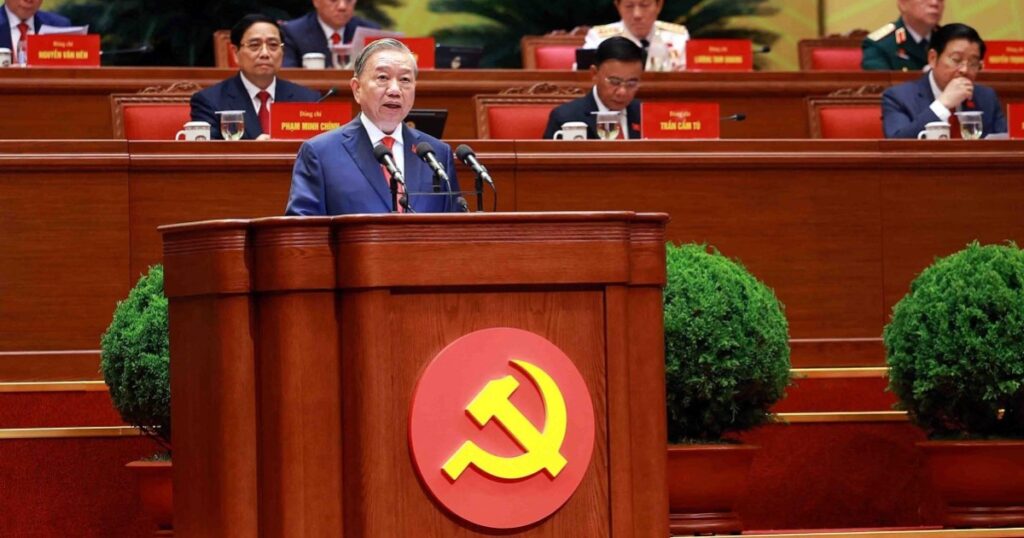
Vietnam’s prominent Communist Party leader, To Lam, has made a strong public commitment to tackling corruption within the country, a move seen as pivotal in strengthening governance and boosting public trust. To Lam, who is reportedly under consideration for a dual role as both party chief and Vietnam’s president, has also set an ambitious economic target, pledging a 10% growth rate to propel the nation forward.
Corruption has been a persistent challenge in Vietnam, affecting various sectors and undermining development efforts. To Lam’s vow to combat this issue signals a renewed governmental focus on transparency and accountability. Experts and citizens alike view this as a significant step towards reform, hoping it will encourage more ethical practices across all levels of administration.
The pledge to achieve a 10% economic growth rate underscores the leadership’s confidence in Vietnam’s economic potential. This target is particularly bold given global economic uncertainties and regional competition. Achieving such growth would require comprehensive strategies including attracting foreign investment, boosting domestic innovation, and enhancing infrastructure.
To Lam’s consideration for a dual role consolidating the positions of party chief and president marks a potential shift in Vietnam’s political landscape. If appointed, it would increase his ability to implement reforms decisively and streamline policy-making processes. This move is viewed as an effort to unify leadership and ensure cohesive governance during a critical period for the country.
Vietnam’s economy has shown resilience over recent years, maintaining steady growth and recovering from the impacts of the COVID-19 pandemic. The government’s focus on economic reform, modernization, and integration into global markets has been central to this progress.
Furthermore, the leadership aims to leverage technological advancements and sustainable development to drive long-term economic stability. Initiatives targeting manufacturing, digital economy, and green energy form core components of the economic strategy aimed at meeting the 10% growth objective.
To Lam’s anti-corruption stance and growth vision have received mixed reactions. While many citizens express optimism and support for stronger leadership, others urge caution, emphasizing the need for transparent implementation and broad-based reforms.
International observers highlight that Vietnam’s commitment to combating corruption aligns with global trends emphasizing good governance as essential for sustainable economic development. Success in these areas could enhance Vietnam’s reputation and attract further foreign investment.
In summary, To Lam’s dual commitments to fight corruption and achieve significant economic growth represent a bold agenda. The success of these initiatives will depend on effective policy execution, political stability, and continued public support as Vietnam navigates future challenges and opportunities.