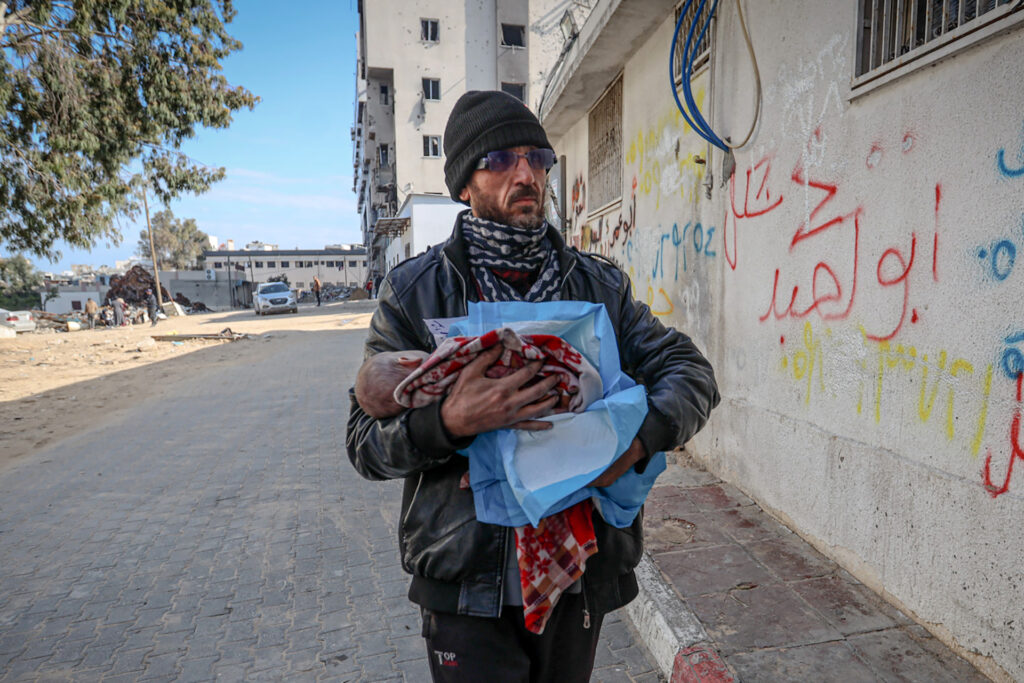
Shaza Abu Jarad, a baby girl in Gaza, has tragically died from the cold this winter, marking the ninth child to succumb to cold-related conditions amid ongoing Israeli aid restrictions. This heartbreaking incident sheds light on the severe humanitarian challenges faced by residents of Gaza, where access to essential supplies and heating has been severely limited due to political and military constraints.
The Gaza Strip, a densely populated region, has long struggled with the effects of conflict and blockade, which have hampered the flow of necessary aid, fuel, and medical supplies. With the harsh winter weather exacerbating the already difficult living conditions, families like that of Shaza Abu Jarad find themselves unable to adequately protect their children from the cold.
Israeli authorities have imposed restrictions on aid deliveries, citing security concerns related to the control of goods entering Gaza. However, these restrictions have had unintended consequences, severely limiting fuel supplies needed for heating homes and powering hospitals. Humanitarian organizations have repeatedly voiced concern over the growing crisis as temperatures drop and vulnerable populations suffer.
The death of Shaza Abu Jarad is a somber reminder of the urgent need for increased humanitarian access and support in Gaza. Local and international agencies are calling for the easing of restrictions to allow more aid to enter the region, including fuel, blankets, and medical supplies necessary to save lives during the cold months.
Health officials in Gaza report a rise in cold-related illnesses, impacting mainly children and the elderly, who are most vulnerable. The combination of poverty, inadequate infrastructure, and aid blockade creates a perfect storm of suffering during the winter season.
This incident also underscores the broader humanitarian implications of the ongoing conflict and political stalemate in the region. While security concerns are legitimate, many argue that the preservation of human life should be a priority, requiring humanitarian corridors and comprehensive solutions to address the acute needs of Gaza’s population.
International humanitarian groups continue to advocate for the rights of Gaza’s residents, emphasizing that children like Shaza Abu Jarad should not suffer due to political conflicts beyond their control. The international community faces increasing pressure to broker negotiations that ensure uninterrupted aid and protect civilian lives.
In the wake of this tragedy, local leaders and advocates urge immediate action to prevent further loss of life. They call for a collaborative approach between all parties involved to facilitate the delivery of essential aid and implement measures that buffer the Gaza population against the harsh impacts of winter.
As Gaza endures the winter months, the story of Shaza Abu Jarad remains a poignant example of the human cost embedded in the ongoing crisis. Her death stands as a call to action for a renewed commitment to humanitarian principles and a peaceful resolution that prioritizes human dignity and safety.
Continued dialogue and cooperation are crucial to breaking the cycle of suffering and ensuring that children in Gaza, like Shaza, have the chance to survive and thrive in a safer, more stable environment.
The tragic loss of Shaza Abu Jarad highlights the urgent necessity for more effective humanitarian interventions and diplomatic efforts aimed at alleviating the harsh realities faced by Gaza’s population under prolonged aid restrictions and conflict.