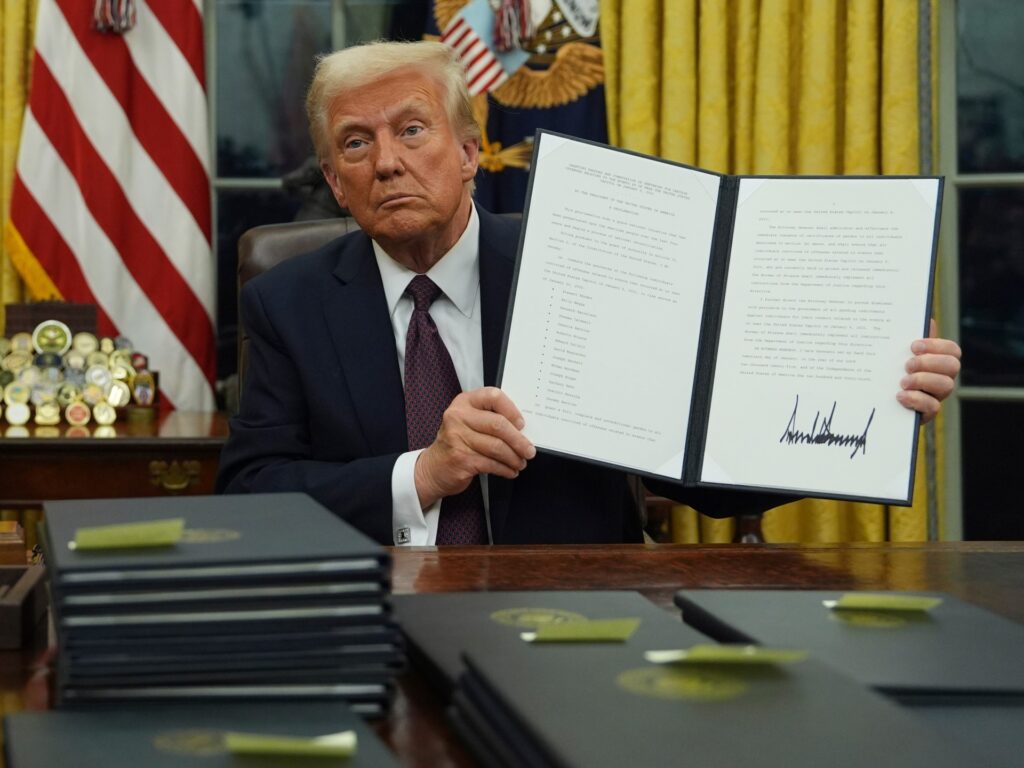
The first year of Donald Trump’s second term as the President of the United States has been characterized by an intense and rapid pace of political and legislative activity. From the moment he was inaugurated, Trump’s approach to governance emphasized swift decision-making and rapid execution of policy measures, a strategy he dubbed “Act fast.”
This aggressive style was apparent in various key domains, including immigration, economic policy, and foreign relations. Trump’s administration moved quickly to impose strict immigration restrictions, overhaul trade agreements, and implement tax reforms. The speed at which these changes were enacted was unprecedented and aimed at minimizing opposition and maximizing the impact of his agenda.
Critics argue that this rush undermines democratic processes by limiting debate and curbing checks and balances. The accelerated pace often left lawmakers, stakeholders, and even members of Trump’s own party scrambling to respond to sudden policy shifts. This heightened the polarization and intensified political conflicts within Washington.
Supporters, however, praise the speed for driving significant reforms that many believed were stalled under previous administrations. They see it as a necessary disruption to the slow and often gridlocked legislative process, demonstrating that decisive leadership can produce tangible results.
The whirlwind of activity in Trump’s second term is also reflective of his broader political strategy—keeping opponents off balance and setting the political agenda relentlessly. This approach has shaped the public discourse and influenced media coverage, with flashpoint moments dominating headlines.
Yet, this breakneck speed has had mixed consequences for American democracy. While it has energized his base and achieved rapid policy wins, it has also raised concerns about the erosion of institutional norms and the marginalization of dissenting voices.
As Trump’s administration moves forward, the balance between effective governance and democratic integrity remains a central question. The first year of his second term serves as a vivid example of how speed in politics can be both a tool for change and a challenge to democratic ideals.