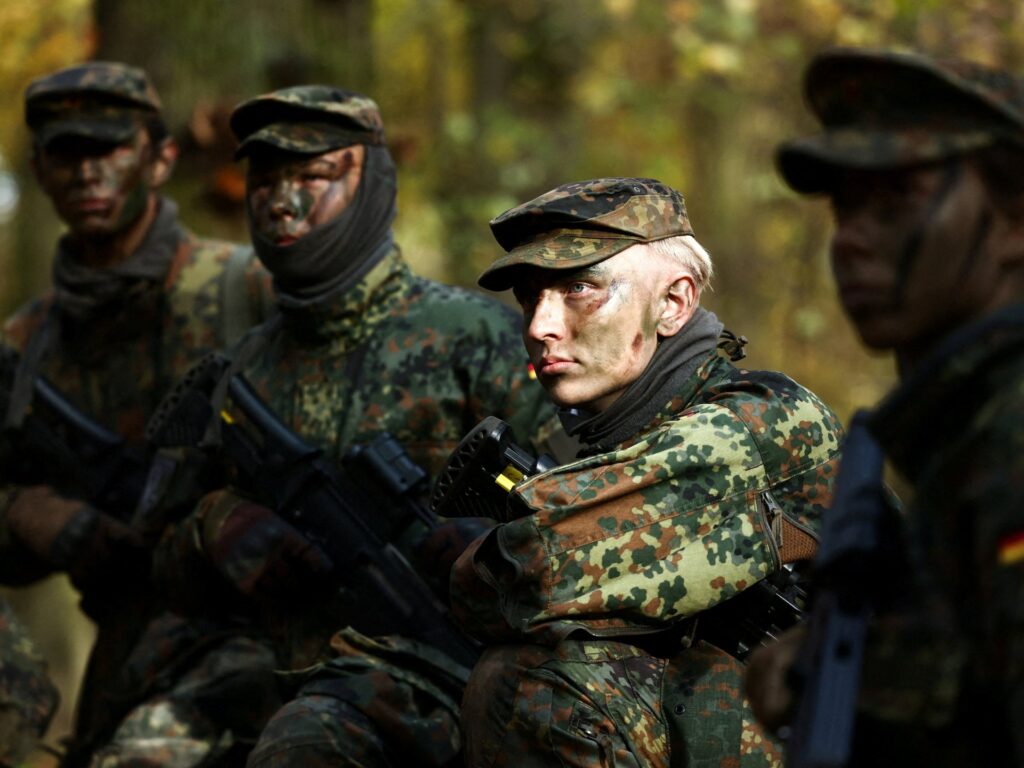
Germany’s ambition to develop ‘Europe’s strongest conventional army’ marks a significant shift in its defense policy, reflecting changing geopolitical dynamics and security concerns within Europe. Historically known for its restrained military posture following World War II, Germany is now vigorously pursuing enhanced military capabilities to assert itself as a key security player in the European Union and beyond.
This transformation is motivated by several interlinked factors. Central among them is the perceived decline of US hegemony in European security affairs. Traditionally, Europe has relied heavily on the United States for military protection, especially under the NATO umbrella. However, recent political shifts and strategic recalibrations in Washington have prompted Germany and its European partners to rethink their defense strategies, aiming for greater autonomy.
Germany’s push for a powerful military is also tied to the desire to establish a credible EU nuclear deterrent. While Germany itself does not currently possess nuclear weapons, it envisions a role within a strengthened European defense framework that includes nuclear capabilities, thus reducing dependence on American nuclear protection and increasing Europe’s strategic independence.
The context of rising tensions with Russia is another critical factor. Russia’s assertive military actions in Eastern Europe, particularly the invasion of Ukraine, have raised alarm bells across Europe, urging Germany to bolster its military readiness and capacity. A stronger German army serves as a potent signal to Russia that Europe is united and capable of defending itself against aggression.
Moreover, Germany’s military buildup is seen as a means to fill the security vacuum that might emerge due to a more isolationist US stance. This has led to a broader European conversation about collective security, military cooperation, and the need for a formidable conventional force that can respond to both external threats and emerging security challenges.
The ambition is not just quantitative but qualitative. Germany is investing in advanced technology, infrastructure, and modernization of its armed forces to create a force that is technologically sophisticated, highly trained, and capable of rapid deployment. This includes acquisitions of new tanks, fighter jets, and naval vessels, along with cyber defense capabilities.
This transition does have its critics. Some Germans remain wary of echoing past militarism or escalating military tensions in the region. The political discourse also debates the balance between defense spending and social welfare priorities. Nevertheless, the prevailing view in German leadership is that strong defense capabilities are indispensable to safeguarding peace and stability in Europe.
In summary, Germany’s pursuit of Europe’s strongest conventional army is a strategic response to shifting global power structures, increased security threats from Russia, and a desire for greater European sovereignty in defense matters. It signals a new era in European defense where Germany seeks to lead the way toward a more autonomous, capable, and unified military posture in the continent.