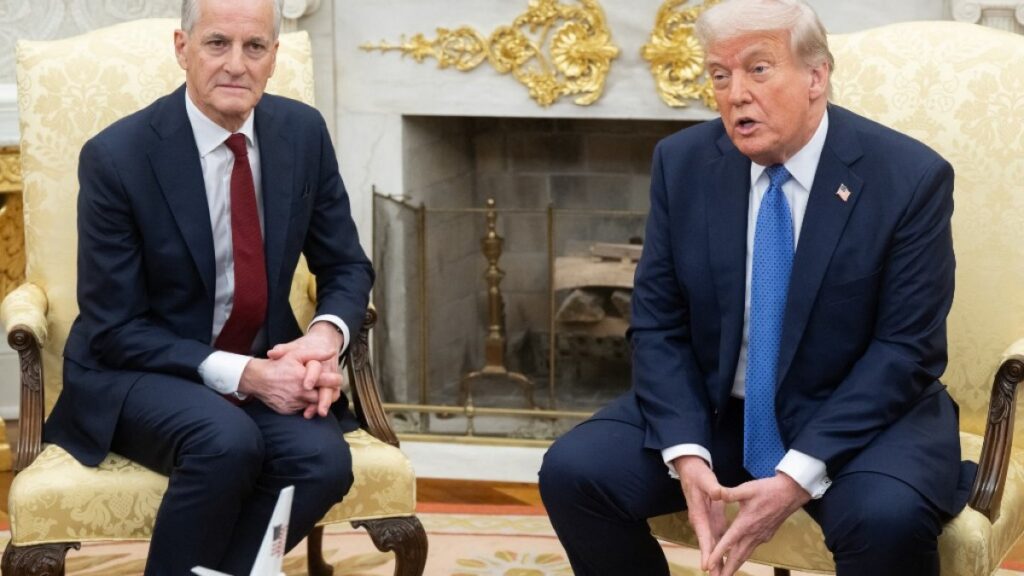
In a recent statement that has attracted significant attention, former U.S. President Donald Trump addressed the Prime Minister of Norway with a striking message following his exclusion from the Nobel Peace Prize nominations he fervently wished to receive. Trump’s remarks come amidst his well-known disappointment and bitterness over being overlooked for the prestigious award, which he believed he deserved.
The Nobel Prize, awarded annually in Oslo, Norway, recognizes outstanding contributions to global peace and humanitarian efforts. Trump, during his tenure, often touted his achievements in foreign policy and peace negotiations and appeared to anticipate a Nobel Peace Prize recognition. His unexpected omission from the award nominations has led to public expressions of frustration.
Trump’s message to the Norwegian Prime Minister carried a pointed tone, suggesting that the country should not feel obligated to prioritize peace above other considerations in its decision-making. This comment was interpreted by some as a challenge to Norway’s image as a peaceful and principled nation in international affairs.
Political analysts see Trump’s statement as part of a broader pattern of his approach to international relations, where traditional diplomatic norms are often questioned or redefined. His commentary is also viewed as an extension of his personal grievances about the Nobel Peace Prize, which he repeatedly campaigned to win, leveraging his role in historic peace talks and agreements.
The reaction from Norway’s political circles and the Nobel Committee was measured, emphasizing the autonomy and integrity of the Nobel selection process. Officials reiterated that the Peace Prize is awarded based on merit and contributions to peace, not as a response to political pressure or individual demands.
Experts note that Trump’s remarks underscore the complexities and political nuances involved in international awards like the Nobel Peace Prize. Such awards carry not only recognition but also influence and legacy, amplifying the impact of transitions in global politics.
Trump’s narrative about the Nobel Peace Prize also reflects broader themes in his political saga—highlighting the intertwining of personal ambition, global diplomacy, and media spectacle. His public airing of grievances over the Nobel snub shines a light on how former leaders manage legacies and public perceptions post-tenure.
Meanwhile, Norway continues to uphold its reputation as a steadfast advocate for peace, despite challenges and criticisms arising from high-profile incidents such as this. The Norwegian government maintains that its foreign policy decisions and international engagements continue to align with its long-standing principles of promoting peace and cooperation worldwide.
This episode adds a new chapter to the complex relationship between political leadership, international recognition, and the symbolism that awards like the Nobel Peace Prize represent in global discourse. The discussion sparked by Trump’s comments will likely continue to evolve as geopolitical dynamics and diplomatic relationships shift in the coming years.