In a surprising move, former U.S. President Donald Trump has announced new tariffs targeting Greenland, escalating economic tensions and prompting swift reactions from international partners. The announcement has sparked significant concern among European Union allies, who view this action as provocative and potentially destabilizing to transatlantic relations.
Greenland, an autonomous territory within the Kingdom of Denmark, holds strategic importance due to its geographic location and natural resources. Trump’s tariff decision is perceived by many as an effort to assert U.S. influence over the region, particularly after previously expressing interest in purchasing Greenland.
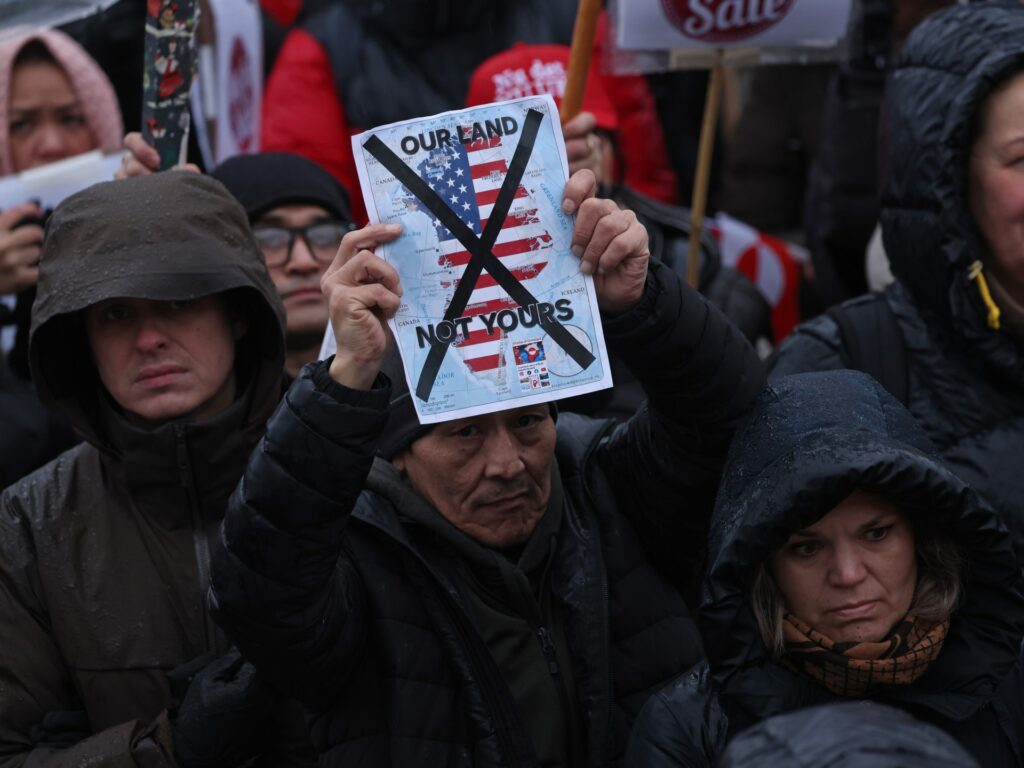
The European Union, recognizing the gravity of the situation, has convened an emergency meeting to formulate a coordinated response. EU officials have condemned the new tariffs, emphasizing the importance of dialogue and cooperation over unilateral economic measures.
Several EU member states have voiced their concerns. Denmark, Greenland’s sovereign state, has strongly criticized the tariffs, calling them unjustified and harmful to the Greenlandic economy. Other allies, including Germany and France, have expressed solidarity with Denmark and are advocating for diplomatic solutions.
The tariffs target a variety of goods exported from Greenland, affecting industries ranging from fisheries to minerals. This move is expected to disrupt Greenland’s trade relations and could have wider implications for EU trade policies.
Economic analysts suggest that these tariffs may lead to retaliation from the EU, possibly involving reciprocal tariffs or other trade barriers on American goods and services. Such a trade conflict could escalate tensions not only between the U.S. and the EU but also have global repercussions.
In response to the tariff announcement, the EU is exploring options including dispute resolution mechanisms within the World Trade Organization (WTO) framework. There is also talk of strengthening internal EU unity to present a united front against what is seen as an aggressive economic posture by the U.S.
The situation remains fluid, with international observers closely monitoring developments. Experts warn that escalating trade disputes could affect global markets, cooperation on climate change, and security alliances.
Meanwhile, Greenlandic officials have expressed concern over the potential economic impact and are seeking reassurance from Denmark and the EU about future support.
In summary, Trump’s tariff announcement on Greenland has triggered a significant diplomatic and economic response from EU allies, highlighting the delicate balance of international trade and geopolitical interests in the Arctic region.