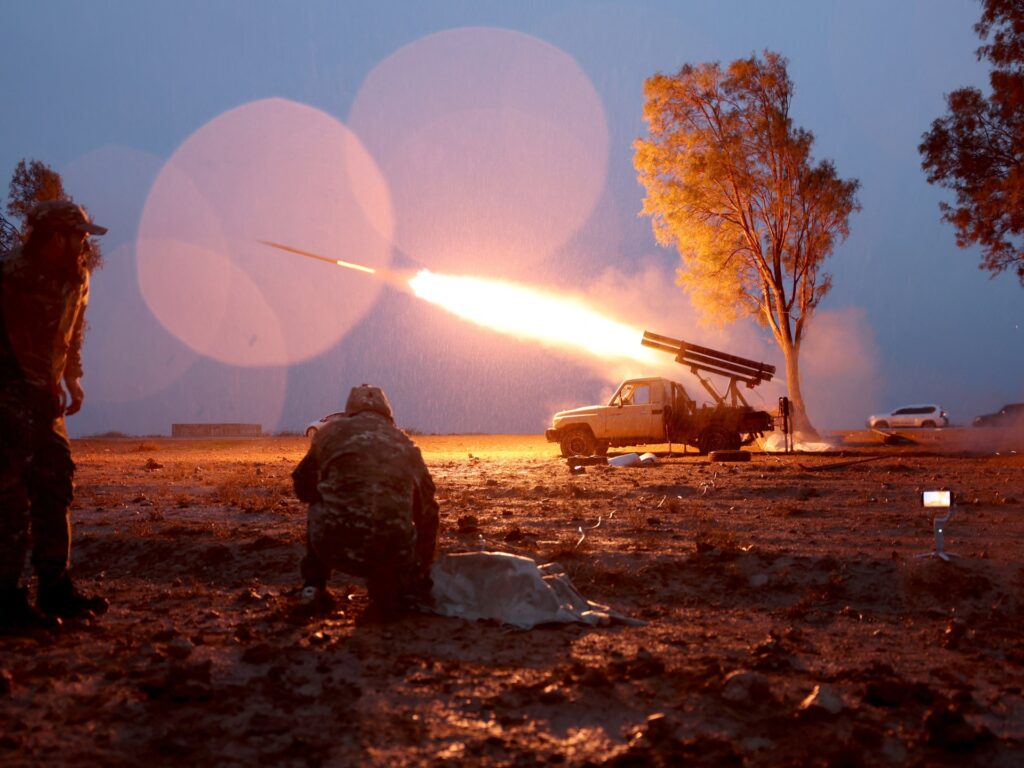
The Syrian army has made significant advances in the Raqqa governorate, capturing the strategic city of Tabqa, a key stronghold previously held by the Syrian Democratic Forces (SDF). This military progress marks a notable shift in control within the region, intensifying the ongoing conflict dynamics in northeastern Syria.
Tabqa, known for its vital dam and airport, has long been a focal point for various factions vying for dominance, given its strategic importance in controlling water and energy resources. The Syrian army’s successful takeover demonstrates its strengthening position in the governorate and its capability to reclaim critical territories from opposition forces.
In parallel with the military operations, President al-Sharaa has issued a historic decree recognizing Kurdish rights within Syria. This landmark move is seen as an effort to address the complex ethnic and political landscape of the region, aiming to foster inclusivity and perhaps stabilize Kurdish relations with the central government.
The decree acknowledges the cultural, political, and administrative rights of the Kurdish population, which has been a contentious subject amid prolonged conflict. Recognition of these rights could pave the way for more effective governance and reduce tensions that have long fueled instability.
The latest developments in Raqqa come amid broader regional and international concerns, as various powers monitor the shifting allegiances and territorial control. The Syrian government’s advance on Raqqa’s strongholds disrupts the previous balance maintained by the SDF, which has had support from international coalitions in the fight against extremist groups.
Military analysts note that the fall of Tabqa could lead to further realignments on the battlefield, potentially affecting the control over other parts of Raqqa and neighboring provinces. The strategic advantage gained by the Syrian army allows it to consolidate power and extend its influence deeper into territories once dominated by Kurdish-led forces.
These events underscore the complexities of Syria’s multi-layered conflict, where military maneuvers intertwine with political decrees to reshape the future governance and ethnic relations within the country. The recognition of Kurdish rights by President al-Sharaa may help ease ethnic divisions but also raises questions about implementation and acceptance among all stakeholders.
The international community remains watchful as the situation evolves, emphasizing the importance of dialogue and peaceful resolutions to prevent further humanitarian crises in the region. The Syrian army’s advance and the historic Kurdish decree together signal a potentially transformative phase in Syria’s protracted conflict.
In summary, the Syrian army’s capture of Tabqa represents a pivotal development in the Raqqa governorate, while President al-Sharaa’s decree recognizing Kurdish rights marks a significant political gesture. Both actions together reflect the changing landscape in Syria’s ongoing civil war and the pursuit of new pathways toward national reconciliation and stability.