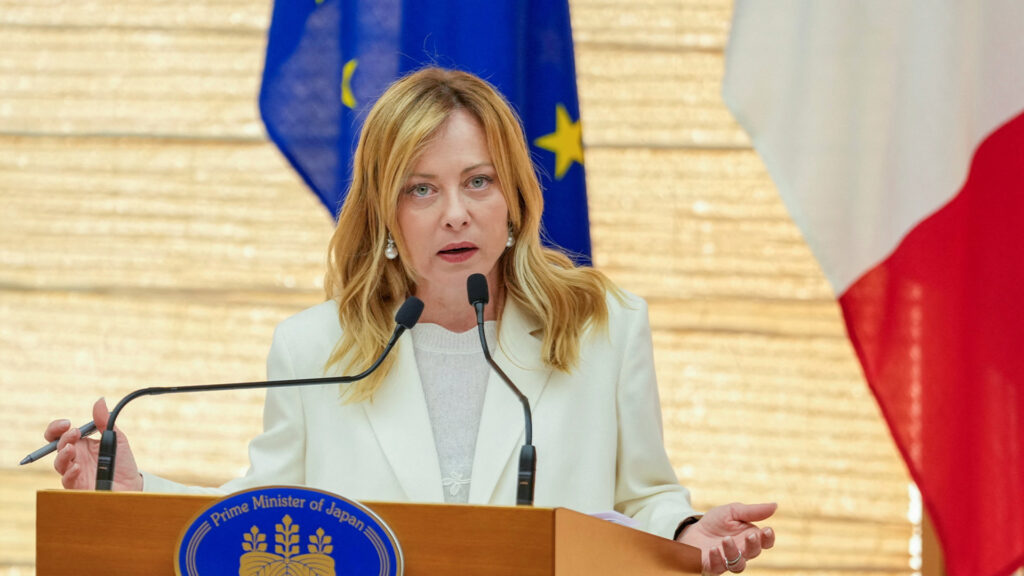
Italy’s Prime Minister Giorgia Meloni has openly criticized the United States’ decision, led by then-President Donald Trump, to impose tariffs on European goods, particularly referencing the controversial Greenland tariffs. Meloni described these tariffs as a strategic mistake that could damage transatlantic relations and disrupt economic stability between the US and Europe.
The tariffs were introduced as part of Trump’s broader trade policy, which aimed to protect American industries but raised significant concern among European leaders. Meloni pointed out that such measures undermine the spirit of cooperation and mutual respect that has historically defined the relationship between the United States and European nations.
Giorgia Meloni emphasized the importance of dialogue and negotiation rather than unilateral actions that could escalate trade tensions. She urged for a comprehensive approach that takes into account global economic realities and the interdependence of markets in today’s world.
European Union officials have also expressed apprehension about the tariffs, fearing that they could trigger a trade war, which would be detrimental not only to the economies involved but also to the global market.
The tariffs on goods, including some from Greenland—a Danish territory—were seen as symbolic of the Trump administration’s hardline stance on trade with Europe. Meloni’s protest highlights the broader pushback from European leaders against protectionist policies.
This public criticism by Italy’s head of government reflects growing frustration within Europe regarding unilateral economic measures from the US, especially amid ongoing Brexit developments and other geopolitical challenges.
Meloni’s remarks also resonate with business communities that rely heavily on transatlantic trade and fear that tariffs could disrupt supply chains and increase costs for consumers.
In response to such critiques, US officials had maintained that tariffs were a necessary tool to level the playing field and protect American jobs and industries from what they described as unfair trade practices by some nations.
However, Italy’s PM Meloni insists that cooperation, rather than confrontation, should be the path forward. She envisions stronger partnerships based on mutual benefit and long-term strategic interests.
Experts analyzing the situation suggest that while tariffs can provide short-term protection for domestic industries, their broader economic impact often includes retaliation and increased prices, which could hamper growth on both sides.
The controversy surrounding Greenland tariffs serves as a case study in the complexities of international trade and diplomacy, illustrating how economic measures can have far-reaching political consequences.
As such, the call by Meloni to reconsider such tariffs is part of a larger dialogue about the future direction of US-European relations, especially as global economies become increasingly interconnected.
In conclusion, Italy’s Prime Minister Meloni’s criticism of Trump’s tariff policy underscores the need for an open, collaborative approach in addressing trade challenges, promoting economic stability, and maintaining the longstanding alliance between Europe and the United States.