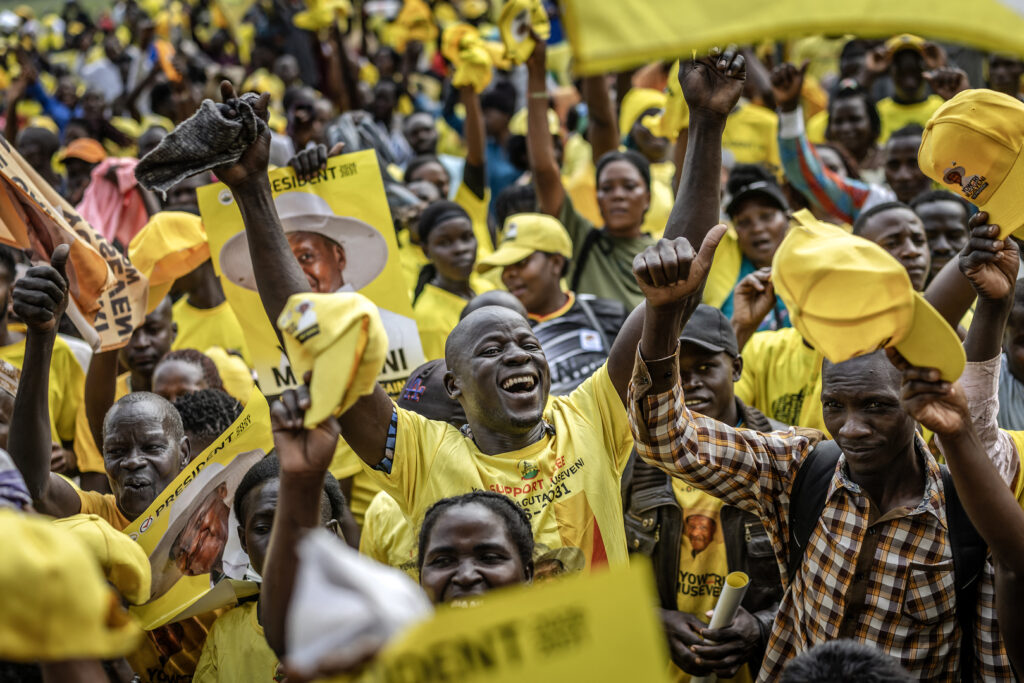
Supporters of Ugandas incumbent president and National Resistance Movement (NRM) presidential candidate Yoweri Museveni celebrate during a party gathering for the announcement of final results for the 2026 Ugandan presidential election at Lugogo Grounds in Kampala on January 17, 2026. Uganda's President Yoweri Museveni, 81, won a seventh term in office on on January 17, 2026 with 71.65 percent of the vote, the country's Electoral Commission said. (Photo by Luis TATO / AFP)
In a significant development in Ugandan politics, President Yoweri Museveni has been re-elected for a seventh term according to official results released recently. Museveni, who has been a dominant figure in Uganda’s political landscape for over three decades, managed to secure another term in office, further extending his long-standing rule.
The election, however, has not been without controversy. Museveni’s main opponent has publicly disputed the election results, labeling them as ‘fake’ and calling into question the integrity of the electoral process. This challenge highlights ongoing concerns about electoral transparency and fairness in Uganda.
President Museveni’s victory sustains his administration’s leadership amid a period marked by both development agendas and political tension. Museveni, initially coming to power in 1986, has maintained a strong grip on power through several elections, with varying degrees of opposition strength.
Critics of Museveni point to issues of political repression, restrictions on media freedom, and the stifling of dissent as major challenges during his tenure. The opposition’s objection to the recent election results is consistent with previous claims of electoral malpractice and government interference.
Supporters argue that Museveni has brought stability and growth to Uganda, crediting him with improvements in infrastructure, health care, and education. Nonetheless, his extended rule raises questions about democratic processes in Uganda and the ability of the country to foster a vibrant multiparty democracy.
The international community has urged for calm and called for all parties to engage in dialogue to ensure a peaceful transition and uphold democratic principles. Observers stress the importance of credible elections in maintaining political stability and public trust.
Moving forward, Uganda faces the challenge of balancing governance, development, and inclusivity while addressing the concerns raised by the opposition and citizens alike. The seventh term of President Museveni will be closely watched domestically and internationally as the country navigates its complex political dynamics.