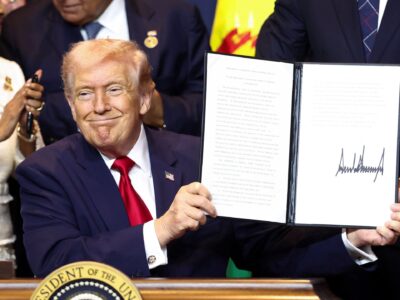
In a bold new initiative, former President Donald Trump has unveiled plans for a so-called “Board of Peace,” initially launched as part of the recent Gaza ceasefire efforts. However, sources close to the project reveal that Trump envisions this board as much more than a temporary solution to the ongoing conflict in Gaza.
The “Board of Peace” was introduced amidst escalating tensions in the Gaza Strip, where a precarious ceasefire had been negotiated. Trump’s team posits that this initiative could serve as a framework for facilitating dialogue and offering mediation in conflict zones worldwide.
According to statements released by Trump’s office, the board is designed to adopt “a bold new approach to resolving global conflicts,” potentially setting a precedent for international peacekeeping and diplomatic engagement.
The composition of the board includes a diverse set of advisors, diplomats, and political figures from various regions, reflecting an intention to bring together a broad spectrum of perspectives and expertise.
While traditionally conflict resolution efforts have been under the purview of established international organizations such as the United Nations, the “Board of Peace” seeks to operate as an independent body capable of swift and pragmatic interventions.
Critics remain cautious, questioning the board’s potential effectiveness and the motivations behind its creation, particularly given Trump’s past controversial foreign policy stances.
Nevertheless, supporters argue that this initiative could inject fresh energy into stalled peace negotiations and offer a more flexible and innovative alternative to standard diplomatic channels.
The eruption of the Gaza conflict had drawn widespread international concern, and the presence of a specialized body focused on conflict resolution was widely seen as a necessary step for crisis de-escalation.
Trump’s vision sees the “Board of Peace” extending its reach beyond Gaza, targeting entrenched conflicts in various regions across the globe, including parts of the Middle East, Africa, and Eastern Europe.
Experts highlight that for the board to succeed, it will need not only political support but also credibility and cooperation from all involved parties.
Initial meetings have reportedly outlined goals ranging from promoting ceasefire agreements to facilitating political dialogue and humanitarian assistance.
The evolution of this initiative into a global conflict resolution entity will require careful diplomacy and considerable resources.
Future developments will be closely watched by international observers and governments interested in peace-building efforts.
As tensions rise in multiple regions worldwide, there is a keen appetite for innovative mechanisms that can bypass bureaucratic inertia and deliver tangible improvements in conflict situations.
Trump’s “Board of Peace” could represent such a mechanism if it can overcome skepticism and operational challenges.
The world community awaits further clarification on the board’s mandate, funding sources, and the extent of its authority.
In summary, while the “Board of Peace” began as a part of the Gaza ceasefire framework, its aspirations clearly aim at creating a broader, more impactful platform for global peace initiatives, signaling a new chapter in international conflict resolution strategies.