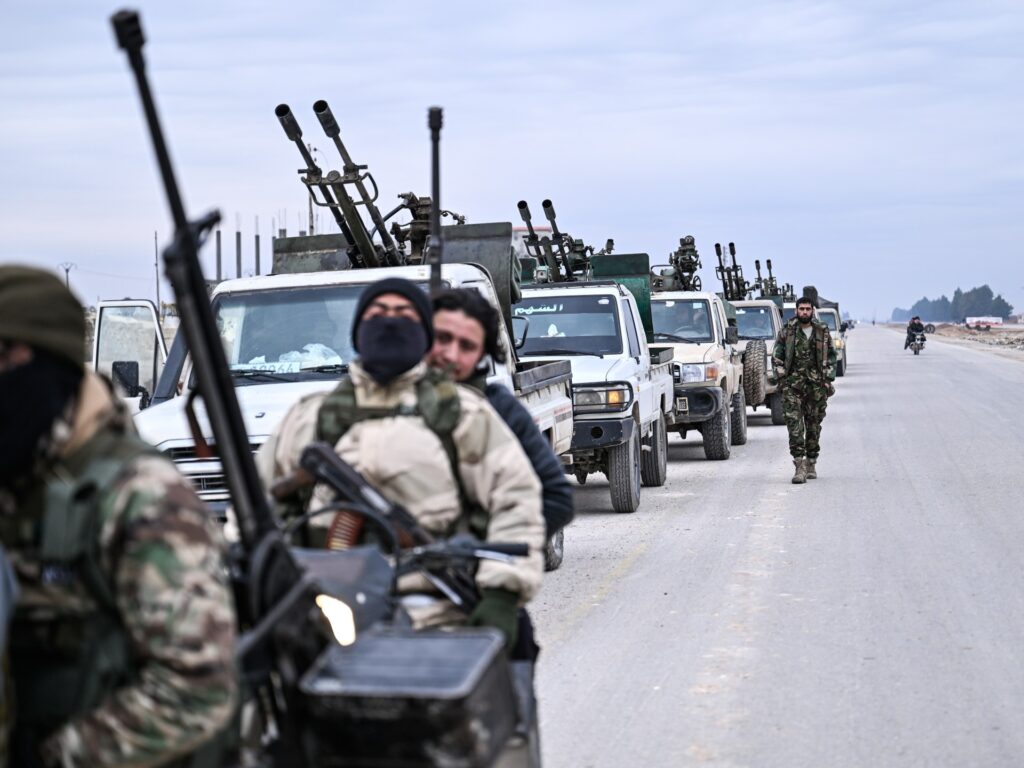
In recent developments in Syria’s ongoing conflict, the Syrian military has achieved a significant victory by capturing the strategic town of Tabqah from the Kurdish-led Syrian Democratic Forces (SDF). This marks a critical point in the whirlwind offensive launched by government troops, as they continue to push forward in the region increasingly contested among various factions.
Tabqah, located west of Raqqa along the Euphrates River, has long been a key strategic location due to its proximity to Raqqa, a city that had formerly served as the de facto capital of the Islamic State extremist group. Control over Tabqah provides the Syrian government with a crucial foothold towards launching further military actions to regain Raqqa and extend its influence in northern Syria.
Meanwhile, the Kurdish-led SDF, which had defended Tabqah, is now bracing for an imminent assault on Raqqa. The SDF is preparing to mount a robust defense against further advances from the Syrian military and other hostile forces, aiming to retain its hold over Raqqa and surrounding areas. This preparation involves bolstering defenses, reinforcing troops, and securing supply lines to withstand the anticipated offensive.
The conflict in Syria remains highly complex, involving multiple actors including Syrian government forces, Kurdish militias, rebel factions, and international coalitions. The gain of Tabqah by government forces underscores the shifting dynamics and continued volatility in the region, highlighting the strategic maneuvers aimed at controlling key territories.
The capture of Tabqah also has implications for the local civilian population, many of whom have been displaced by fighting and are caught amid ongoing hostilities. Humanitarian concerns remain paramount as the conflict intensifies near populated areas.
As government troops advance, international observers and humanitarian organizations are closely monitoring the situation for any escalations that could further destabilize the region or lead to intensified civilian suffering.
In conclusion, the Syrian military’s capture of Tabqah represents a major tactical advancement in its campaign to regain control over northern Syrian territory. The Kurdish-led SDF’s preparations for a counter-assault or defensive battle in Raqqa signal that significant fighting lies ahead. The broader struggle for control in Syria continues to shape the intricate and volatile dynamics on the ground, with all sides heavily invested in securing strategic locations.
This evolving situation will be closely watched in the coming days to assess its impact on the broader conflict and efforts toward stability in Syria.