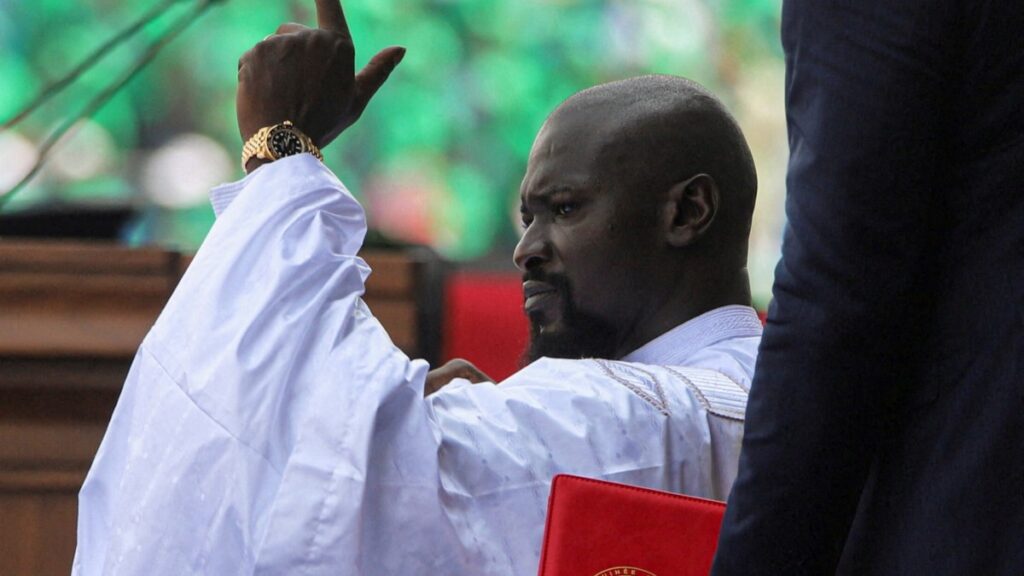
In a significant development for Guinea’s political landscape, military leader Mamady Doumbouya has been sworn in as the country’s president. This milestone marks a crucial step in Guinea’s transition following a period of military rule. Doumbouya emerged victorious in the nation’s first election since he led a military coup in 2021, a takeover that had altered Guinea’s governance and drawn international attention.
The election was a pivotal event for Guinea, aiming to restore constitutional order and civilian leadership after a turbulent period marked by political instability and military control. Doumbouya, who previously commanded the special forces unit, assumed power in a coup that ousted former President Alpha Condé. His rise to the presidency now symbolizes a move towards legitimizing his leadership through democratic means.
During the swearing-in ceremony, Doumbouya pledged to work towards national unity and development. He emphasized the importance of reconciliation and economic progress for a country rich in natural resources but challenged by socio-political divisions and economic difficulties.
The international community has been closely monitoring developments in Guinea, as the 2021 military takeover raised concerns about stability in the West African region. The successful conduct of elections and the peaceful transition to a civilian president were seen as positive signs of progress.
Doumbouya’s presidency is expected to focus on strengthening democratic institutions and addressing urgent issues such as poverty, education, healthcare, and infrastructure. Observers hope that his administration will foster transparency and inclusivity to heal wounds left by the coup and pave the way for sustainable growth.
The journey from military rule to elected governance in Guinea reflects broader trends in the region, where countries have grappled with similar challenges of democratic consolidation amid internal conflicts and power struggles. Doumbouya’s ability to maintain stability while implementing reforms will be crucial for Guinea’s future.
As Guinea embarks on this new chapter, citizens and international partners alike will watch closely to see how the new president manages the delicate balance between his military background and the demands of civilian political leadership. The success of this transition could set a precedent for other nations facing comparable situations.
In conclusion, Mamady Doumbouya’s inauguration as Guinea’s president is a moment of both reflection and anticipation. It represents a hopeful turn from a turbulent past towards a future that aspires to democracy, stability, and development, promising a more peaceful and prosperous path for the West African nation.