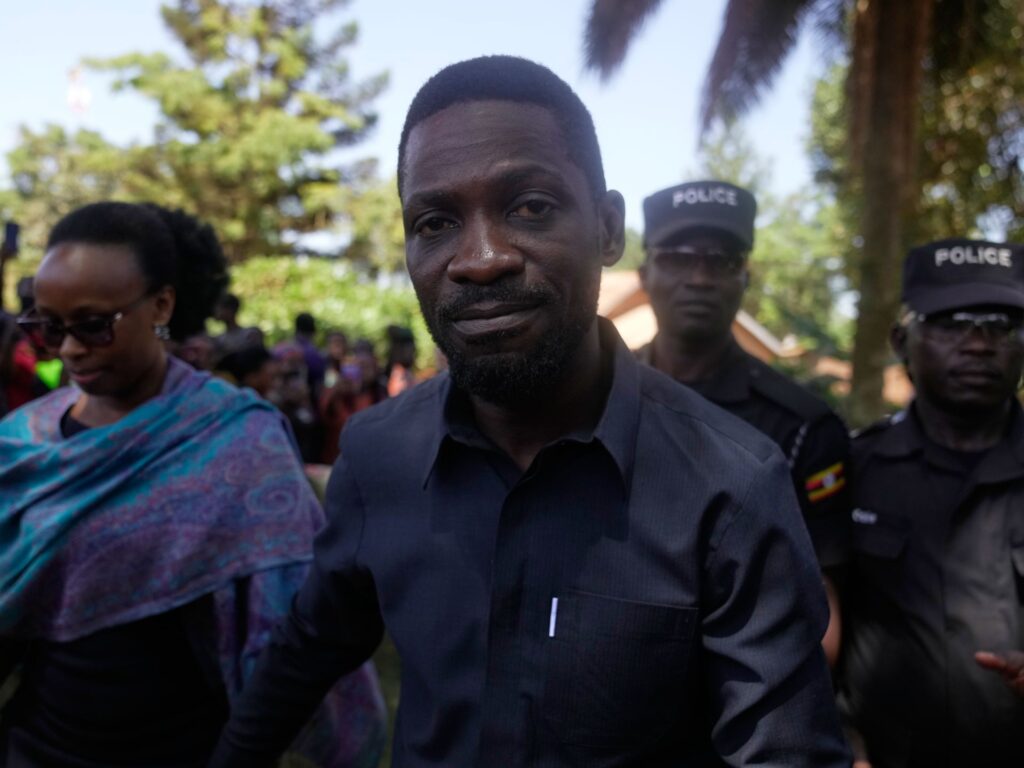
In a dramatic escalation of political tensions in Uganda, Bobi Wine, the prominent opposition presidential candidate and leader of the National Unity Platform (NUP), has been seized from his home by military forces. According to his party, Bobi Wine was taken away in an army helicopter to an undisclosed location, deepening concerns over the state of democracy and human rights in the country.
This development comes just one day after a tense and fiercely contested election, which has seen allegations of irregularities and suppression of opposition voices. Bobi Wine, whose real name is Robert Kyagulanyi, has been a vocal critic of the incumbent government and President Yoweri Museveni, who has been in power for over three decades.
The National Unity Platform quickly condemned the seizure, stating that this act represents a blatant attempt to intimidate and silence opposition ahead of the final phases of the electoral process. They emphasized that Bobi Wine’s removal is a serious violation of constitutional rights and democratic principles, calling on both local and international communities to intervene.
The situation has sparked immediate outrage among supporters of Bobi Wine, human rights advocates, and international observers who fear that this could further destabilize the already volatile political environment in Uganda. There have been calls for the government to provide transparency about Bobi Wine’s whereabouts and to ensure his safety.
In the days leading up to his abduction, Bobi Wine had been actively campaigning across the country, urging Ugandans to seek change through peaceful means. His campaign focused on addressing issues such as corruption, economic challenges, and the need for political reform.
The use of military helicopters and personnel in the detention of a political figure marks a worrying precedent in Uganda’s electoral history. Such actions underscore the heightened militarization and suppression tactics employed by the government against opposition figures.
International human rights organizations have urged the Ugandan government to release Bobi Wine immediately and engage in meaningful dialogue with opposition groups. They have also called on the international community to monitor the situation closely and support efforts to restore democratic processes.
This event has cast a shadow over the electoral process, raising questions about the fairness and freedom of the election. Observers note that the abduction of an opposition candidate could undermine confidence in the electoral commission and the overall legitimacy of the election results.
Bobi Wine’s detention also risks escalating protests and civil unrest in Uganda, where political frustrations have been mounting. Already, there have been reports of clashes between security forces and protesters in various parts of the country.
The international community is watching closely, with diplomats from several countries expressing concern and calling for restraint. There are hopes that diplomatic pressure might lead to Bobi Wine’s release and a more peaceful resolution to the political crisis.
As the situation develops, the focus remains on safeguarding democracy, human rights, and political freedoms in Uganda. The fate of Bobi Wine will likely play a critical role in shaping the country’s political future and its relations with the international community.
In summary, Bobi Wine’s seizure by military forces and removal to an unknown location represents a significant and alarming episode in Uganda’s ongoing struggle for democratic governance. The National Unity Platform and its supporters demand his immediate release and a return to peaceful, transparent electoral processes, while the world watches with heightened concern.