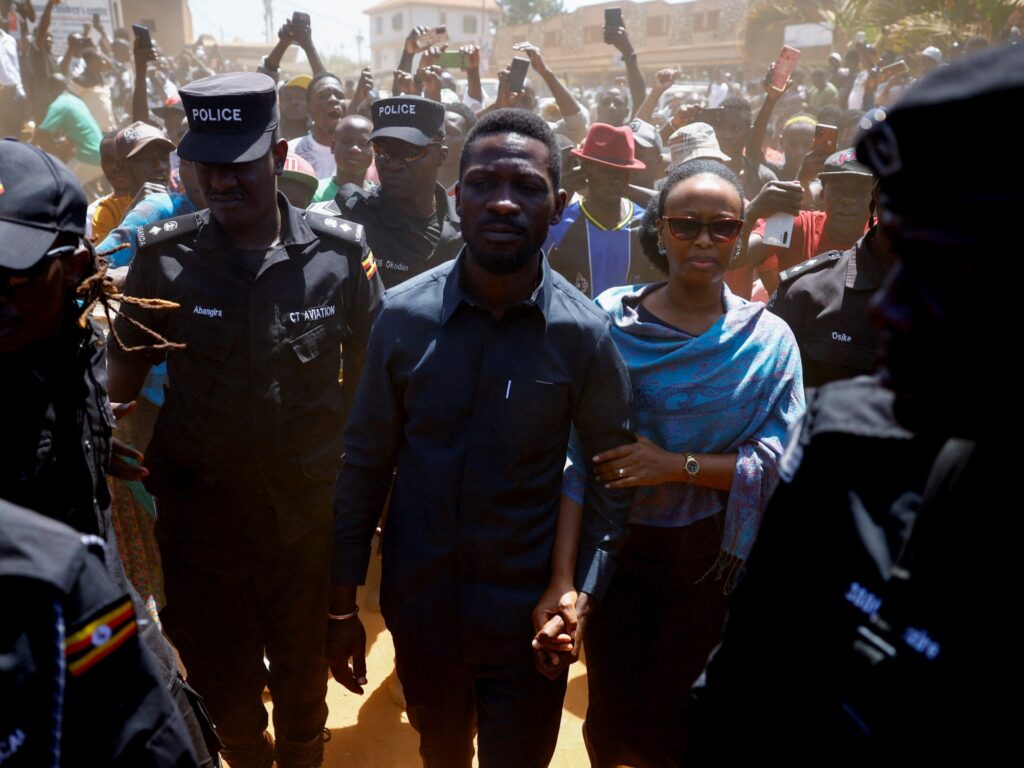
In a dramatic turn of events following the recent presidential election in Uganda, opposition leader Bobi Wine has claimed to have escaped a police and army raid on his residence. This incident occurred just hours before incumbent President Yoweri Museveni, aged 81, was announced as the winner of the contested vote. The raid reportedly involved heavy security forces attempting to detain Bobi Wine, who has been a prominent critic of Museveni’s long rule and a symbol of youthful opposition in the country.
Bobi Wine, whose real name is Robert Kyagulanyi, has been vocal about alleged electoral fraud and called for international scrutiny of the election process. The violence and tensions leading up to and following the election have raised concerns among human rights organizations about the state of democracy in Uganda.
Opposition supporters have expressed outrage over the raid and the election results, which many see as unfair and undemocratic. The government maintains that the election was free and fair, while critics argue that the political environment was heavily skewed in favor of Museveni, who has been in power since 1986.
The raid on Bobi Wine’s home is one among several instances where security forces have clamped down on opposition figures and protests across the country. Witnesses reported a heavy military presence and the use of tear gas and force during the raid. Despite the crackdown, Bobi Wine managed to evade capture. His supporters claim this demonstrates the resilience and determination of the opposition movement.
International reaction has been mixed but largely critical of the violence and alleged irregularities surrounding the election. Many Western governments and advocacy groups have called for restraint, respect for democratic processes, and transparency in tallying votes. The African Union and regional bodies have also been urged to monitor the situation closely.
The disputed election and subsequent unrest have highlighted deeper political and social divisions in Uganda. For decades, Museveni’s regime has been criticized for restricting political space, limiting press freedom, and suppressing dissent. Bobi Wine emerged as a fresh face for change, particularly appealing to younger Ugandans disillusioned by economic challenges and government corruption.
The immediate aftermath of the election sees Uganda at a crossroads, with heightened tensions and uncertainty about the country’s political future. The opposition continues to demand a recount and calls for fair investigations into electoral conduct. Meanwhile, President Museveni has vowed to maintain order and defend the legitimacy of his administration.
Analysts suggest that Uganda’s political stability depends on resolving these disputes through dialogue and inclusive governance. The international community’s role in encouraging peaceful conflict resolution and supporting democratic norms remains crucial. This episode underscores the challenges faced by emerging democracies in Africa as they navigate electoral competition and governance.
As Uganda grapples with these challenges, the world watches to see whether peace and democratic principles will prevail or if the country will experience further polarization and unrest. Bobi Wine’s escape from the raid symbolizes not only his personal survival but also the ongoing struggle for political change in Uganda.