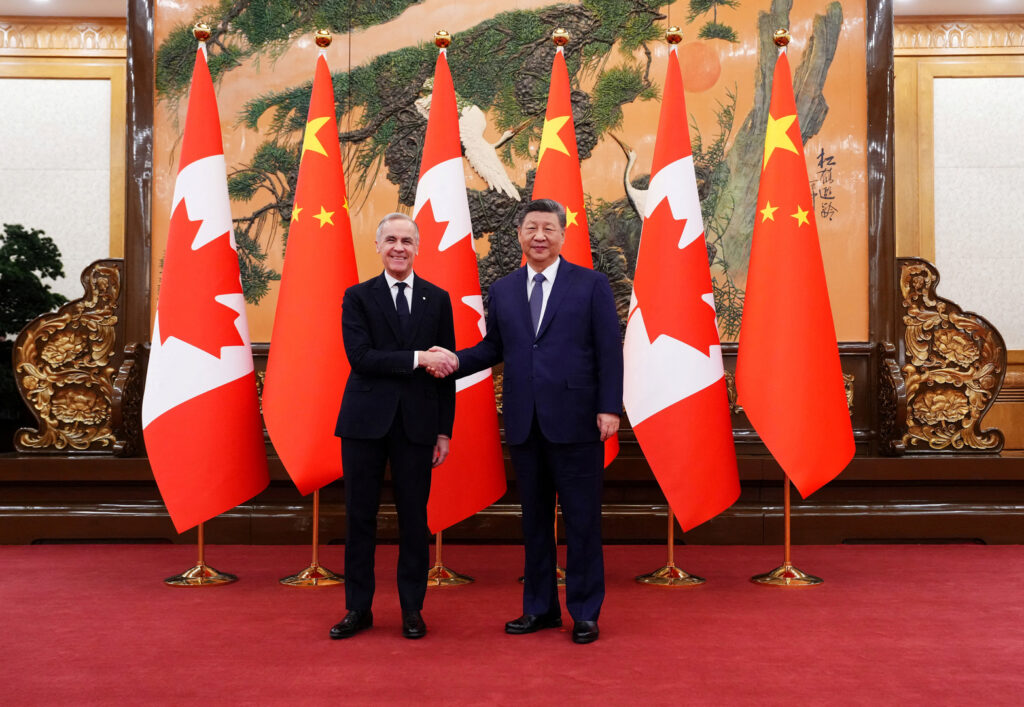
Canadian Prime Minister Mark Carney meets with President of China Xi Jinping at the Great Hall of the People in Beijing, China on Friday, Jan. 16, 2026. Sean Kilpatrick/Pool via REUTERS
In a significant departure from the United States’ stance, Canada has announced it will cut its 100% tariff on Chinese electric vehicles (EVs) as part of a new trade arrangement. This strategic move is aimed at fostering better trade relations with China and comes in exchange for lower Chinese duties on Canadian farm exports.
For years, Canada has maintained a strict tariff policy on Chinese electric vehicles, mirroring somewhat the US approach aimed at protecting domestic industries and responding to concerns over trade imbalances and security. However, the recent agreement marks a shift towards a more collaborative trade strategy with China, reflecting Canada’s prioritization of its agricultural sector and export potential.
Under the new agreement, Canada will significantly reduce, or potentially eliminate, the hefty 100% tariff it imposed on Chinese electric vehicles. This reduction is expected to make Chinese EVs more affordable and accessible in the Canadian market, potentially stimulating consumer uptake and increasing competition in the automotive sector.
In return, the Chinese government has agreed to lower tariffs on Canadian farm products. Agriculture represents a vital segment of Canada’s economy, and access to the massive Chinese market is crucial for Canadian farmers. Reduced Chinese duties on products such as grains, meat, and dairy will likely boost Canadian agricultural exports, providing economic relief and growth opportunities for farmers and related industries.
Trade analysts suggest that this deal could pave the way for a more nuanced and flexible trade relationship between Canada and China. By addressing tariffs on both electric vehicles and farm exports, both countries seek to balance their economic interests and reduce trade tensions.
The move also highlights Canada’s desire to assert its trade policies independently, even when they diverge from major allies like the United States. While the US has maintained higher tariffs on Chinese EVs to counter competition and protect its own manufacturing industry, Canada’s decision underscores its focus on maximizing benefits for its national economy.
Environmental advocates have welcomed the tariff cut on EVs, viewing it as a positive step towards cleaner transportation options and greater adoption of electric vehicles in Canada. Lower tariffs may encourage more Canadians to choose EVs, thereby contributing to the country’s climate goals and reducing reliance on fossil fuels.
Farmers and exporters in Canada have expressed optimism about the enhanced access to Chinese markets. The reduction in Chinese tariffs can translate to increased competitiveness and profitability for Canadian agricultural products, supporting rural economies and employment.
The Canadian government has emphasized that this agreement does not negate its commitments to fair trade and addressing issues such as intellectual property rights and market access challenges in China. It remains part of a broader strategy to engage China constructively while protecting Canadian interests.
In conclusion, Canada’s bold move to cut tariffs on Chinese electric vehicles in exchange for lower Chinese duties on Canadian farm exports represents a pragmatic approach to trade policy. It balances the interests of multiple sectors, promotes environmental goals, and asserts Canada’s independent economic diplomacy on the global stage. This development will be closely watched by trade partners and markets worldwide as it may signal a shift in North American trade dynamics and international relations with China.