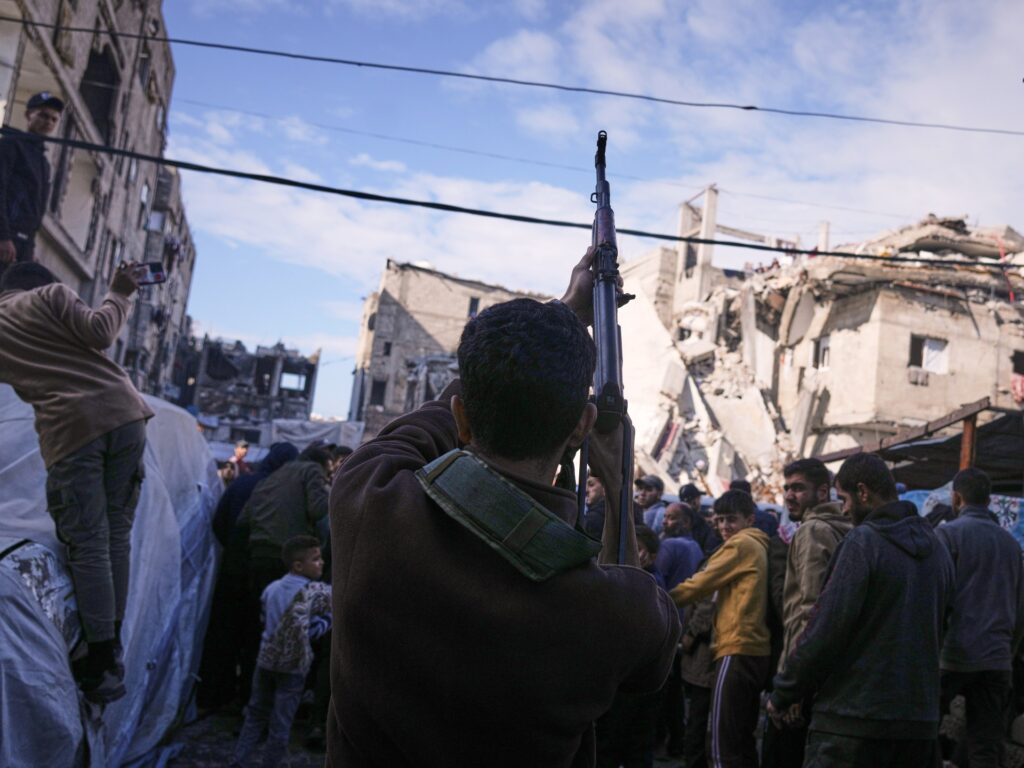
Former US President Donald Trump has stepped forward with a renewed and emphatic demand for the demilitarisation of Hamas. His statement underscores the escalating pressure being applied by the United States to compel Hamas, the Palestinian militant group controlling Gaza, to disarm amidst continuing conflict dynamics and recent ceasefire developments.
Trump’s declaration came at a time when the peace process appears fragile yet ongoing. The US is actively engaging in a phased approach to the ceasefire agreement, which involves a critical second phase aimed at solidifying peace efforts and reducing hostilities. This phase, however, is unfolding amid complexities, including Israel’s hesitance or delay in executing key parts of the peace deal such as military withdrawal and the delivery of humanitarian aid.
The former president’s rhetoric was straightforward yet forceful — indicating that the path to peace and stability may be ‘‘easy or hard’’ dependent on Hamas’s willingness to relinquish its armed status. This binary framing places the responsibility squarely on Hamas, highlighting the group’s significant role in either facilitating or obstructing lasting peace in the region.
The US administration’s heightened pressure strategy includes diplomatic efforts, potential leverage in international forums, and support for Israel. It seeks to weaken Hamas’s military capabilities and curb threats posed by ongoing hostilities, which have had devastating impacts on civilian populations in Gaza and Israel alike.
Critics of Hamas argue that its continued militarization perpetuates cycles of violence and stalls peace processes. Conversely, supporters argue that the group sees itself as a defender against Israeli aggression, complicating disarmament dialogues.
Meanwhile, the uneven progress on Israel’s commitment to the ceasefire terms—including troop withdrawals and humanitarian relief—adds another layer of urgency and complexity. International observers and humanitarian organizations stress that without Israel’s adherence to these provisions, the ceasefire and any chance for long-term peace remain vulnerable.
The current situation presents a complex geopolitical landscape where diplomacy, military posturing, and humanitarian concerns converge. Stakeholders including the US, Israel, Hamas, and various international actors are deeply intertwined in efforts to prevent further escalation.
As the phase 2 ceasefire unfolds, the international community continues watching closely. The success or failure of this stage depends heavily on collective action and particularly on Hamas’s response to calls for demilitarisation. Trump’s outspoken demand serves as a stark reminder of the high stakes and the pressing need for decisive measures to achieve a sustainable resolution to one of the world’s most protracted conflicts.
In summary, the ongoing efforts to implement and reinforce a ceasefire between Israel and Hamas are met with new challenges and demands. The US, through Trump’s vocal stance and administrative backing, pushes for disarmament as a critical pathway to peace. How Hamas responds will likely dictate the trajectory of future negotiations and the stability of the region.
This evolving scenario underscores the intricate balance between diplomacy, security, and humanitarian considerations that define the Israel-Hamas conflict and the broader Middle East peace process.