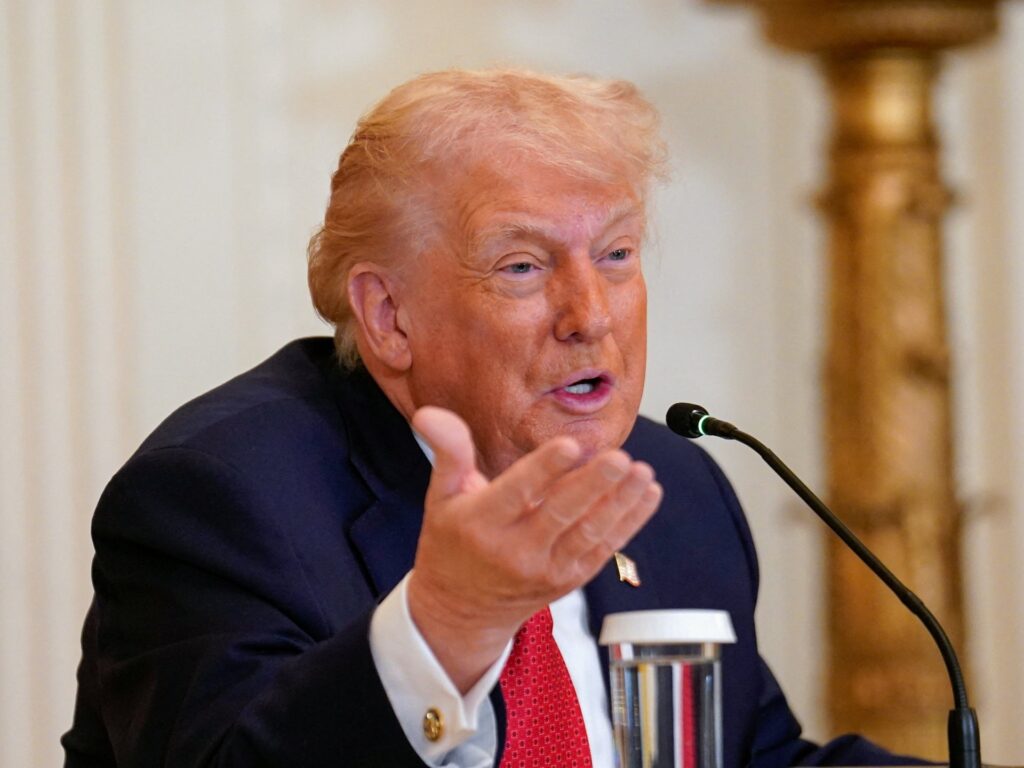
In a bold and controversial move, former President Donald Trump has indicated that he may impose tariffs on countries that do not support his plan to acquire Greenland. This plan, which has garnered international attention and sparked diplomatic discussions, involves the United States purchasing the large Arctic island of Greenland from Denmark. Trump’s announcement suggests a willingness to use economic leverage to advance what he perceives as a strategic national interest.
The Greenland plan itself has elicited mixed reactions globally. Greenland, an autonomous territory within the Kingdom of Denmark, holds significant geopolitical and economic value due to its location and resources. Trump’s administration has highlighted the island’s potential for military strategic uses and access to natural resources like rare earth minerals.
However, the prospect of the United States buying Greenland has been met with skepticism and resistance from Denmark, who has dismissed the idea as absurd. The international community is also divided, with some countries viewing the move as a sign of aggressive U.S. expansionism in the Arctic region, while others remain cautiously observant.
Trump’s suggestion to apply tariffs on unsupportive nations raises the stakes, signaling an aggressive approach to diplomacy that leverages economic pressure. Tariffs, essentially taxes on imported goods, are a potent tool in trade policy and diplomacy, often used to influence foreign nations’ decisions or actions.
Critics argue that such a tariff strategy could exacerbate global tensions and disrupt international trade relations. They caution that punishing countries for their stance on the Greenland plan may isolate the United States diplomatically and economically.
Supporters of Trump’s stance contend that asserting economic pressures is a necessary measure to protect U.S. interests and national security, especially in a region as strategically pivotal as the Arctic.
This development follows other significant tariff-driven trade actions taken during Trump’s presidency, aimed at reshaping economic relationships and asserting U.S. dominance in global affairs.
Analysts suggest that the move to impose tariffs could escalate into broader trade conflicts unless diplomatic efforts are intensified to find mutually agreeable solutions.
The Greenland acquisition plan, coupled with potential tariffs, illustrates a broader pattern of Trump’s foreign policy—direct, aggressive, and centered on American interests first. It also underscores the complex interplay between geopolitical ambitions and economic tools in modern international relations.
As this story unfolds, the world watches closely. The outcome may influence Arctic geopolitics, economic alliances, and the future of U.S. foreign policy strategies. International stakeholders are keenly aware that decisions made around Greenland and related economic actions like tariffs could redefine regional power dynamics for years to come.
In summary, Trump’s consideration of tariffs on countries opposing the Greenland plan marks a significant escalation in the plan’s implementation phase. It signals readiness to use economic means to overcome diplomatic barriers, reinforcing the administration’s intent to secure Greenland as a strategic asset.
This approach exemplifies the increasingly complex nature of global diplomacy, where trade policies and territorial ambitions intersect, creating new challenges and opportunities in international relations.