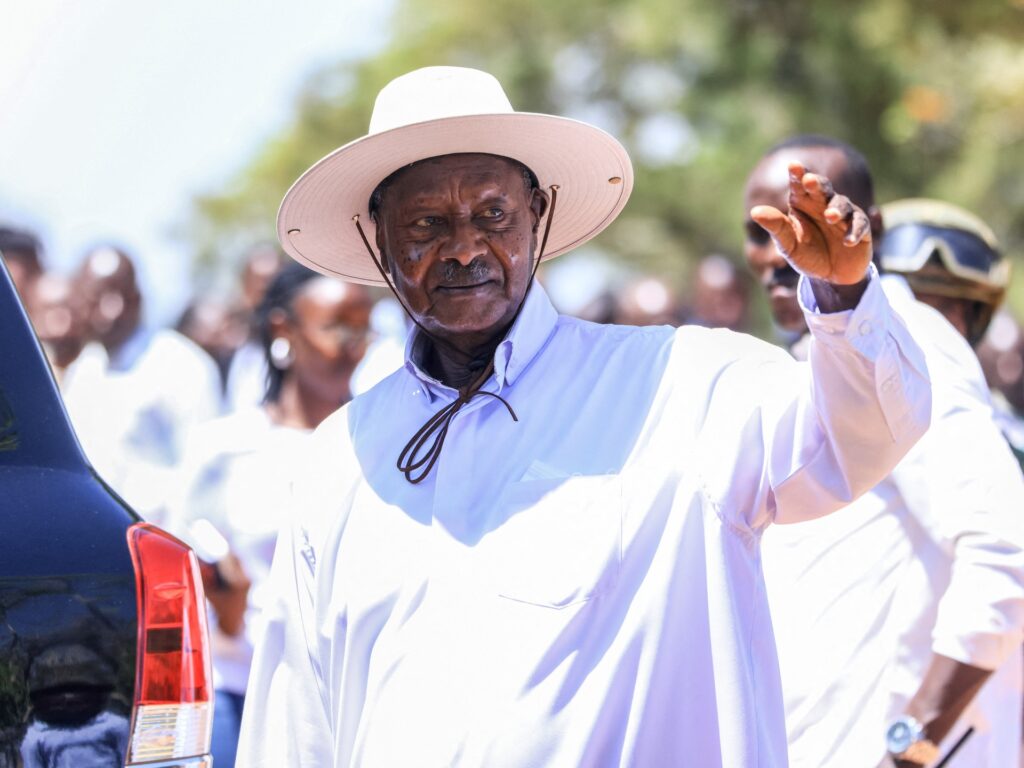
In the recent Uganda presidential election, incumbent President Yoweri Museveni has taken a commanding lead in the early vote count, capturing approximately 76 percent of the votes. Museveni, who has been in power since 1986, is seeking another term amid a highly contested and tense political environment.
The early results indicate a significant margin over his main opponent, Robert Kyagulanyi Ssentamu, popularly known as Bobi Wine, a former pop star turned politician who has galvanized the youth vote with promises of change and reform. Despite Wine’s popularity, the current data suggest President Museveni remains the dominant political figure in Uganda.
The election period has been marred by reports of violence and unrest in various parts of the country. Supporters of Bobi Wine have alleged intimidation and suppression by government forces. There have also been accounts of clashes between supporters of both candidates, contributing to an atmosphere of fear and uncertainty.
Adding to the tension, Bobi Wine has reportedly been placed under house arrest. This move has drawn criticism from international observers and human rights organizations, who see it as an attempt to stifle political dissent and undermine the democratic process.
Election officials are continuing to count votes from across Uganda, and the final results are expected to be announced in the coming days. Observers are closely monitoring the situation to ensure a transparent and credible electoral process.
President Museveni’s long tenure and strong electoral performance showcase his deep-rooted influence in Ugandan politics. However, the opposition’s determination and the vocal demands for change highlight ongoing challenges to the status quo.
As the nation awaits the official outcome, calls for peace, dialogue, and respect for democratic norms have been urged by both local leaders and international stakeholders. The unfolding events in Uganda underscore the complexities of political competition in a country marked by a mix of hope for progress and concerns over governance and human rights.
The election serves as a crucial juncture for Uganda’s future trajectory, with implications for stability, development, and the strengthening of democratic institutions in the region.