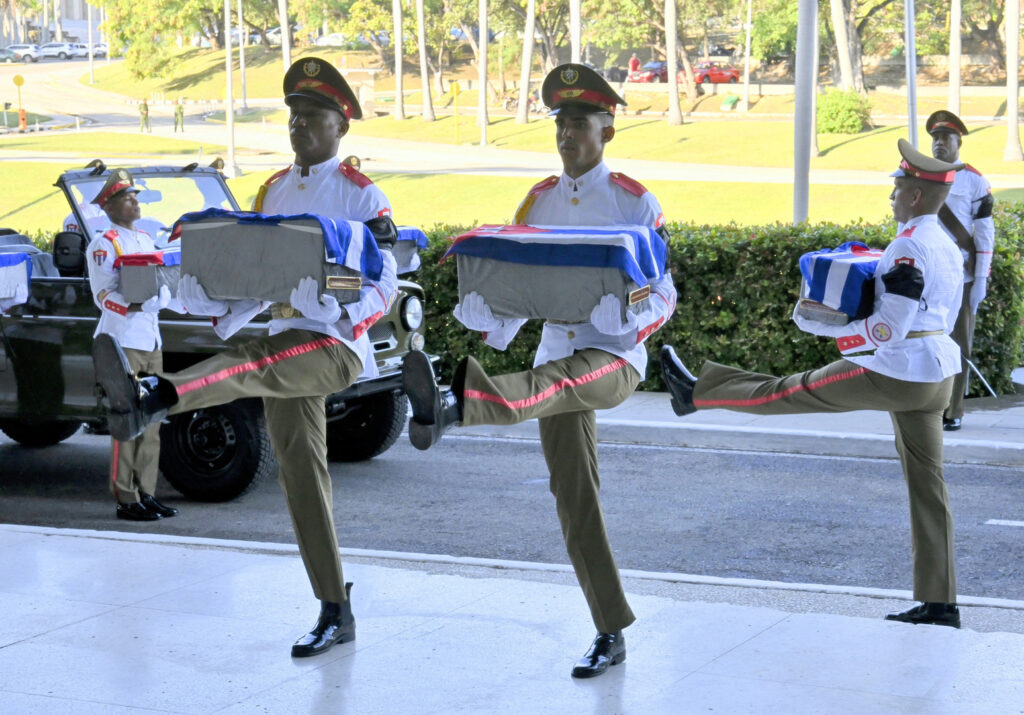
Members of the Cuban military honor guard carry Cuban‑flag‑draped urns of soldiers killed in the U.S. strike and the capture of President Nicolas Maduro and his wife, Cilia Flores, in Caracas on January 3, as Cuba pays tribute, in Havana, Cuba January 15, 2026. Adalberto Roque/Pool via REUTERS
In a significant and somber development, Cuba has received the remains of 32 Cuban soldiers who were killed during a US bombing operation targeting Venezuela. These soldiers lost their lives amidst the tense and complicated military action aimed at the capture of Venezuelan President Nicolás Maduro.
The operation, shrouded in controversy and geopolitical tension, led to the tragic loss of Cuban lives, highlighting the deep military and political entanglement between Cuba and Venezuela. The return of these remains marks an important moment for both countries, reflecting the human cost of international conflicts and proxy wars.
The soldiers were part of the Cuban contingent stationed in Venezuela, which has been involved in various capacities in supporting the Venezuelan government. Their deaths underscore the risks and sacrifices made by foreign forces involved in regional conflicts.
Cuba’s government has received the remains with full military honors, mourning the loss of their compatriots. The repatriation process involved cooperation between Cuban and Venezuelan authorities amid ongoing regional tensions.
This event has reignited discussions on the nature of US military interventions in Latin America and the broader implications for sovereignty and regional stability. It also brings into focus Cuba’s role in Venezuela’s political and military affairs, an alliance that has been both strategic and contentious.
Families of the deceased soldiers have been notified, and memorial services are planned across Cuba to honor the fallen. The Cuban leadership has expressed condolences and highlighted the soldiers’ dedication and bravery.
The incident has also sparked diplomatic reactions. The US government has been under scrutiny for its involvement and the consequences of its military actions, while regional actors are calling for de-escalation and peaceful resolutions to conflicts.
Experts suggest that this development might influence future diplomatic dialogues and military strategies within Latin America. It serves as a poignant reminder of the human dimension behind geopolitical maneuvers and the ongoing struggles affecting the region.
As Cuba lays its fallen soldiers to rest, the event stands as a sobering chapter in the complex narrative of US-Latin America relations, underscoring the enduring impact of foreign policy decisions on individual lives and national destinies.