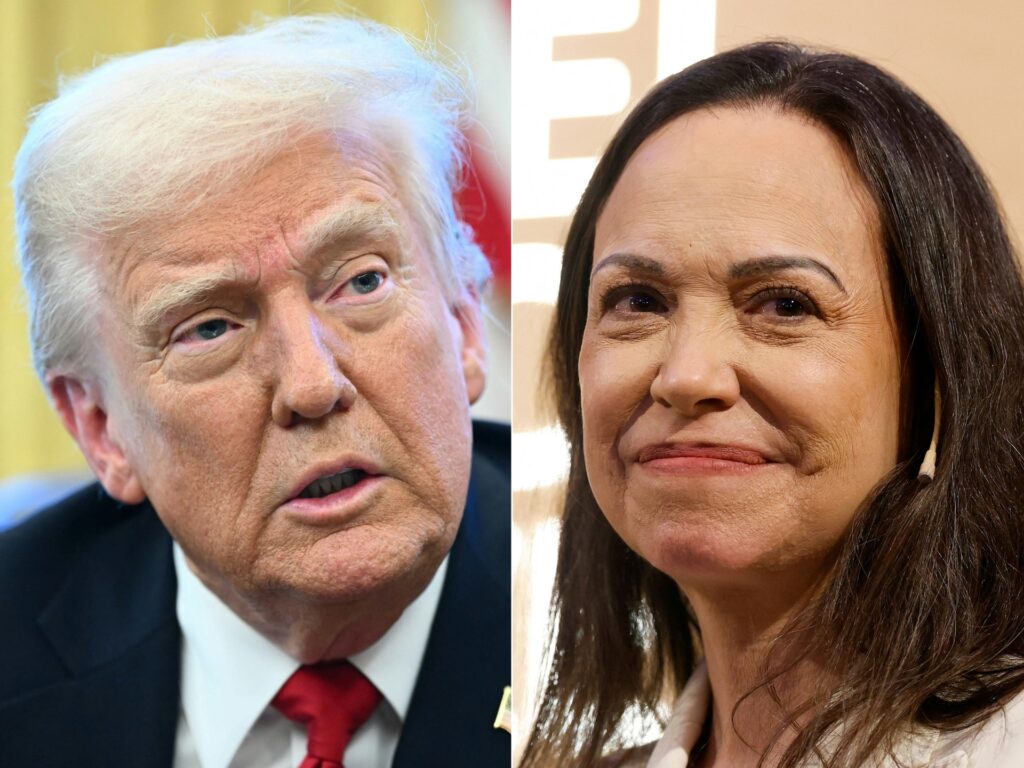
In a significant diplomatic and strategic development, the United States has seized an oil tanker in the Caribbean Sea ahead of an important meeting between US President Donald Trump and Venezuelan opposition leader David Smolansky Machado. This meeting marks the first in-person discussion between President Trump and Machado, reflecting heightened US involvement in Venezuelan political affairs.
The oil tanker seizure took place in international waters of the Caribbean Sea, an area often monitored due to its strategic importance for energy transportation and geopolitical tensions. US authorities have not released comprehensive details about the tanker’s origin, cargo specifics, or the legal grounds for the seizure, but insiders suggest it may be linked to sanctions enforcement against Venezuelan oil shipments.
President Trump’s decision to personally meet with Machado signals a strong US stance on supporting Venezuelan opposition efforts. The Venezuelan opposition has been seeking international assistance to challenge the current government led by President Nicolás Maduro, whose administration the US and many Western allies view as illegitimate.
David Smolansky Machado, a prominent opposition figure, is expected to discuss a wide range of issues with President Trump, including strategies to restore democracy in Venezuela, humanitarian aid, and counteracting Venezuelan government policies perceived as oppressive and corrupt.
The seizure of the oil tanker may be interpreted as an effort by the US to exert pressure on the Maduro regime, while simultaneously showing solidarity with the opposition movement. The US government has imposed several rounds of sanctions on Venezuela, focusing primarily on its oil sector, which is a vital source of revenue for Maduro’s government.
Experts suggest this multi-dimensional approach of diplomatic engagement combined with economic enforcement reflects the US administration’s attempt to influence Venezuela’s political landscape without direct military intervention.
The Caribbean region, due to its proximity to Venezuela and significant oil shipping routes, has been a hotspot for such strategic operations, reinforcing the US commitment to monitor and control the flow of resources in line with its foreign policy objectives.
This incident is likely to escalate tensions between the US and Venezuela, which already has seen strained relations since the onset of the Venezuelan political and economic crisis. The Maduro government has previously condemned US sanctions and interference, labeling these actions as violations of Venezuela’s sovereignty.
Observers await the outcomes of the Trump-Machado meeting with keen interest, as it may set the stage for future US actions in Latin America concerning the Venezuelan crisis. The discussion is also expected to touch upon how the international community can work together to support democratic institutions and address the ongoing humanitarian crisis in Venezuela.
In summary, the US seizure of an oil tanker in the Caribbean Sea just before a historic meeting between President Trump and Venezuelan opposition leader David Smolansky Machado underscores the intensifying US efforts to influence Venezuelan politics through a combination of strategic pressure and diplomatic engagement. This development marks a notable chapter in the complex geopolitical dynamics of the region, with significant implications for international relations and energy security.