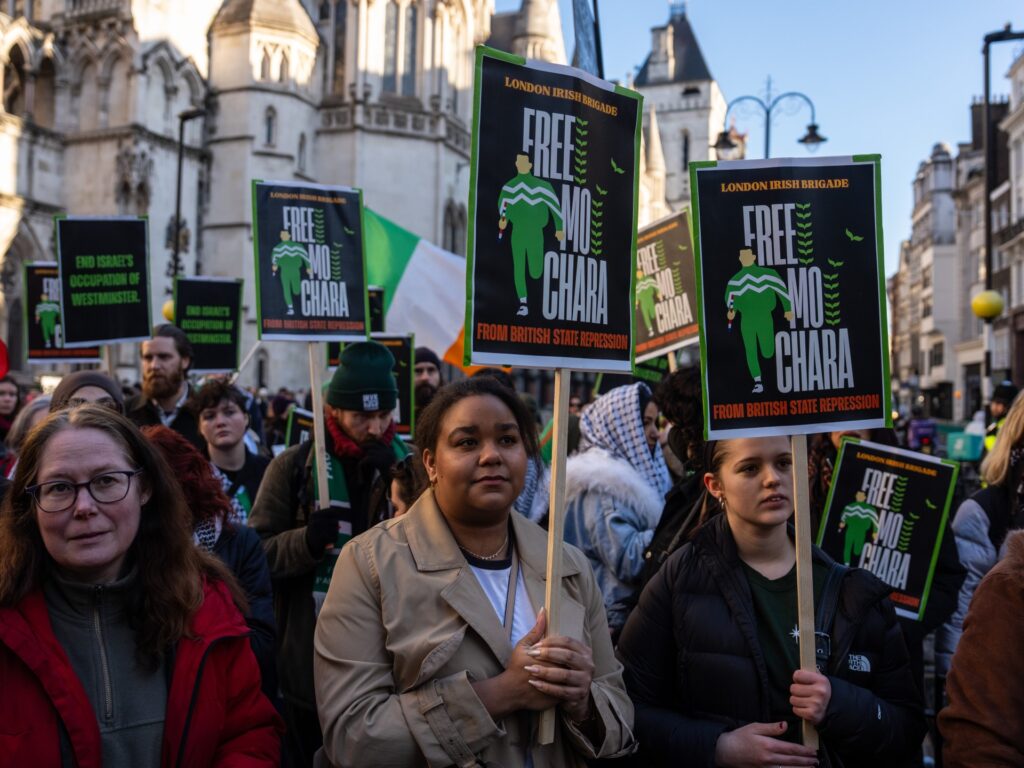
In a recent and controversial development, UK prosecutors have pushed to reinstate a terrorism-related charge against Liam O’Hanna, a member of the Irish rap group Kneecap. This move has sparked significant backlash from the band and its supporters, who condemn the action as an unnecessary burden on public resources.
The charge originally stems from allegations that O’Hanna’s lyrics and public statements may have incited terrorism or supported terrorist activities. However, the specifics of the charge and evidence leading to it remain contentious and highly debated among legal experts and fans alike.
Kneecap, known for their politically charged music addressing Irish republicanism and social issues, have often found themselves at the center of political controversies. Their supporters argue that the group’s artistic expression is protected under free speech and cultural commentary and that the charge is a politically motivated attempt to silence dissent.
The band issued a statement slamming the prosecutors’ attempt to reinstate the charge. They described this pursuit as a “waste of public time and public money,” emphasizing that the prosecution detracts from addressing more pressing societal issues. Members of Kneecap maintain that their music is aimed at raising awareness and providing a voice to marginalized communities rather than inciting violence.
Legal experts have also weighed in on the case, highlighting the delicate balance between combating terrorism and preserving freedom of expression. Some argue that reinstating such charges against artists risks setting a precedent that could stifle artistic exploration and political criticism.
The UK’s counter-terrorism laws have expanded in recent years, aiming to address various forms of extremism, but have simultaneously raised debates on civil liberties. Cases like this bring these issues into the spotlight, prompting discussions about where the line should be drawn between legitimate security concerns and fundamental democratic rights.
Public reaction has been mixed, with some supporting the government’s tough stance on terrorism, while others fear it could lead to overreach and unfair targeting of minority voices and political activists.
The case is expected to proceed in UK courts, where further arguments will likely center on the interpretation of anti-terrorism statutes and the role of artistic freedom in a democratic society.
For now, Kneecap and Liam O’Hanna continue to perform and advocate through their music, while the legal battle unfolds. The outcome could have lasting implications for artists facing similar charges in the future and for the ongoing debate about security, expression, and justice in the UK and beyond.