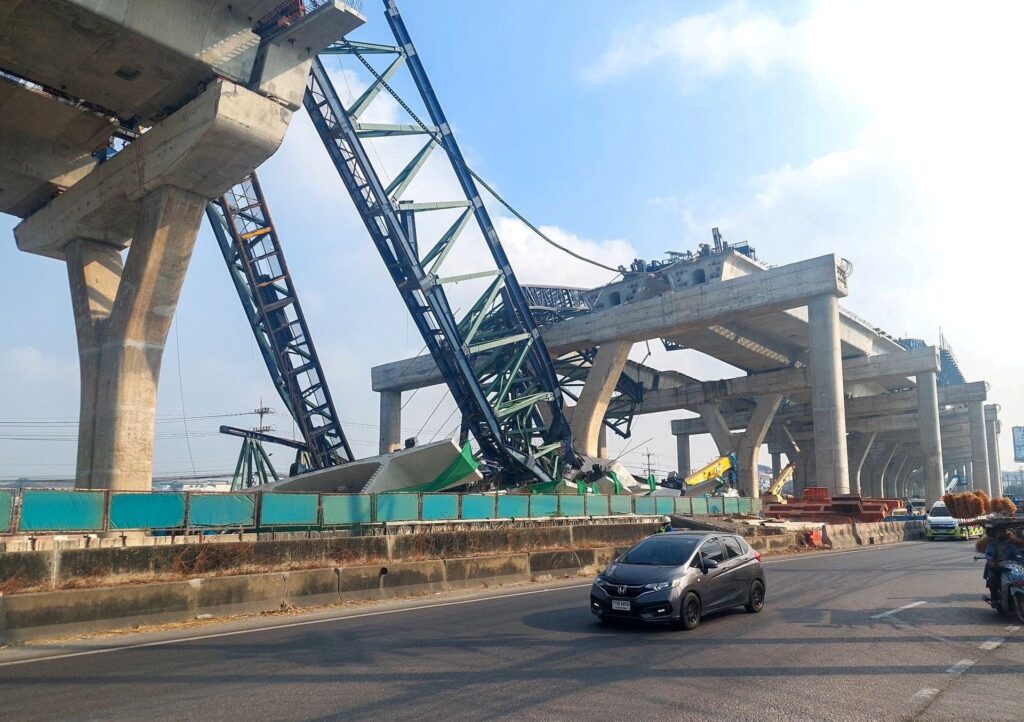
Thailand has been recently struck by consecutive crane collapse incidents, causing widespread concern and mourning across the nation. On Thursday, outside Bangkok, a crane collapsed resulting in the deaths of two individuals. This tragic event follows a similar devastating accident the previous day in the northeast region of the country where 32 people lost their lives in a crane collapse.
The Thursday incident has drawn immediate attention due to its proximity in time and place to the disastrous event of the day before. Authorities are currently investigating the cause of the collapse, focusing on potential safety violations, maintenance issues, or structural failures. Rescue teams were deployed rapidly to the scene to provide aid and begin recovery operations.
The earlier collapse in the northeast occurred amid construction activities and tragically claimed 32 lives, marking it as one of the deadliest crane accidents in recent history within Thailand. The sequence of these incidents has raised urgent calls for stricter regulations and comprehensive safety assessments of cranes and heavy machinery in the country.
Experts emphasize the gravity of these disasters, highlighting that crane operations require meticulous adherence to safety protocols due to the heavy risks involved. Both incidents reflect systemic challenges in construction safety management, signaling an urgent need for improvements in regulatory oversight.
Families of the victims are mourning their loss, and communities are rallying in support of those affected by these unforeseen calamities. The government has expressed condolences and promised thorough investigations that aim to prevent such tragedies from recurring.
International observers and experts in construction safety have also weighed in, urging Thailand to adopt global best practices, improve worker training, and enhance machinery inspection routines. These steps could significantly mitigate the risk of future accidents.
The recent crane collapses serve as a grim reminder of the importance of safety in heavy construction work. They underscore the critical need for governments and businesses to prioritize human life through vigilant safety enforcement and investment in infrastructure durability.
As investigations continue, it remains paramount that all stakeholders collaborate to ensure the structural integrity of cranes, implement advanced safety measures, and foster a culture of safety to protect workers and bystanders alike.
In summary, the dual tragedies involving crane collapses in Thailand, first damaging many lives in the northeast and subsequently causing further loss near Bangkok, have shocked the nation. They illustrate a pressing concern for crane safety and demand immediate action to safeguard lives in the construction industry.