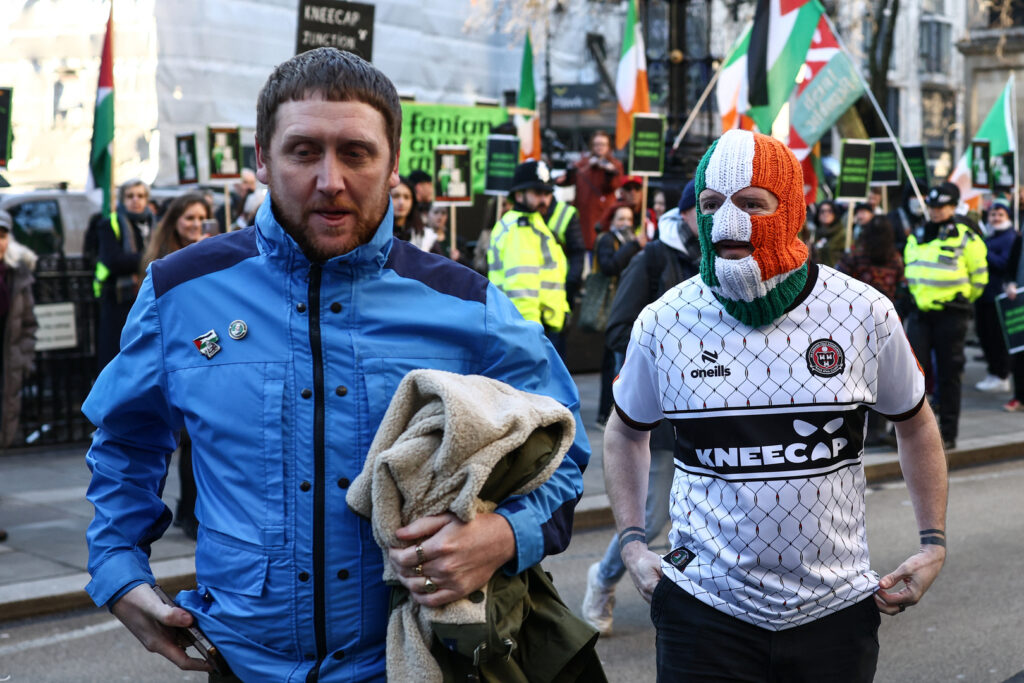
Kneecap member DJ Provaí (R) and Kneecap manager Dan Lambert (L) walk past supporters and protesters (behind) as they arrive outside the Royal Courts of Justice ahead of the arrival of band member Liam O'Hanna, who performs under the stage name Mo Chara, in London on January 14, 2026. The singer Mo Chara is back before the courts on January 14 as British prosecutors challenge a decision to drop a terrorism charge against him. (Photo by Henry NICHOLLS / AFP)
Supporters of the Irish-language punk-rap group Kneecap gathered in protest outside London’s esteemed Royal Court of Justice in response to a court appeal involving the band. Kneecap, known for their politically charged lyrics and vocal support for Palestine, have attracted significant attention not only for their music but also their activism.
The demonstration was marked by chants, banners, and speeches advocating for Palestinian rights, underscoring the solidarity between the group’s fan base and the broader pro-Palestine movement. The protestors expressed strong opposition to the court’s handling of the appeal, which they believe undermines free speech and political activism.
Kneecap has carved a niche within the music scene by blending Irish-language punk and rap styles, using their platform to highlight political issues, including the Israeli-Palestinian conflict. The band’s stance has galvanized a passionate following, particularly among young Irish and international audiences who resonate with their message.
The court case centers around previous legal proceedings that challenged Kneecap’s lyrical content and public statements. Supporters argue that the appeal threatens to stifle artistic expression and freedom of speech, vital components in democratic societies.
Protest organizers emphasized the importance of standing up against perceived judicial overreach and ensuring that artists can continue to voice their perspectives without fear of legal repercussions. The event attracted activists, fans, and members of various human rights groups united in their call for justice and recognition of Palestinian struggles.
This incident highlights the increasingly visible intersection of music, politics, and activism in contemporary society. Kneecap’s case serves as a focal point for discussions about censorship, artistic liberty, and the role of courts in adjudicating on matters involving political expression.
Observers noted that the location of the protest, the Royal Court of Justice, added symbolic weight to the demonstration, emphasizing the tension between state institutions and citizen activists. The court’s decision on the appeal is highly anticipated and could set precedents impacting similar cases in the future.
Kneecap’s supporters remain steadfast in their commitment to advocating for Palestine while defending their right to free speech through artistic mediums. The protest outside the court reflects a broader global movement where music and political advocacy continue to intertwine, challenging legal and societal boundaries.
As the legal process unfolds, Kneecap and their supporters are poised to maintain their activism both within and beyond the courtroom, using music as a vehicle for change and awareness. The protest at the Royal Court of Justice represents a pivotal moment in the ongoing conversation about rights, expression, and justice in the modern era.