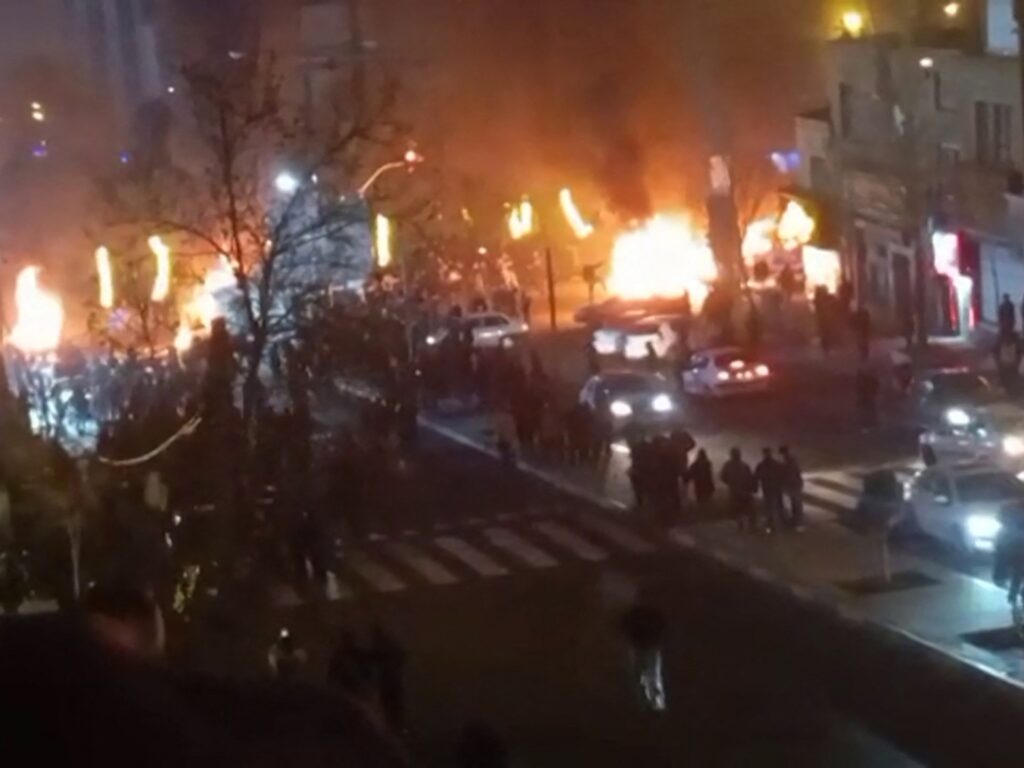
In recent developments, former President Donald Trump expressed vocal support for Iranian protesters on his social media platform Truth Social, stating that “help is on its way.” This message has stirred discussions about potential U.S. military involvement or options regarding Iran, particularly given the tense geopolitical climate.
Trump’s military options for an attack on Iran, should such a decision be made, are varied but complex. These options range from limited strikes to full-scale military engagement, each carrying different strategic implications and risks.
1. Limited Airstrikes: One of the most immediate military options involves precision airstrikes against key Iranian military or nuclear facilities. This approach aims to degrade Iran’s military capabilities without engaging in prolonged conflict.
2. Naval Blockades and Sea Control: The U.S. Navy could establish blockades or exert control over strategic waterways like the Strait of Hormuz, through which a significant portion of global oil trade passes. This would put economic pressure on Iran but risks confrontation.
3. Cyber Warfare: The U.S. also has significant cyber capabilities that could disrupt Iran’s command and control systems, infrastructure, or nuclear program without physical conflict.
4. Special Operations Forces: Targeted operations by U.S. Special Forces could be conducted within Iran or against Iranian proxies to weaken Iran’s influence and operational capabilities indirectly.
5. Support for Opposition Groups: Beyond direct military action, the U.S. could increase support for internal Iranian opposition or protest movements, providing intelligence, logistical support, or even arms to undermine the Iranian government from within.
6. Missile Strikes: The U.S. could deploy missile strikes using assets positioned in the region, aiming for critical targets to deter or degrade Iran’s military reach.
Each option carries risks of escalation and broader regional conflict, necessitating careful consideration of diplomatic channels alongside military strategies. The message of support to the protesters suggests an alignment with internal dissent as a non-kinetic method of pressure.
Trump’s public statement sends a signal of potential increased pressure on Tehran, either through direct or indirect means. It also highlights the continuing complexities and dangers of the U.S.-Iran relationship amidst ongoing protests and regional tensions.
In conclusion, any military action against Iran would involve a combination of tactical precision, strategic planning, and alignment with wider geopolitical objectives, with Trump’s recent comments underscoring the volatility and unpredictability of the situation.