A wave of unrest has swept across Palestinian territories as students stage strikes in protest against Israel’s recent restrictions that limit teachers residing in the West Bank from traveling to occupied East Jerusalem. The restrictions, imposed by Israeli authorities, have sparked widespread condemnation among the Palestinian community and human rights organizations.
In detail, the Israeli government has imposed stringent measures that prevent educators from the West Bank—a Palestinian territory under Israeli occupation—from crossing into East Jerusalem to teach. This move disrupts the educational process for thousands of Palestinian students who rely on access to their regular teachers for continuous learning and academic development.
East Jerusalem remains a highly sensitive and contested area under Israeli control since 1967, with Palestinians considering it the capital of a future independent state. The restrictions have intensified existing tensions, further complicating an already difficult socio-political landscape characterized by frequent conflicts over territory, governance, and civil rights.
Palestinian students across the region have responded by organizing strikes and protests at schools and universities, demanding the right of their educators to move freely and continue teaching without Israeli-imposed barriers. These actions have garnered significant local support, highlighting the critical role of education in Palestinian society and the community’s resilience amidst political adversity.
Human rights advocates have criticized the travel restrictions as part of broader Israeli policies that undermine Palestinian access to essential services and infringe upon their fundamental rights. They argue that preventing teachers from entering East Jerusalem not only hampers education but also disrupts the socio-economic fabric of Palestinian life.
The Israeli government, however, defends the policy, citing security concerns amid ongoing conflict and unrest in the region. Officials argue that restrictions on movement are necessary to prevent potential security threats, though critics dispute the proportionality and fairness of such measures.
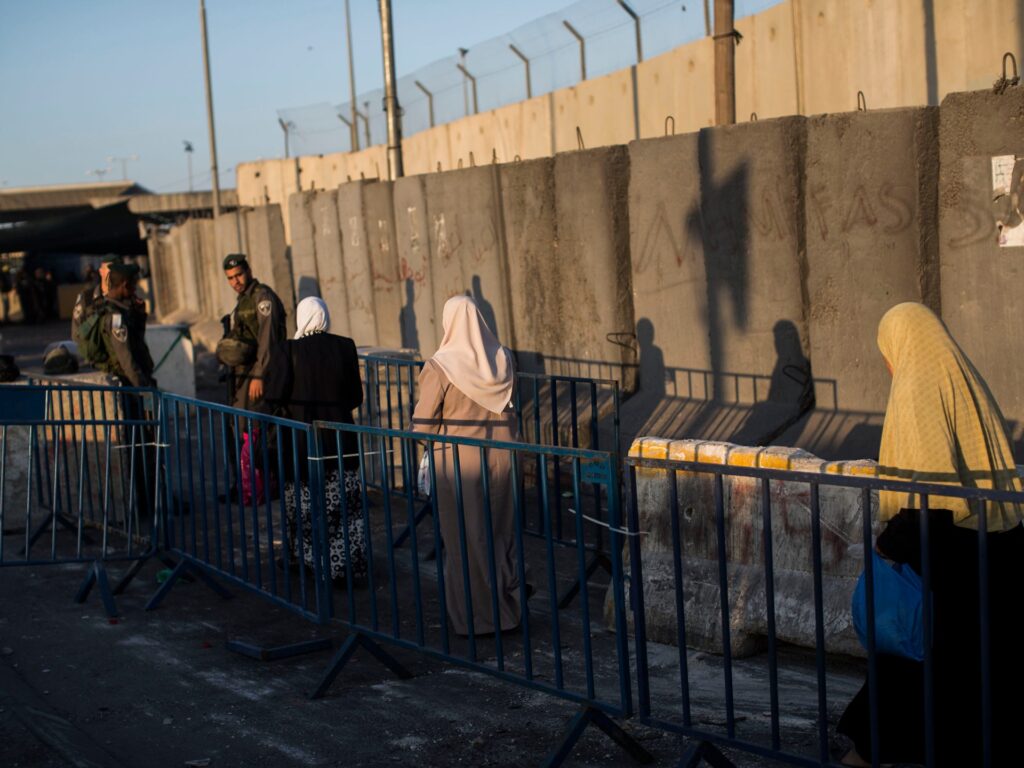
The bans affect a significant number of educators who travel daily or weekly between the West Bank and East Jerusalem. Many teachers have experienced revocation of permits, delays, and even detention at checkpoints, forcing some to abandon their posts or seek alternative arrangements such as remote teaching, which remains a challenge due to limited infrastructure.
Educational institutions in East Jerusalem have been compelled to adapt to these new restrictions, facing teacher shortages and disrupted curricula. Palestinian students have expressed frustration and concern over the quality and continuity of their education, which they perceive as being undermined by the political dispute.
International observers have called for immediate dialogue between Israeli authorities and Palestinian representatives to find a solution that respects both security concerns and the right to education. They emphasize that education should be protected and prioritized, even in conflict zones.
This ongoing situation underscores the broader challenges faced by Palestinians living under occupation, where restrictions on mobility, access to services, and fundamental rights remain daily hurdles. The student strikes symbolize a broader resistance to these conditions and a call for respect of Palestinian dignity and rights.
As tensions continue to mount, stakeholders urge the international community to intensify diplomatic efforts to address the root causes of the conflict and to support initiatives aimed at restoring peace, security, and equitable access to education for all Palestinians.
The controversy surrounding Israel’s limitation on West Bank teachers’ travel to East Jerusalem highlights the complex intersection of education, security, and human rights in one of the world’s most protracted conflicts. Going forward, ensuring Palestinian students receive uninterrupted education remains a critical challenge amid a landscape of political uncertainty and strife.