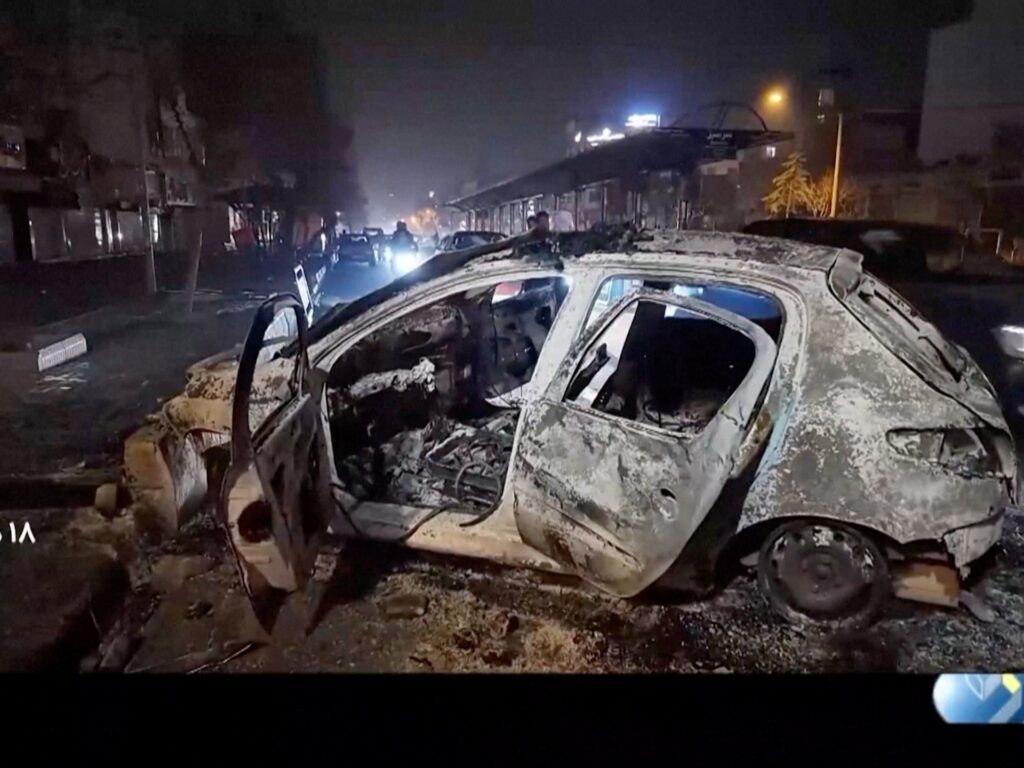
The situation in Iran remains highly volatile as protests continue to grip the nation, drawing significant international attention. Tehran has accused US President Donald Trump of using the unrest as a pretext to push for regime change, claiming that the United States is attempting to “manufacture a pretext for military intervention.” This accusation intensifies the already strained relations between Tehran and Washington.
Throughout the crisis, President Trump has issued stern warnings of “strong action” should the situation deteriorate further or if American interests are threatened. His administration views the protests as a potential opportunity to challenge Iran’s government, which Tehran vehemently denies is politically vulnerable.
The unrest began as demonstrations against economic conditions but quickly evolved into broader anti-government protests. Iranian security forces have responded with a heavy hand, leading to numerous casualties and arrests. Tehran accuses foreign powers, particularly the US, of fomenting the instability to weaken the Islamic Republic.
Iran’s leadership denounces these claims as propaganda and insists the protests are purely internal issues that the government is capable of managing without external interference. However, the proximity of US military assets in the region and rhetoric from Washington have escalated fears of possible intervention.
Analysts warn that any military involvement could lead to a broader conflict in the Middle East, destabilizing an already fragile region. Diplomatic efforts continue in the background, with international actors calling for restraint and a peaceful resolution.
The US government remains firm in its stance, indicating that it supports the Iranian people’s aspirations for freedom and change but stops short of endorsing regime change explicitly. Meanwhile, Tehran portrays the US position as hostile interference aimed at undermining Iran’s sovereignty.
Amidst the turbulence, ordinary Iranians continue to voice their concerns about economic hardship and political repression, demanding reforms. The international community watches closely, wary of the consequences that further escalation might bring.
As the situation unfolds, the world remains apprehensive about the potential outcomes. The possibility of military confrontation looms as a significant threat, yet hopes for dialogue and peaceful change persist. The coming days will be critical in determining the future trajectory of Iran’s domestic and foreign relations.