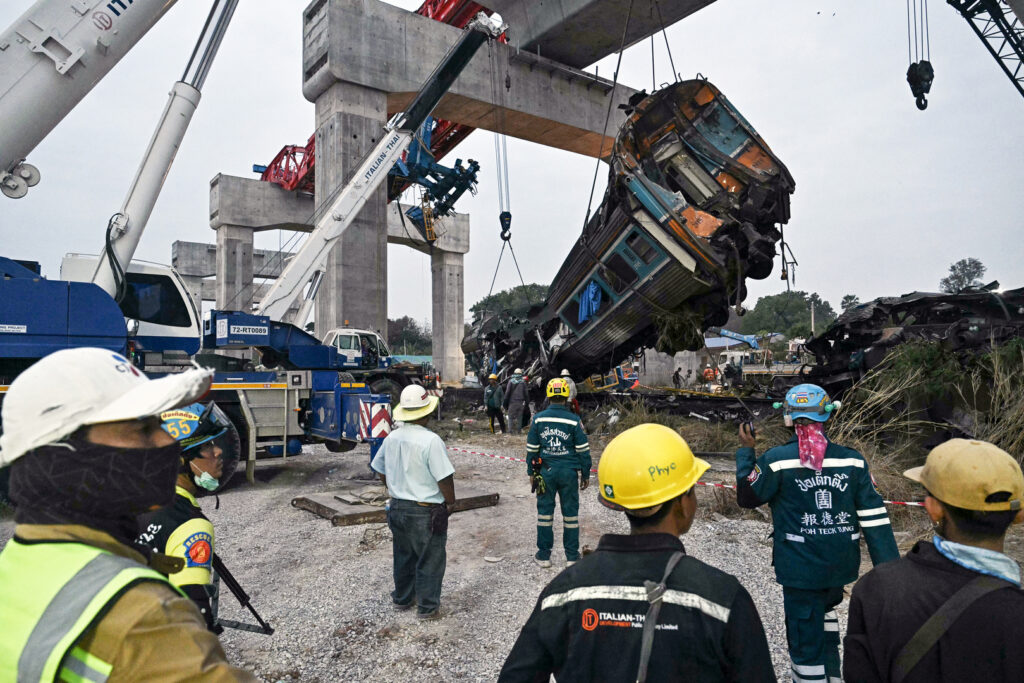
Recovery workers watch as a carriage of a train that crashed when a construction crane collapsed is lifted off the tracks in Thailand's Nakhon Ratchasima province on January 14, 2026. A crane at a China-backed high-speed rail project in Thailand collapsed onto a passenger train on January 14 and caused it to derail, killing at least 28 people and injuring dozens more, authorities said. (Photo by Lillian SUWANRUMPHA / AFP)
A tragic rail accident unfolded in Thailand when a passenger train was crushed by construction cranes that suddenly slammed onto the carriages, resulting in the death of at least 29 people. The incident has shocked the nation and raised questions about safety measures in place near active railway tracks, especially in construction zones.
The accident occurred when heavy construction cranes, used for building work nearby, toppled over or malfunctioned and fell directly onto the moving train cars. This catastrophic impact caused significant damage to the train carriages, leading to numerous casualties and injuries among the passengers on board.
Emergency services responded promptly to the scene, working tirelessly to rescue survivors and provide medical aid to the injured. Hospitals in the region have been mobilized to handle the sudden influx of trauma patients from the crash site.
Initial investigations indicate that the cranes were situated dangerously close to the railway line, and their collapse onto the train suggests possible lapses in safety protocols or structural failures. Authorities have launched an inquiry to determine the precise cause of the crane collapse and to assess whether negligence or procedural errors contributed to the disaster.
The victims of the crash include a mix of local commuters and tourists, reflecting the train’s role as a vital transportation link connecting various parts of Thailand. The local community has been deeply affected, with mourning and support services being organized for families who lost loved ones.
This deadly incident has prompted calls for stricter regulations around construction activities near railways to prevent such tragedies in the future. Thai government officials and railway authorities have vowed to enhance oversight and enforce more rigorous safety standards.
The collision has also disrupted rail services in the area, causing delays and cancellations as infrastructure and rolling stock are assessed and repaired. Alternative transportation arrangements have been made for affected passengers while cleanup and restoration efforts continue.
In summary, the Thailand rail accident stands out as a harrowing reminder of the critical importance of safety in construction zones adjacent to busy transportation routes. The loss of at least 29 lives is a devastating blow to the community and the nation, underscoring the urgent need for improved safety safeguards and vigilant enforcement to protect passengers and workers alike.