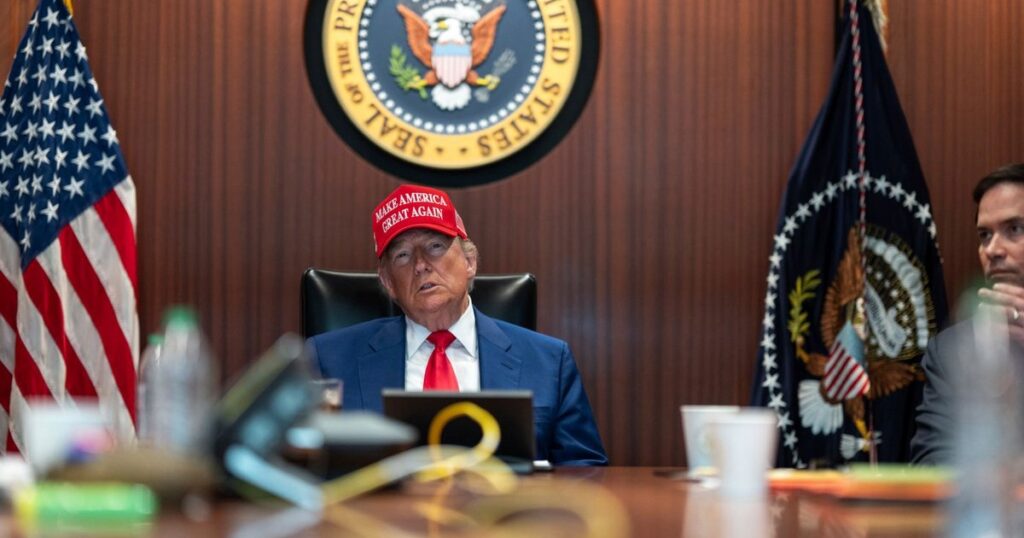
The United States government has officially designated the branches of the Muslim Brotherhood operating in Egypt, Lebanon, and Jordan as terrorist organizations. This significant policy move was announced by top US diplomat Marco Rubio, who emphasized Washington’s commitment to countering the influence and activities of the group through all available means.
The Muslim Brotherhood, a political and social movement founded in Egypt in 1928, has long been viewed with suspicion and hostility by many governments worldwide. Its ideologies and activities have often sparked controversy, with some nations labeling it as a terrorist entity, while others have engaged with it politically.
Marco Rubio’s announcement marks a clear stance from the US administration towards the Brotherhood’s affiliates in key Middle Eastern nations. The labeling as terrorists implies increased scrutiny, targeted sanctions, and potential military or intelligence actions aimed at dismantling the Brotherhood’s operational networks in these countries.
In Egypt, the Muslim Brotherhood has been a formidable political force and has roots in Islamic activism, but the government has blamed it for various violent incidents and political unrest in the past decade. The group’s status has been contentious since the military ousted former President Mohamed Morsi, a Brotherhood member, in 2013.
In Lebanon and Jordan, the Brotherhood maintains significant social and political influence. Both countries have grappled with the group’s role in their domestic affairs, balancing concerns about radicalism with broader regional dynamics.
The US decision to label these branches as terrorist entities signals a hardening of foreign policy towards Islamist movements deemed hostile to US interests and allies. It also aligns with broader efforts to combat extremism and maintain stability in a region critical to global geopolitics.
Rubio urged international partners and regional allies to support America’s efforts in isolating and countering the Brotherhood’s influence. This cooperation may involve intelligence sharing, enforcement of sanctions, and diplomatic pressure.
Critics of the designation have warned that such moves might exacerbate tensions and drive the Brotherhood underground, potentially increasing the risk of radicalization and violence. Some also fear that political solutions to address grievances linked to the Brotherhood’s support base could be sidelined.
Nonetheless, the US government remains firm on using “all available tools” to address the perceived threats posed by the Muslim Brotherhood branches in these countries. This includes leveraging diplomatic channels, economic sanctions, and possibly supporting regional security operations.
The move is expected to have widespread implications for US relations in the Middle East, affecting diplomatic ties, aid programs, and counterterrorism cooperation.
As the situation develops, the international community watches closely to gauge the broader impact on regional stability and security amidst a complex geopolitical landscape.