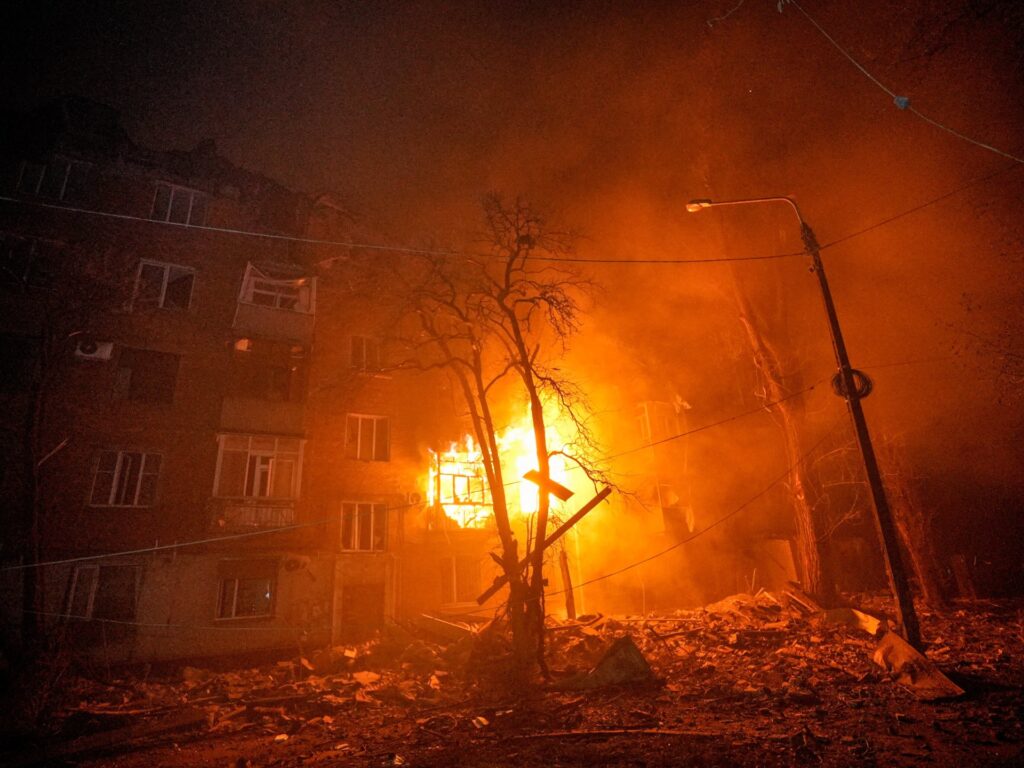
The United States has sharply condemned Russia for what it describes as a ‘dangerous escalation’ in the ongoing conflict in Ukraine, following a series of new deadly missile strikes. This development was highlighted during a recent meeting of the United Nations Security Council, where the Trump administration vocally denounced Russia’s actions.
At the heart of the US criticism is Russia’s reported use of a nuclear-capable Oreshnik missile, a move seen as a significant escalation in the military conflict that has gripped the region for years. The deployment of this missile type raises concerns among international observers about the potential for increased violence and the risk of nuclear involvement in the conflict.
During the UN Security Council session, US representatives articulated their condemnation in strong terms, emphasizing the danger such weapons pose not only to Ukraine but to global security. The missile strikes have resulted in significant casualties and destruction, further destabilizing an already volatile situation.
The Trump administration’s response points to a broader strategy of holding Russia accountable on the international stage for its military tactics in Ukraine. This includes calls for increased sanctions and diplomatic pressure aimed at deterring further use of such dangerous weaponry.
International reaction to the US denunciation has been mixed, with some nations supporting a firm stance against Russia’s actions, while others call for renewed diplomatic engagement to de-escalate tensions.
The conflict in Ukraine has been ongoing since 2014, with frequent outbreaks of violence despite numerous ceasefires and peace talks. The recent missile strikes signal a troubling intensification of the hostilities, raising fears of a broader regional conflict.
Analysts suggest that Russia’s use of advanced missile technology like the Oreshnik might be intended to intimidate Western nations and assert dominance in the region. However, this tactic risks provoking stronger military and economic responses from the US and its allies.
The US administration has also urged the international community to unite in condemning the missile strikes and to take collective action to prevent further escalation.
In response, Russia has defended its actions as necessary for its national security interests, accusing the US and NATO of interfering in regional matters and provoking tensions.
The recent events underscore the fragile nature of peace in Eastern Europe and the urgent need for renewed diplomatic efforts to resolve the conflict.
As the situation develops, the global community watches closely, hoping to avoid a dangerous spiral that could lead to widespread conflict and increased human suffering in Ukraine.
The US call for accountability and restraint serves as a reminder of the critical role of international institutions like the UN in managing and potentially resolving conflicts of this magnitude.
This latest episode marks one of the most severe confrontations between the US and Russia since the beginning of the Ukraine conflict, highlighting the complexities and risks involved in contemporary international relations.
The use of a nuclear-capable missile in active conflict zones remains a deeply concerning precedent, one that could reshape military strategies and geopolitical alliances in the years to come.
As tensions escalate, the international community faces the challenge of balancing deterrence and diplomacy to prevent a full-scale war in the region.
The situation remains fluid, with daily developments potentially altering the diplomatic and security landscapes significantly.
Stakeholders, including governments, international organizations, and civil society, are urged to engage constructively and seek peaceful solutions that respect Ukraine’s sovereignty and territorial integrity.
The US administration’s position stresses the importance of upholding international law and norms in conflict situations to maintain global peace and security.
Further discussions at the UN and other forums are anticipated as the world grapples with the evolving crisis in Ukraine and the broader implications for international stability.