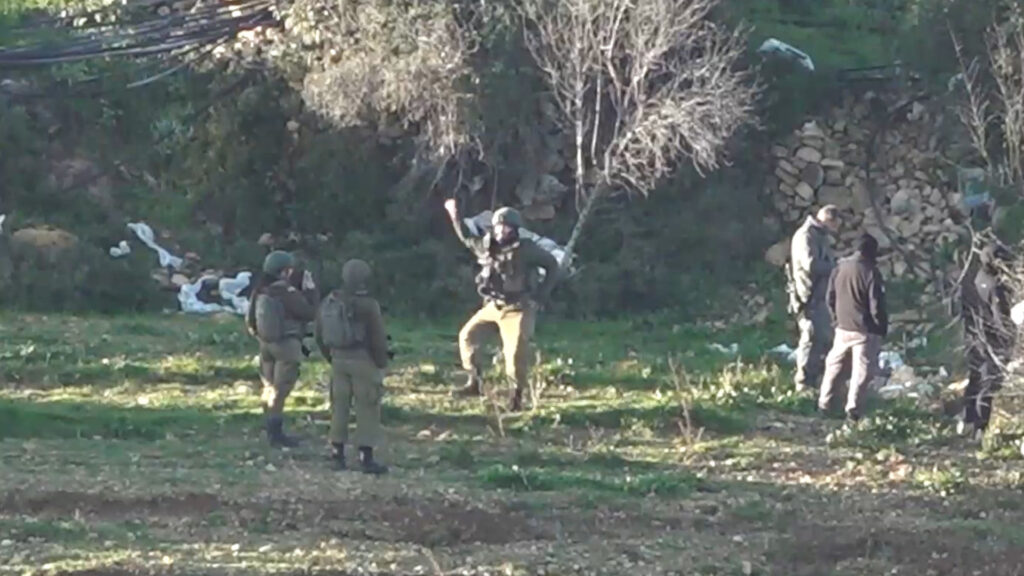
An Israeli soldier was recently filmed dancing at a site in Hebron, East Jerusalem, where Palestinian homes were being demolished. The incident has sparked outrage among activists and human rights groups who are critical of the demolitions carried out in the occupied West Bank. These demolitions are often conducted by the Israeli military under various pretexts, including lack of building permits or security concerns, but they frequently lead to displacement of Palestinian families.
Hebron, a flashpoint city in the West Bank, has witnessed frequent tensions between Israeli military forces and Palestinian residents. The demolition of Palestinian homes there is a contentious issue, contributing to ongoing disputes and international criticism. Activists argue that such demolitions violate international law, particularly those related to the protection of civilian property in occupied territories.
The video of the Israeli soldier dancing at the demolition site was viewed as insensitive by Palestinian communities and human rights advocates. Many interpreted it as a symbol of the trivialization of Palestinian suffering amid forced evictions and loss of homes. This came as the demolitions displaced several Palestinian families, heightening tensions in an already volatile region.
Israeli authorities maintain that home demolitions are necessary security measures and legal enforcement actions. However, critics contend that the demolitions serve to expand Israeli control and settlements in the West Bank, further complicating peace efforts between Israelis and Palestinians.
The incident has reignited debates about the Israeli military’s conduct in the occupied territories and the broader political conflict. International organizations have called for restraint, respect for human rights, and a halt to demolitions that lead to civilian displacement.
Such occurrences underscore the deep divisions and ongoing hardship experienced in occupied West Bank communities. The reaction from both sides highlights the complex and emotionally charged nature of the Israeli-Palestinian conflict, where everyday actions are deeply symbolic and politically loaded.