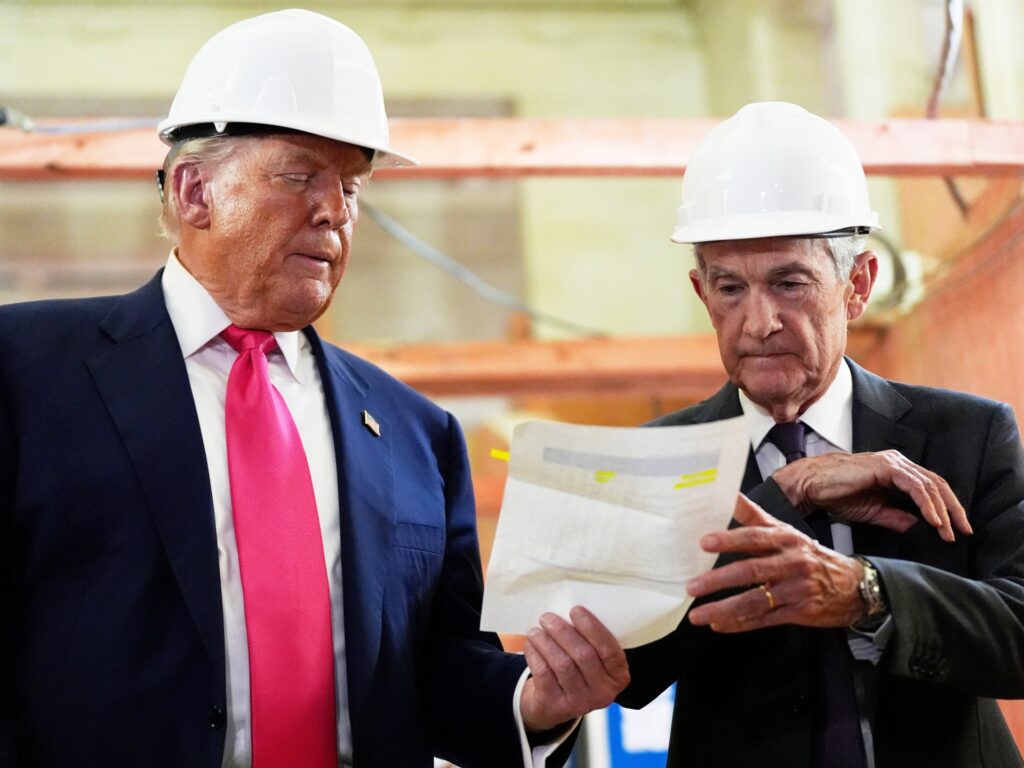
The tenure of Federal Reserve Chair Jerome Powell has recently come under intense scrutiny as the Justice Department launches an investigation into his conduct. This probe arrives amidst escalating tensions between Powell and President Donald Trump, particularly concerning the Federal Reserve’s policies on interest rates.
Jerome Powell, appointed as Fed Chair in 2018, has been a pivotal figure navigating the U.S. economy through turbulent times. His decisions on interest rates, aimed at balancing inflation and fostering employment, have drawn both praise and criticism.
President Trump, known for his outspoken views on economic policies, has frequently expressed dissatisfaction with Powell’s approach to interest rates. Trump argues that the Fed’s rate hikes are hindering economic growth and job creation, asserting that the central bank should adopt a more accommodative monetary stance.
The Justice Department’s probe, while primarily confidential in specifics, is seen by some analysts as politically charged, given the timing amid an election year and Trump’s vocal critiques. There is speculation that the investigation could examine Powell’s decision-making processes, potential conflicts of interest, or adherence to regulatory frameworks.
In response to the investigation and ongoing criticism, Powell has maintained a stance emphasizing the independence of the Federal Reserve. He stresses that monetary policy decisions are guided by economic data and long-term stability objectives, free from political interference.
Trump’s statements about Powell have been increasingly sharp, reflecting broader frustrations with the Fed’s handling of economic challenges. He has publicly suggested that Powell might be overstepping his bounds and questioned the Fed’s transparency and accountability under his leadership.
Financial markets have reacted variably to these developments. Investors remain cautious, closely monitoring any shifts in monetary policy and potential impacts of the investigation on the Fed’s credibility.
Experts highlight that the Fed’s independence is crucial for maintaining economic stability and that political pressures may undermine public confidence. They caution against conflating policy disagreements with allegations that require thorough and fair investigation.
As the probe continues, both the Federal Reserve and the Justice Department face scrutiny. The outcome could have significant implications for the central bank’s future operations and the political dynamics between the executive branch and monetary authorities.
Overall, the situation underscores the complex interplay between economic policy management and political considerations, with Jerome Powell at the center of an unfolding narrative about governance, accountability, and the stability of the U.S. financial system.