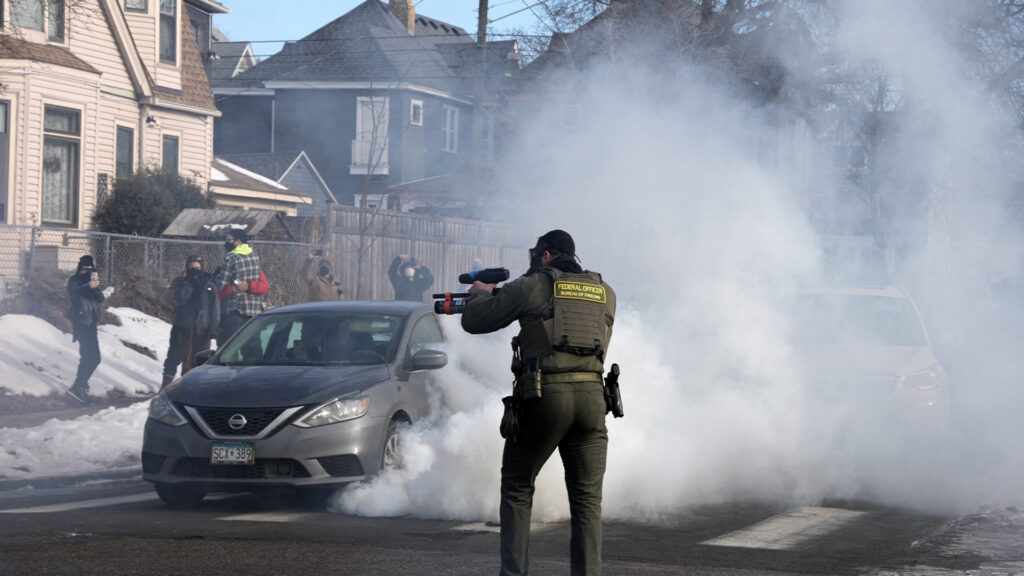
In recent developments surrounding the United States immigration enforcement landscape, Immigration and Customs Enforcement (ICE) agents have reportedly increased the number of arrests in Minnesota. This uptick in activity comes concurrent with the state’s legal action against former President Donald Trump.
The escalation in arrests has occurred in the context of heightened tensions in Minneapolis, especially following the fatal shooting of Renee Good, which has sparked protests and unrest. ICE agents have found themselves clashing with demonstrators who are demanding justice and reforms, further intensifying the atmosphere of conflict in the region.
Minnesota’s lawsuit against Trump centers on issues related to immigration policy and federal enforcement strategies. While the specifics of the legal claims in the lawsuit have not been exhaustively detailed in public statements, the suit reflects broader state-level resistance to federal immigration policies enacted during Trump’s administration.
The increased ICE arrests appear to be a strategic move amid this legal and social turbulence, signaling the agency’s commitment to enforcing immigration laws despite state opposition. This enforcement surge has drawn criticism from protestors and immigrant advocacy groups who argue that the measures exacerbate community tensions and threaten vulnerable populations.
Community leaders in Minneapolis are calling for a de-escalation of ICE operations and an end to confrontations that have led to injuries among protesters and officers alike. They emphasize the need for dialogue and policy solutions that address the root causes of immigration issues without resorting to heightened enforcement.
The clash between federal immigration authorities and Minnesota protesters is emblematic of the ongoing national debate over immigration enforcement, state sovereignty, and the balance of power between federal and state governments.
As Minnesota continues its legal challenge against Trump and ICE maintains a robust enforcement posture, the situation remains fluid with significant implications for immigration policy and civil rights in the region. Observers and stakeholders across the political spectrum are closely monitoring developments, which could shape future immigration enforcement and state-federal relations.
This increasing friction underscores the complex and often contentious nature of immigration issues in the United States, where local communities, state governments, and federal agencies must navigate competing priorities and perspectives.