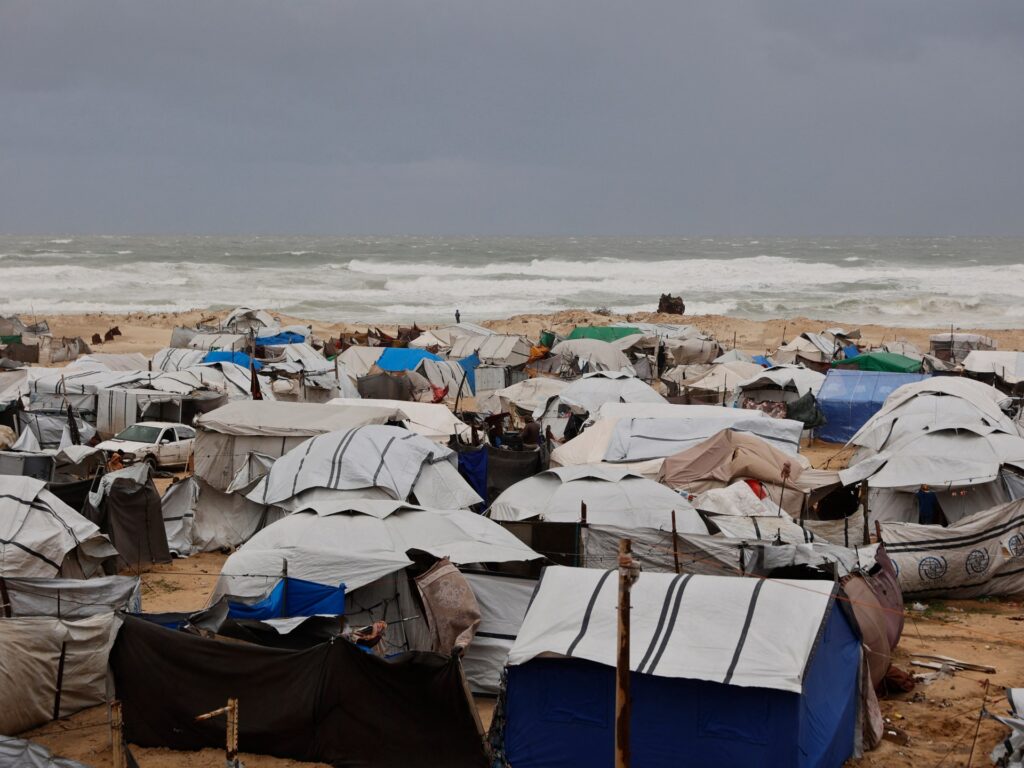
A severe storm has struck Gaza, resulting in the deaths of eight individuals and causing extensive structural damage across the region. The storm unleashed extreme cold temperatures and fierce winds, which led to the collapse of multiple buildings, further exacerbating the humanitarian crisis in an already vulnerable area.
Civil Defence authorities have issued grave warnings about the catastrophic repercussions the storm poses for Gaza’s population. Many residents lack adequate shelter to protect themselves against the harsh weather conditions, making them especially vulnerable during this emergency.
The combination of intense cold and infrastructural collapse has left many families homeless and exposed to the elements. Emergency services are stretched thin, attempting to rescue those trapped under debris and provide assistance to displaced individuals.
Gaza’s dense population and widespread poverty complicate relief efforts, with limited resources and infrastructure to cope with natural disasters. Humanitarian organizations have called for urgent aid and support to prevent further loss of life and to assist in emergency response and recovery operations.
The storm’s impact highlights the broader challenges faced by the Gaza Strip in terms of shelter, healthcare, and disaster preparedness. Without substantial aid and improved infrastructure, residents remain at great risk during extreme weather events.
Local authorities continue to assess the damage while coordinating with international agencies to mobilize resources. Efforts are underway to provide temporary shelters, distribute essential supplies, and restore vital services disrupted by the storm.
This tragic event underscores the urgent need for comprehensive strategies to strengthen Gaza’s resilience against natural disasters, including investment in durable housing, improved early warning systems, and community-based disaster risk reduction programs.
As the humanitarian situation remains critical, the international community’s support is imperative to help Gaza recover and better withstand future emergencies.