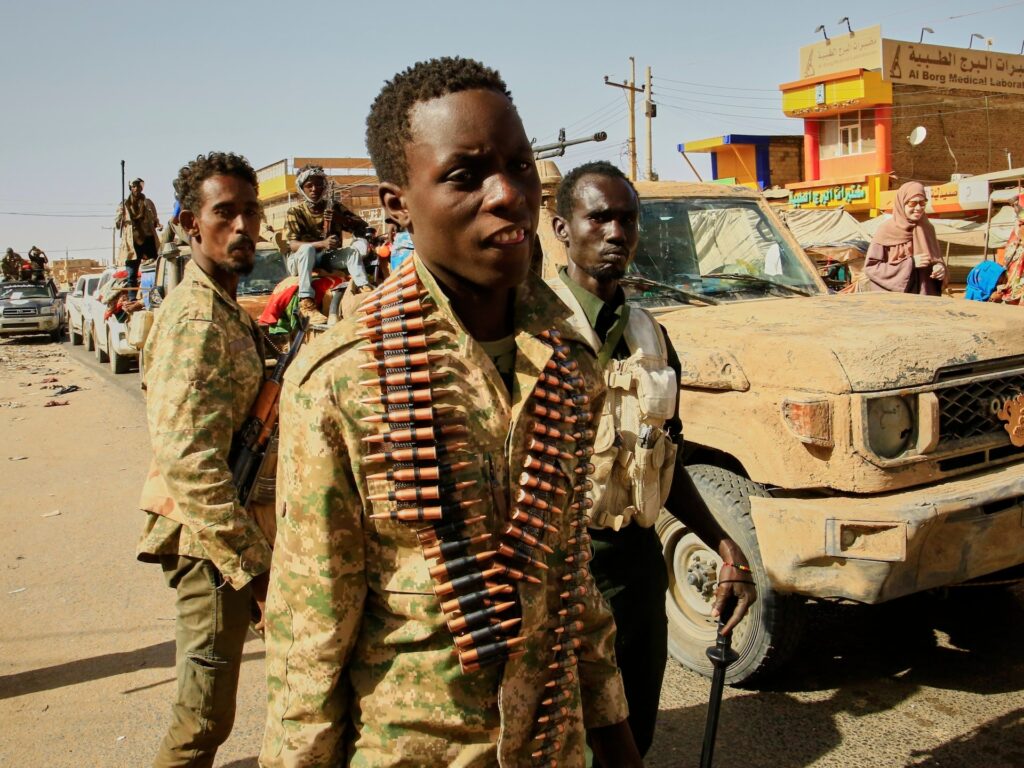
Sudan’s military is intensifying its campaign to retake control of the strategic regions of Kordofan and Darfur from the paramilitary Rapid Support Forces (RSF). This renewed military effort marks a significant escalation, surpassing even the army’s successful recapture of Khartoum State last year.
The RSF, a powerful paramilitary group, has maintained strong footholds in various key areas, posing a substantial challenge to Sudan’s regular army. The regions of Kordofan and Darfur are particularly significant due to their size, resources, and historical importance in Sudan’s political and security landscape.
Kordofan and Darfur have long been centers of conflict and instability, with various armed groups vying for control. The RSF has been especially influential in these regions, often operating with a degree of autonomy that undermines the central government’s authority.
The Sudanese army’s campaign aims to restore government control over these areas, which are vital for national unity and security. By targeting the RSF’s strongholds in Kordofan and Darfur, the military hopes to weaken the paramilitary group’s operational capabilities and limit their influence.
Last year, the army’s recapture of Khartoum State was a notable victory, reestablishing government authority over the capital and surrounding areas. Building on that success, the renewed offensive in Kordofan and Darfur represents a broader strategy to consolidate power and stabilize the country.
Military sources indicate that the current operations are more extensive and coordinated, involving increased troop deployments and advanced tactics. The objective is not only to reclaim territory but also to dismantle the RSF’s infrastructure and command networks spread across these regions.
The conflict has significant implications for Sudan’s political future. The RSF, led by its commander Mohamed Hamdan Dagalo, also known as Hemeti, wields considerable political influence, and the military offensive against them could reshape the power dynamics within the country.
International actors and regional powers are closely monitoring the situation, concerned that escalating hostilities could lead to broader instability. Humanitarian groups have also expressed alarm over the impact of renewed fighting on civilian populations, who have already suffered tremendously from years of conflict.
Despite the challenges, the Sudanese army remains committed to its mission, viewing the retaking of Kordofan and Darfur as essential to restoring law, order, and national sovereignty. The outcome of this renewed military effort will likely have profound consequences for peace and security in Sudan and the broader region.