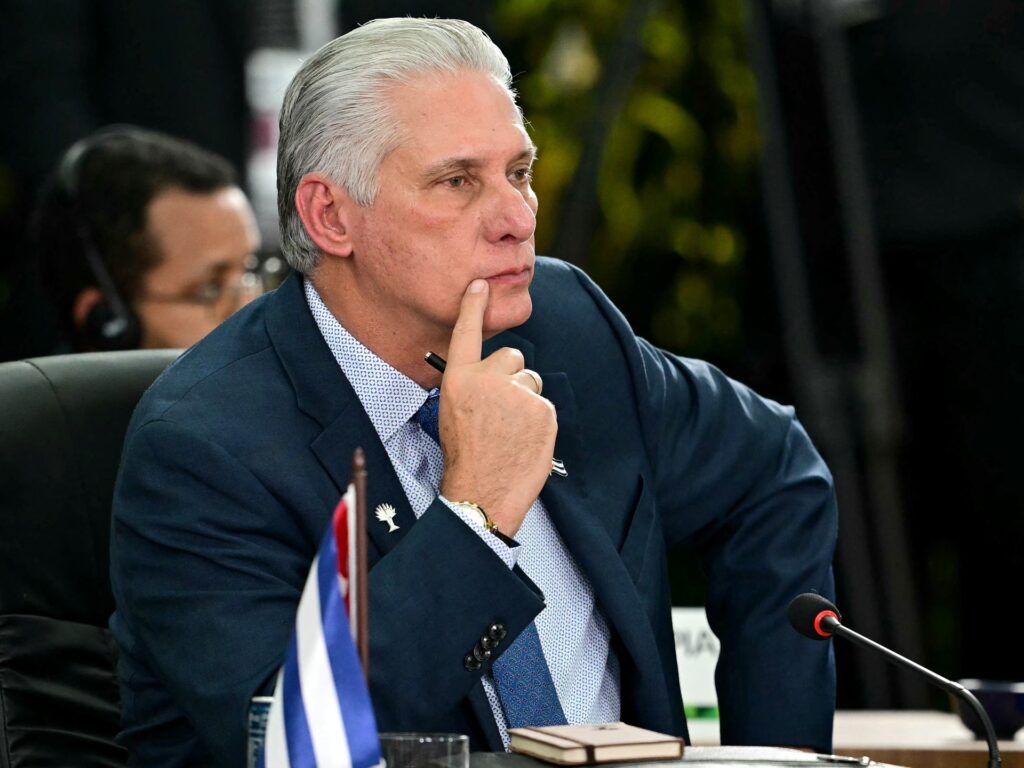
In recent developments marking a tense chapter in Cuba-US relations, Cuban President Miguel Diaz-Canel has firmly stated that Cuba will not engage in any talks with the United States while threats from former US President Donald Trump continue to escalate. This declaration comes in response to heightened tensions and aggressive rhetoric from Trump and his administration towards Cuba.
Diaz-Canel’s stance reflects a strong rejection of the threats and criticisms made by Trump, who has intensified efforts to impose stricter sanctions and increase pressure on the Cuban government. The Cuban President emphasized the nation’s unwavering independence and its commitment to defending its sovereignty against what he described as external aggression.
The Cuban leader articulated that the island nation values its sovereignty above all and will not bow to coercion or attempts at intimidation by foreign powers. Diaz-Canel reiterated Cuba’s dedication to its principles, highlighting that the government is united and prepared to protect the country’s interests and its people’s dignity.
This exchange underscores the complex and often fraught nature of Cuba-US relations, which have seen cyclical phases of rapprochement and conflict over the decades. Under the Obama administration, efforts were made to normalize relations, but many of these measures were rolled back under Trump’s presidency.
Trump’s administration adopted a hardline approach, reversing diplomatic openings and increasing economic sanctions aimed at isolating Cuba economically and politically. His threats, often communicated through social media and official statements, have been perceived by Cuban officials as aggressive posturing aimed at destabilizing the Cuban government.
In response, Diaz-Canel’s government has consistently reaffirmed its resolve not to engage in negotiations under duress and has called on the international community to respect Cuba’s sovereignty and its right to self-determination.
Analysts note that this stance solidifies the Cuban government’s position and is a message to the global community that Cuba intends to remain independent in its political and economic policies. The Cuban leadership is also seeking to rally domestic support by projecting strength and resistance against foreign pressure.
The continuing impasse presents challenges for any future diplomatic efforts to mend relations between Cuba and the United States. Observers suggest that meaningful dialogue would require a shift away from threats and sanctions toward mutual respect and negotiation.
In the broader context, Cuba’s rejection of talks under threatening conditions signifies a broader geopolitical struggle where Cuba asserts its sovereignty in the face of US influence in the region. The island’s leadership appears committed to sustaining its policy path despite external pressures.
Overall, Diaz-Canel’s declaration sends a clear indication that Cuba’s government remains defiant in the face of escalating threats, prioritizing national sovereignty and independence above all else. Whether these tensions will ease or escalate further remains to be seen as both nations navigate a complicated history and an uncertain future.