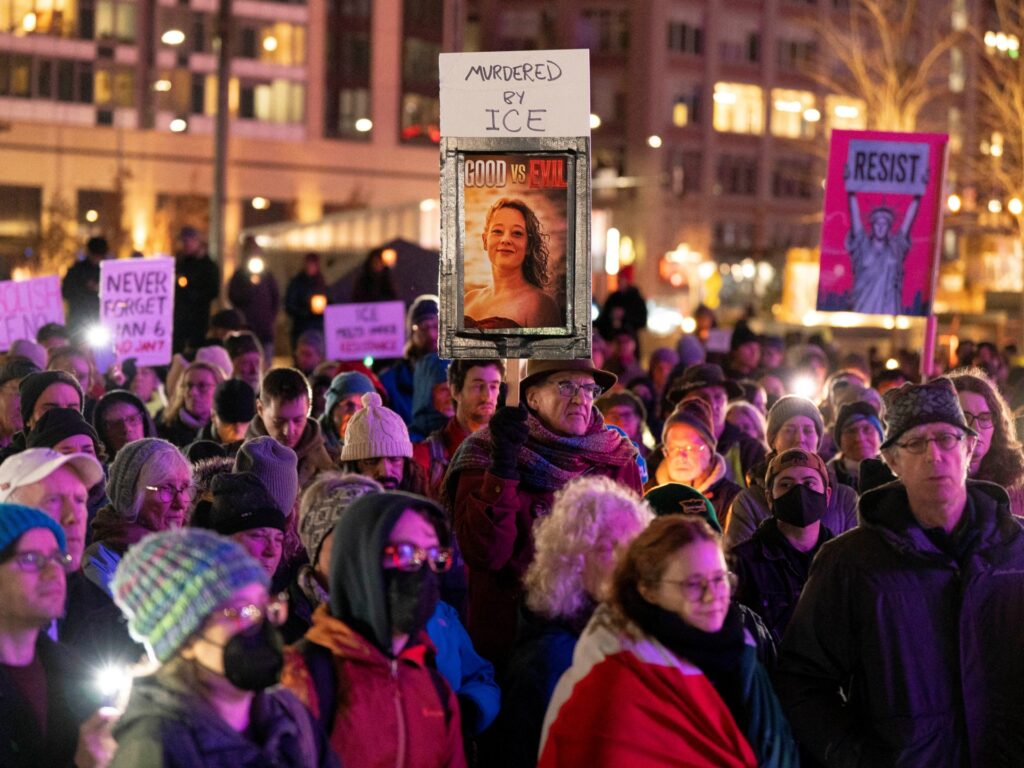
The recent fatal shooting of Renee Good, a US woman, by an Immigration and Customs Enforcement (ICE) agent has ignited a heated debate regarding the use of the term ‘domestic terrorist’ by officials. Renee Good was shot by the ICE agent under circumstances that have raised critical questions in the public and among experts about the justification and appropriateness of labeling her a ‘domestic terrorist.’
This incident’s aftermath focused heavily on statements made by the US Homeland Security Secretary, who labeled Good as a ‘domestic terrorist.’ Experts argue that this characterization may have been misused or politically motivated to justify the shooting, raising concerns about potential abuse of power and the implications for civil liberties.
The term ‘domestic terrorist’ traditionally refers to individuals or groups that engage in violent acts intended to intimidate or coerce a civilian population or government policy within the United States. The application of this label to an individual involved in a law enforcement encounter is unusual and controversial.
Civil rights advocates and legal experts emphasize the need for clear and evidence-based criteria before applying such a significant label, as it can have severe consequences for the individual involved and also set a problematic precedent for law enforcement actions.
The incident has sparked calls for an independent investigation to ascertain the facts surrounding the shooting and to evaluate whether the label ‘domestic terrorist’ was appropriately applied. There is also an ongoing conversation about the broader implications of law enforcement encounters being framed through the lens of terrorism.
Many experts warn that misuse of the term could lead to stigmatization and undermine trust between communities and law enforcement agencies. They stress that labels should not be used to preemptively justify the use of lethal force without transparent investigation.
This tragic event has also reignited discussions about ICE’s role, its accountability, and the protocols guiding its agents in the field, especially concerning interactions with civilians.
Community leaders call for improved oversight and clearer guidelines to prevent such tragedies in the future and to ensure that responses to threats are measured, justified, and lawful.
As investigations continue, the public awaits more clarity on the specifics of the incident and official responses that address the concerns raised by experts and rights groups.
The case underscores the critical importance of careful language in public and governmental discourse, especially in incidents involving fatal outcomes and questions of justice and security.
The need for balanced, informed discussions around policies related to domestic terrorism and law enforcement practices has never been more urgent in the current socio-political climate of the United States.
This incident serves as a reminder of the delicate balance between ensuring national security and protecting individual rights, a balance that requires constant vigilance and transparent governance.