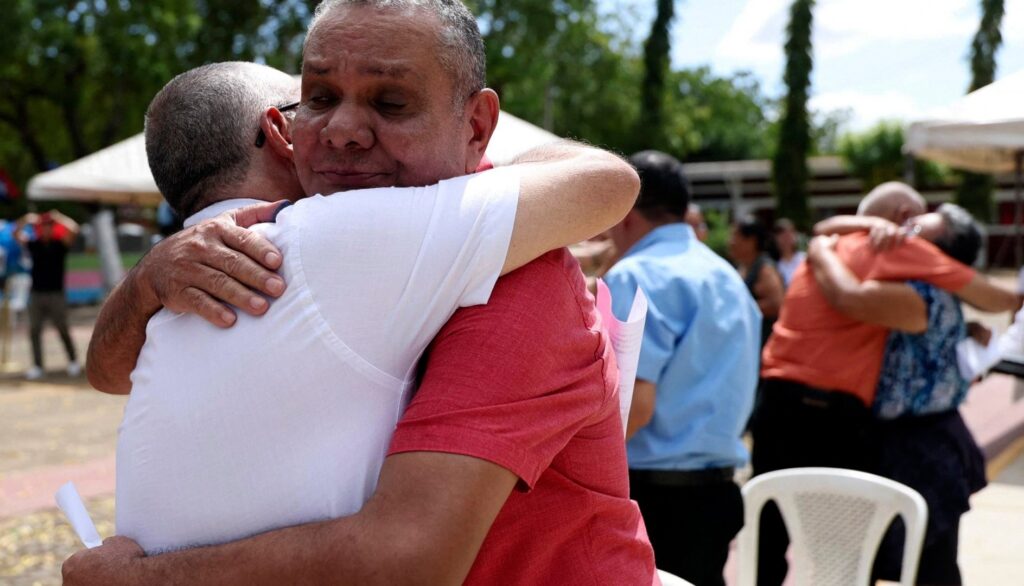
In a significant development, Nicaragua has freed dozens of prisoners amidst increasing pressure from the Trump administration. This move comes as part of a complex political backdrop, with opposition groups interpreting the release as strategic political maneuvering following heightened tensions between the United States and the Venezuelan government.
The release of prisoners in Nicaragua is seen by many as a response to the diplomatic and political pressure exerted by the Trump administration, which has been critical of the Nicaraguan government’s policies and human rights record. The U.S. has been particularly vocal about political repression in Nicaragua and has threatened sanctions and other actions to compel the government to change its course.
Opposition leaders and activists in Nicaragua view the prisoner release not merely as a humanitarian gesture but as part of a calculated series of ‘political chess moves.’ They argue that Nicaragua’s government is attempting to ease international pressure while maintaining tight control domestically.
This sequence of events follows a dramatic incident in which the U.S. was accused of orchestrating an abduction attempt on Venezuela’s President Nicolas Maduro. The failed operation escalated tensions in the region, putting added strain on relationships between leftist governments in Latin America and the United States.
The geopolitical fallout from the Maduro incident has had ripple effects beyond Venezuela’s borders, influencing the actions of allied nations like Nicaragua. By releasing prisoners, Nicaragua may be signaling a willingness to negotiate or de-escalate tensions with the U.S., despite its ongoing alliance with Venezuela.
Human rights organizations have called for continued scrutiny and monitoring of Nicaragua’s political prisoners, pointing out that temporary releases do not necessarily equate to systemic reform. Many activists fear that repression could resume once international attention diminishes.
The United States has praised Nicaragua’s decision to release prisoners as a positive step but emphasized the need for more comprehensive reforms to ensure human rights and democratic freedoms.
Analysts suggest that this episode reflects the broader challenge faced by the Trump administration in balancing tough rhetoric and sanctions with diplomatic engagement in Latin America.
As Nicaragua navigates this complex landscape, the regional dynamics continue to shift, with political strategies and international pressure shaping the policies of governments across Central and South America.
The release of the prisoners has brought temporary relief to families and human rights defenders but underscores ongoing struggles for democracy and justice in Nicaragua. Observers remain cautious, recognizing that political chess moves often mask deeper conflicts that require sustained attention and dialogue.