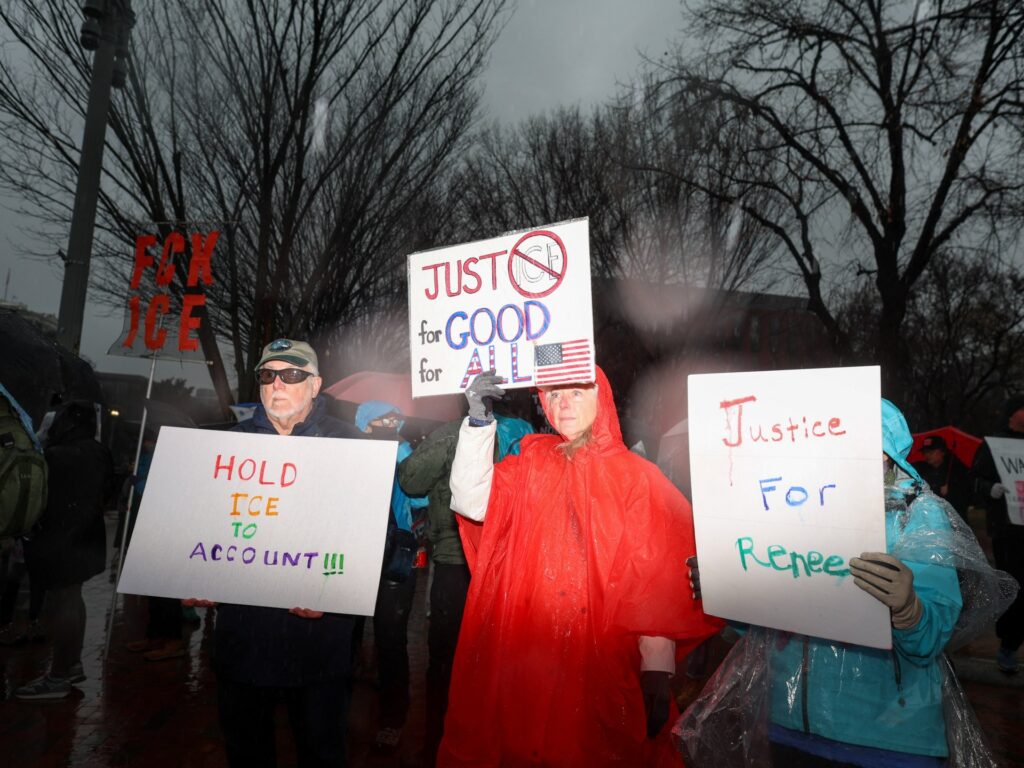
The killing of Renee Nicole Good, a mother of three, by an Immigration and Customs Enforcement (ICE) agent in Minneapolis has ignited widespread protests across the United States. The incident, which occurred earlier this week, has stirred a powerful outcry from communities demanding justice and accountability for what many view as an unjust and tragic loss of life.
Renee Nicole Good’s death has become a rallying point for activists and citizens who are calling for a thorough investigation into the circumstances surrounding the shooting. Witnesses and community leaders highlight a need to address the broader issues of law enforcement practices, especially regarding ICE agents and their interactions with immigrant communities.
Protests have erupted not only in Minneapolis but also in various cities nationwide. Participants in these demonstrations are voicing concerns over systemic injustices and the aggressive tactics employed by immigration authorities. Chants and signs calling for justice and reform punctuate the gatherings, highlighting the emotional and urgent demand for change.
The case has also prompted discussions about the larger role and power of ICE within the United States’ immigration enforcement framework. Critics argue that actions like the one in Minneapolis reflect a pattern of excessive use of force and underscore the necessity for stricter regulations and oversight.
Family members and advocates for Renee Nicole Good have emphasized her role as a devoted mother, underscoring the devastating impact of her loss on her children and community. Her death has become symbolic of the broader struggles faced by many immigrant families across the country.
Activists and community leaders are urging local and federal authorities to take concrete steps to prevent further incidents, advocating for transparency, accountability, and comprehensive reform of immigration enforcement policies.
As protests continue to grow, the nation’s attention remains fixed on Minneapolis, hoping that this tragedy will lead to meaningful change in how immigration laws are enforced and how justice is served for families like Good’s. The call to “stand up” resonates strongly among demonstrators, encapsulating a collective plea for dignity, respect, and human rights in the face of adversity.