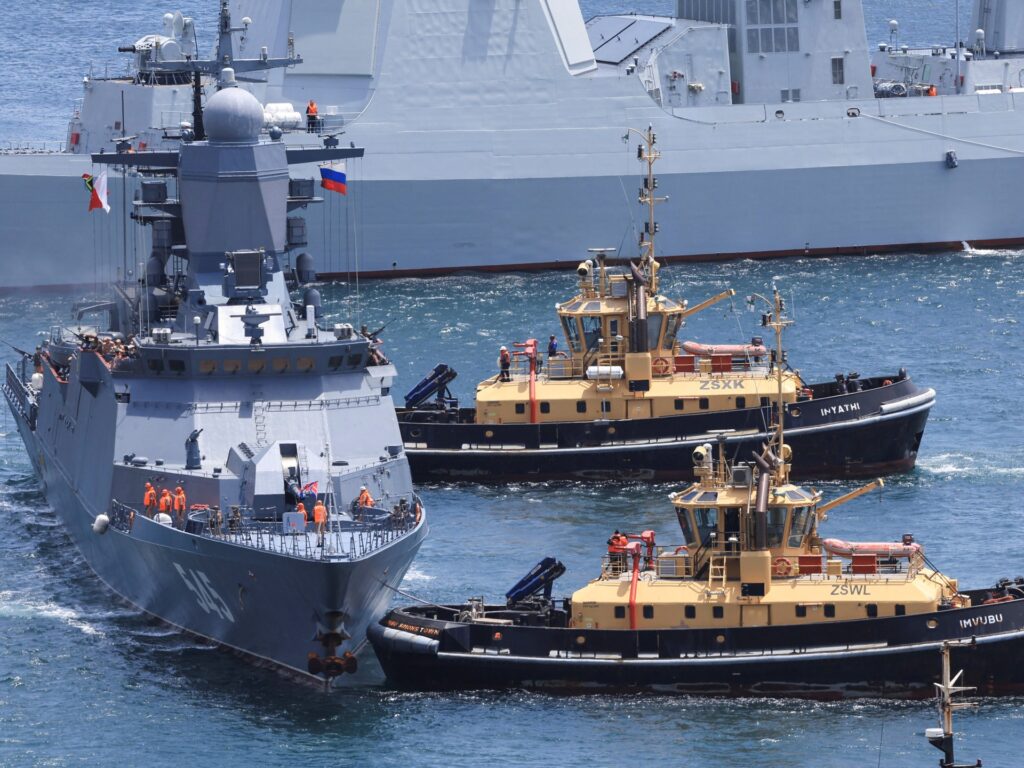
The BRICS wargames, a series of military exercises involving the member countries Brazil, Russia, India, China, and South Africa, hold significant geopolitical and strategic importance. These exercises serve as a platform to enhance military cooperation, improve interoperability, and build trust among emerging powers. South Africa is currently hosting the latest iteration of these BRICS wargames, symbolizing the growing influence and unity of the group on the global stage.
However, this edition of the BRICS wargames has seen notable absences. Among the founding members, India has chosen to opt out of the exercises. This decision is underscored by the complex geopolitical landscape and India’s strategic calculus in response to intensifying tensions between the BRICS nations and the United States.
The BRICS coalition has been gaining momentum, presenting itself as a counterbalance to Western-dominated institutions and asserting a multipolar world order. The joint military exercises underscore not only military collaboration but also a shared vision of strategic autonomy and economic partnership.
South Africa’s role as host signifies its position as a key player within BRICS, bridging the interests of Africa with those of other major emerging economies. Hosting the wargames brings visibility to the continent and underscores its growing military capabilities and strategic importance.
India’s decision to refrain from participation stems largely from its cautious approach towards its relationships with both China and Russia, which have exhibited varying degrees of conflict and cooperation with the United States. India has been navigating a delicate balance, maintaining traditional partnerships while expanding strategic autonomy.
The increasing US-China rivalry has put India in a complex position vis-à-vis its own security concerns and diplomatic relations. Opting out of the BRICS wargames reflects India’s desire to avoid overt entanglement in military groupings that could exacerbate tensions with Western allies.
Moreover, India’s military doctrines and strategic goals focus on maintaining regional security and countering threats primarily from neighboring states, which may not align seamlessly with the broader strategic objectives of the BRICS wargames.
The absence of India, along with other abstentions, impacts the overall dynamic of the military exercises, signaling nuanced geopolitical realignments within the group. It highlights potential fractures and differing priorities among BRICS members amid shifting global power equations.
These developments suggest that while BRICS remains a potent symbol of emerging power cooperation, internal differences and external pressures continue to shape the extent and nature of collaboration. The wargames, therefore, are not merely military drills but a reflection of the evolving geopolitical contours shaping the 21st-century international order.
In summary, the BRICS wargames matter as a demonstration of military cooperation that reinforces the bloc’s strategic ambitions. South Africa’s hosting role amplifies the group’s global aspirations. Meanwhile, India’s opting out underscores complex diplomatic and security considerations amid global tensions, signaling a cautious approach to balancing regional and international imperatives.