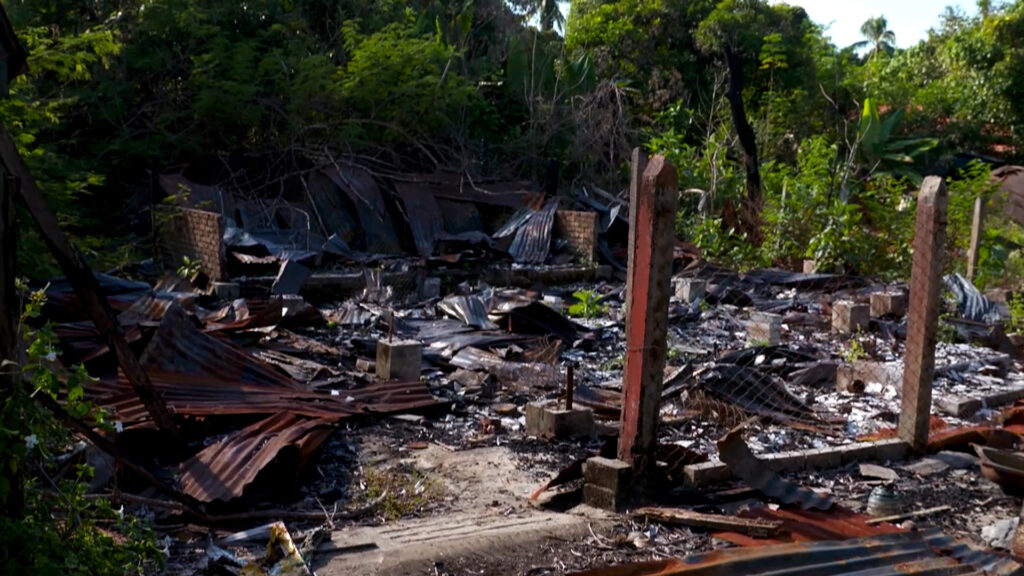
Myanmar’s ongoing conflict has led to a complex and troubling situation as its military government proceeds with plans to hold national elections despite widespread warfare across the country. A recently abandoned town in Myanmar serves as a poignant symbol of these challenges, reflecting the deep impact of conflict on democratic processes.
The town, once a bustling community, now lies deserted as residents fled the violence and instability that have engulfed the region. This abandonment highlights the difficulty of conducting elections in areas where safety and normalcy have been severely disrupted. Many regions under conflict have limited access to basic security, making voting logistics extraordinarily complex and raising questions about the inclusiveness and fairness of the electoral process.
Myanmar’s military government, which has been in power since a coup in February 2021, aims to legitimize its rule through these elections. However, the timing and context of the vote raise significant concerns domestically and internationally. The country remains fractured, with multiple armed groups controlling large swaths of territory and ongoing clashes between military forces and resistance groups.
The war has caused not only population displacement but also a breakdown in communication and infrastructure, all of which are crucial for a functioning election. Many voters, especially in conflict zones, face barriers such as lack of polling stations, fear of violence, and disrupted transportation routes—all factors that can discourage participation and skew results.
Additionally, the election occurs under a military regime accused of human rights abuses and restricting freedoms, further tarnishing the credibility of the election. Transparency and fairness are critical to democratic elections, but these elements are in question given the prevailing conditions.
Experts and observers warn that holding elections under such wartime conditions might serve to consolidate military control rather than provide a genuine democratic choice. The international community has expressed concerns about the legitimacy of the polls, urging for peaceful dialogue and respect for human rights.
For the residents of the abandoned town, the election may feel irrelevant against the pressing needs for safety, stability, and peace. Their plight underscores a broader issue: the difficulty of embedding democratic processes in a nation torn by conflict and ruled by military authority.
As Myanmar prepares to move forward with its election plans, these challenges emphasize the critical need for reconciliation efforts and the restoration of peace as prerequisites for any meaningful democratic participation. Until then, towns like this stand as somber reminders of the cost of war on democracy, human rights, and community life in Myanmar.